
The 2026 sargassum season has hit the Mexican Caribbean ahead of schedule. While the official season traditionally ramps up in late April, live webcams and satellite tracking confirm a significant landfall is actively washing ashore across the Quintana Roo coast.
At The Cancun Sun, we rely entirely on live feeds and verified data to establish ground truth. Right now, the data shows a massive split in beach quality across the region. Travelers heading to the coast need to understand that the situation varies drastically mile by mile.
The Real-Time Build-Up
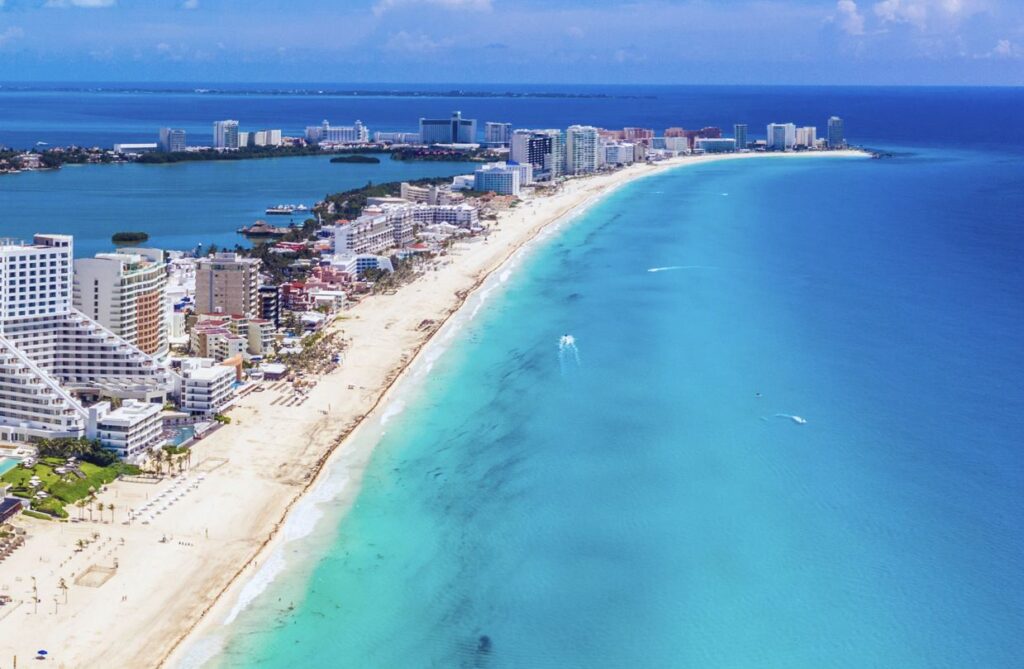
- Cancun Hotel Zone (Heavy Arrival): Live webcam feeds from central properties like the Live Aqua resort confirm a solid, continuous dark band of sargassum blanketing the shoreline. While it is not yet a catastrophic, beach-closing event, the buildup is significant. White sand remains visible behind the tide line, but the immediate waterline has turned murky brown, heavily disrupting swimming.
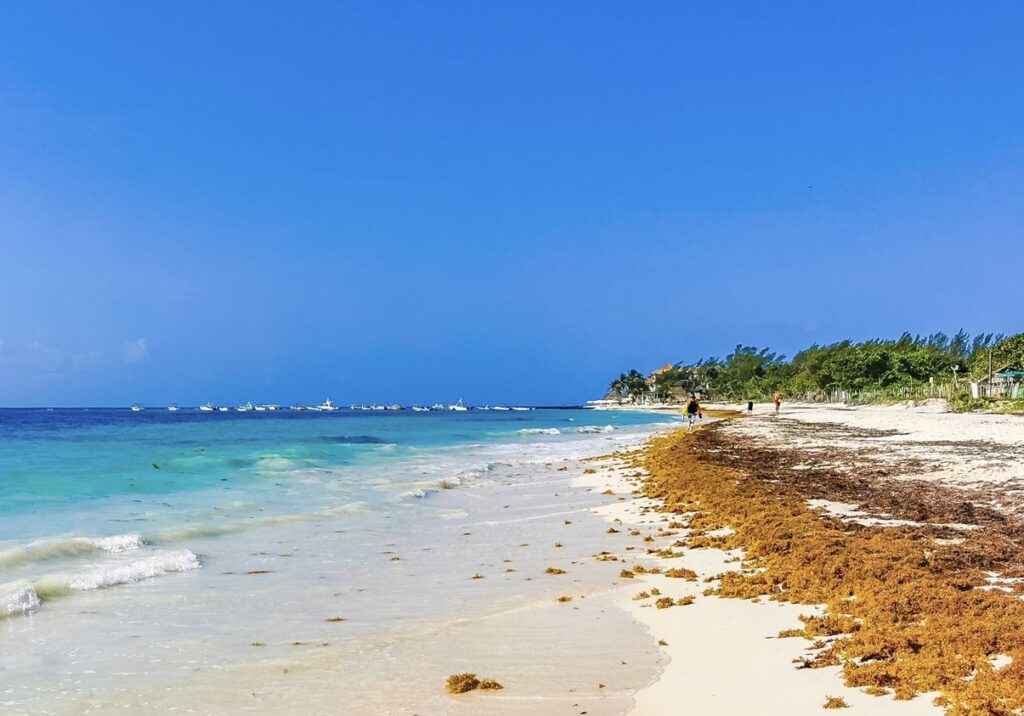
- Playa del Carmen (Improving): While Playa del Carmen took a heavy hit earlier in the week from southerly winds pushing over 130 tons onto central beaches, current live feeds show rapid improvement. Local currents and wind shifts have pivoted, actively pulling the floating mats away from the central tourist zones.
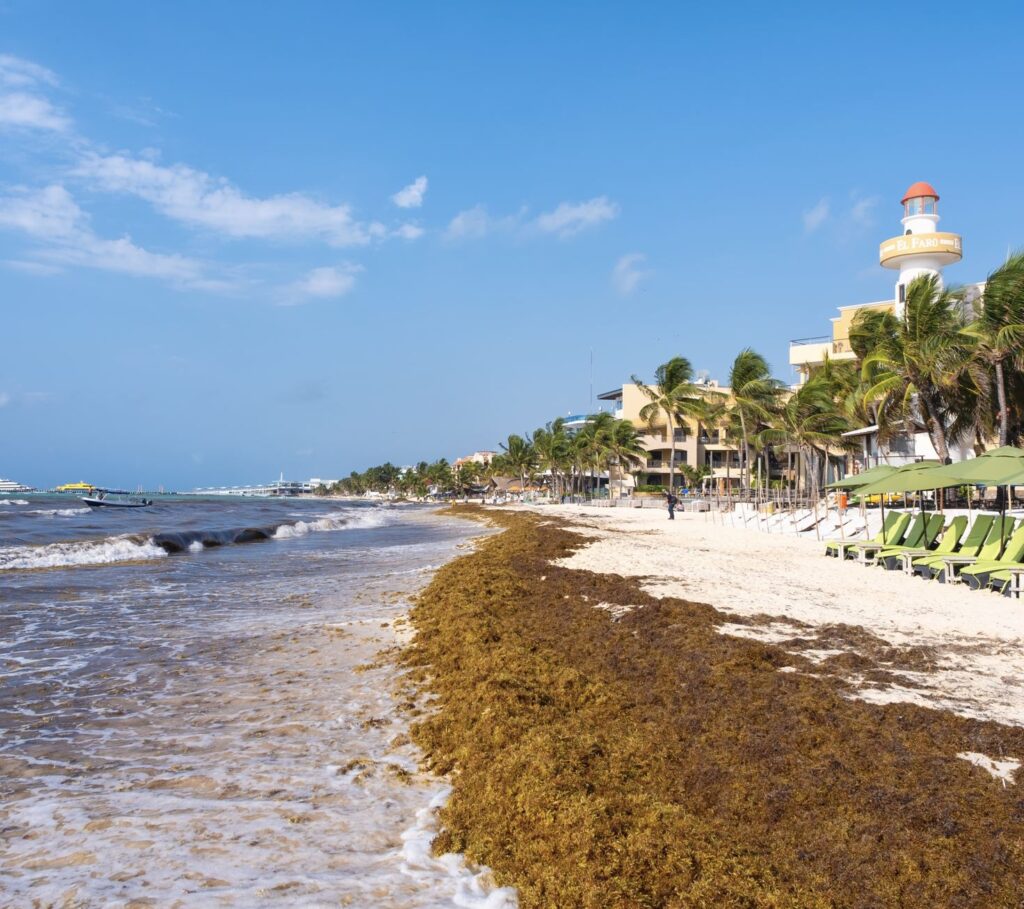
- Tulum & Akumal (High Alert): South of the city, the situation remains severe. Boat owners and local brigades in Akumal Bay are reporting some of the largest single-day landfalls to date. Thick, rotting mats of algae are making the ocean entirely unswimmable in many parts of the Tulum hotel zone. However, live webcam feeds are showing constant clean-up by crews.
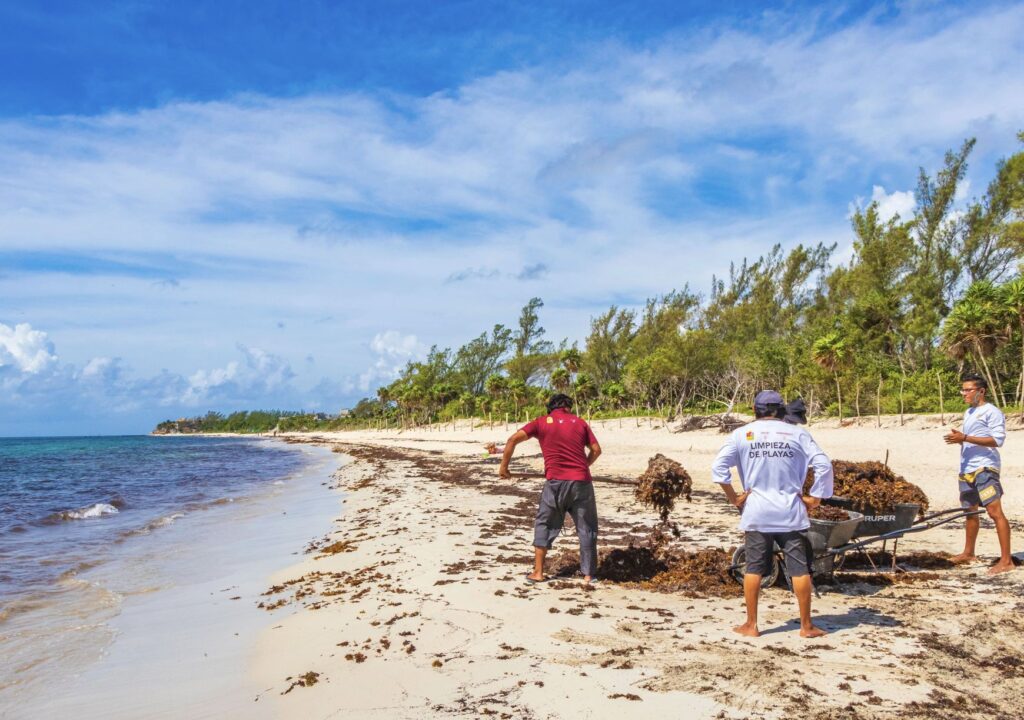
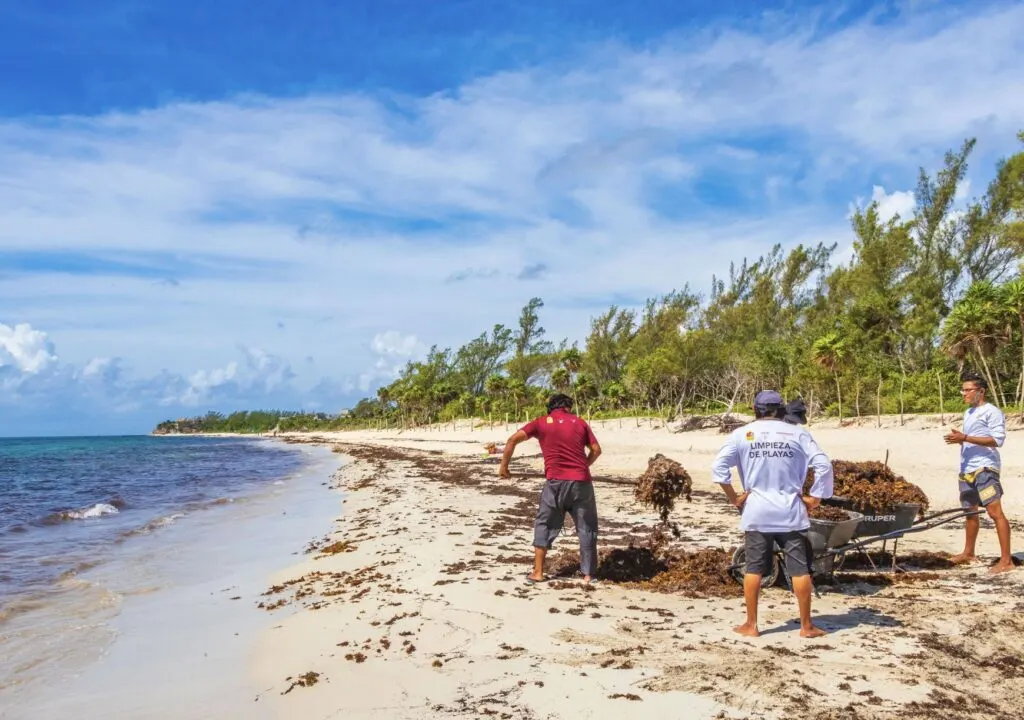
- The Safe Zones: If you are on the ground right now, Isla Mujeres (Playa Norte) and the West Coast of Cozumel remain completely clear. Because these specific beaches face west, they are geographically shielded from the Atlantic currents pushing the macroalgae ashore.
The 2026 Forecast
The early arrival is not an anomaly; it is the leading edge of a massive system. The University of South Florida’s Optical Oceanography Lab has issued a warning for 2026, predicting it will be one of the heaviest sargassum years on record.
March satellite reports confirm that the Atlantic “seed population” is already sitting in the 75th percentile of historical volume. Between the Western Atlantic and the Caribbean, over 5.5 million tons of sargassum are currently tracking westward. The primary cause is the 2025 bloom, which never experienced a full winter die-off, giving the 2026 season a massive head start.
In response, the Mexican Navy (Semar) has activated emergency protocols. Authorities are currently deploying over 9,500 meters of offshore anti-sargassum barriers along the Quintana Roo coast. They are utilizing specialized skimmer vessels to intercept the floating islands before they make landfall, but the sheer volume means coastal containment is only partially effective.
The Rise of the “Resort Mini-City”
The reality of recurring sargassum has forced the region to adapt. Over the last three years, the hospitality landscape in Cancun has fundamentally changed. What used to be a simple “beach and pool” setup has evolved into massive, self-contained complexes designed to make the ocean completely optional. Resorts are investing millions to ensure a vacation stays on track even when the beach is compromised.
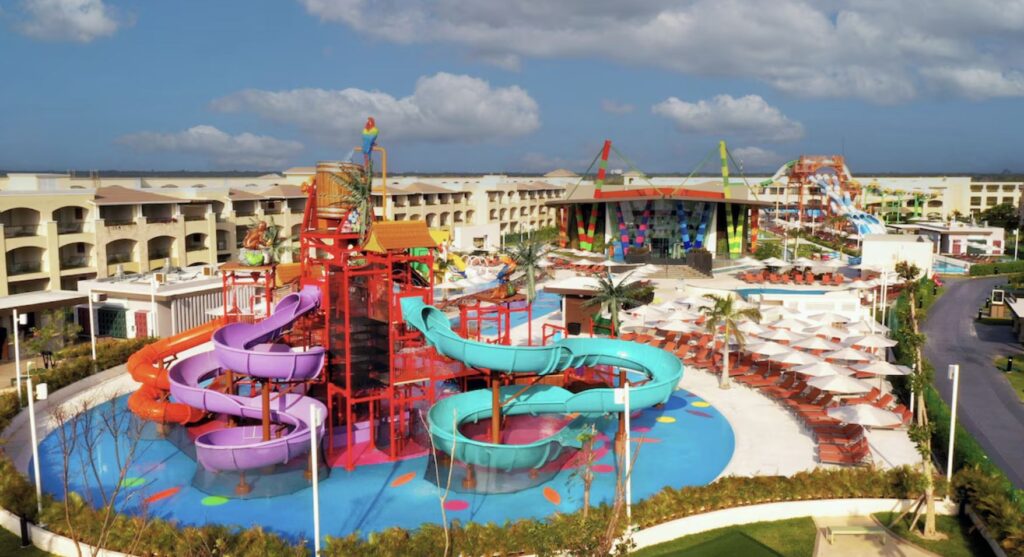
The newly expanded Royalton Splash Riviera Cancun represents the peak of this shift. Instead of relying on the ocean, the property boasts one of the largest on-site water parks in the Caribbean, featuring 14 giant water slides, two sprawling lazy rivers, and massive splash pads. If the weather turns, the resort features an indoor “Game Up” entertainment center complete with a trampoline park and laser tag.
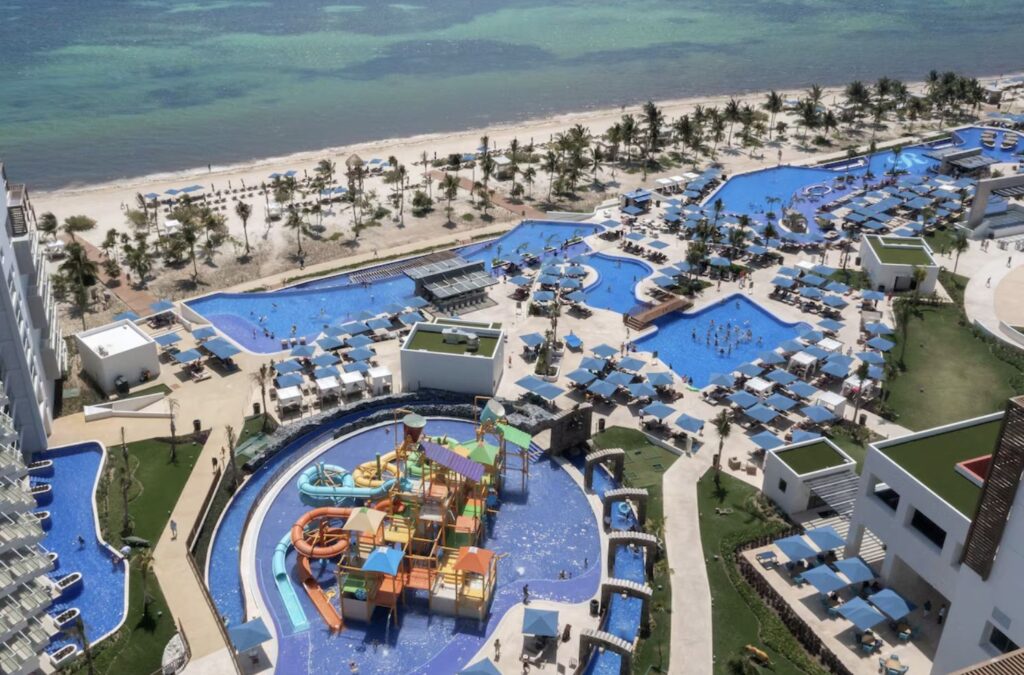
Similarly, Moon Palace The Grand has pivoted its marketing away from the sand. The property features nine distinct pools, an enormous dedicated water park, and a FlowRider double surf simulator. By offering inland luxury on a massive scale, these mega-resorts guarantee the high-end experience regardless of the shoreline conditions.
The Golden Rules for 2026 Travelers
If you are traveling to the Mexican Caribbean this year, you must not listen to social media or outdated news reports.
- Visual Verification: Before heading down to the sand, check the live webcams. If your immediate beach is red-flagged for sargassum, look at feeds 5 kilometers in either direction.
- Book the Pool, Not the Sand: When selecting a resort for the 2026 season, prioritize properties with extensive amenities, massive pool complexes, and verified on-site entertainment. Save a pool chair just in case the sargassum is heavy and the smell is foul on the beach.
Sargassum Tracker
The Ultimate Cancun Trip Planner
When’s the best time to go? Our powerful month-by-month guide breaks down the weather, crowds, sargassum, and prices for your perfect trip.
Find Your Perfect Cancun & Riviera Maya Resort In Seconds
This simple, powerful tool was built by our on-the-ground experts to match you with the ideal resort for your specific budget and travel style.
Subscribe to our Latest Posts
Enter your email address to subscribe to The Cancun Sun’s latest breaking news affecting travelers, straight to your inbox.