
When travelers step off their flight at Cancun International Airport, clear customs, and walk out into the thick Caribbean heat, the only thing standing between them and a well-deserved margarita is the dreaded airport transfer.
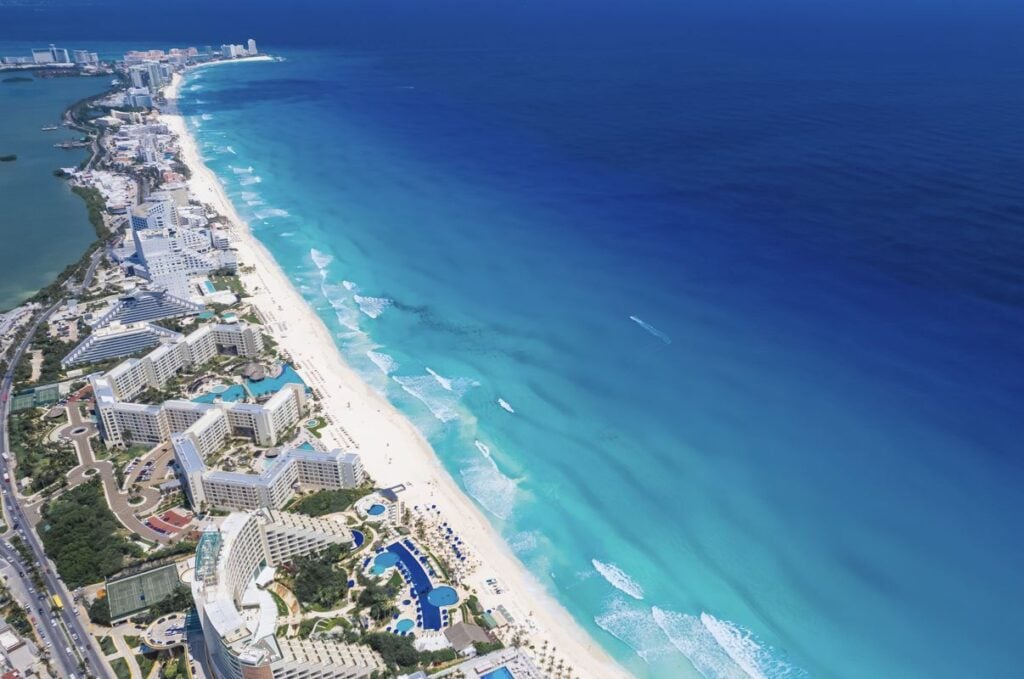
For decades, getting into the famous Hotel Zone meant navigating a single, highly congested strip of land that wraps around the coastline.
If you happened to arrive during peak morning or late afternoon traffic hours, that final stretch of your journey could easily take well over an hour, putting a serious dent in your first vacation day. I don’t know about you but once I am in the car on the way to my resort I am ready to RELAX.
Well, I’ve got good news for you.
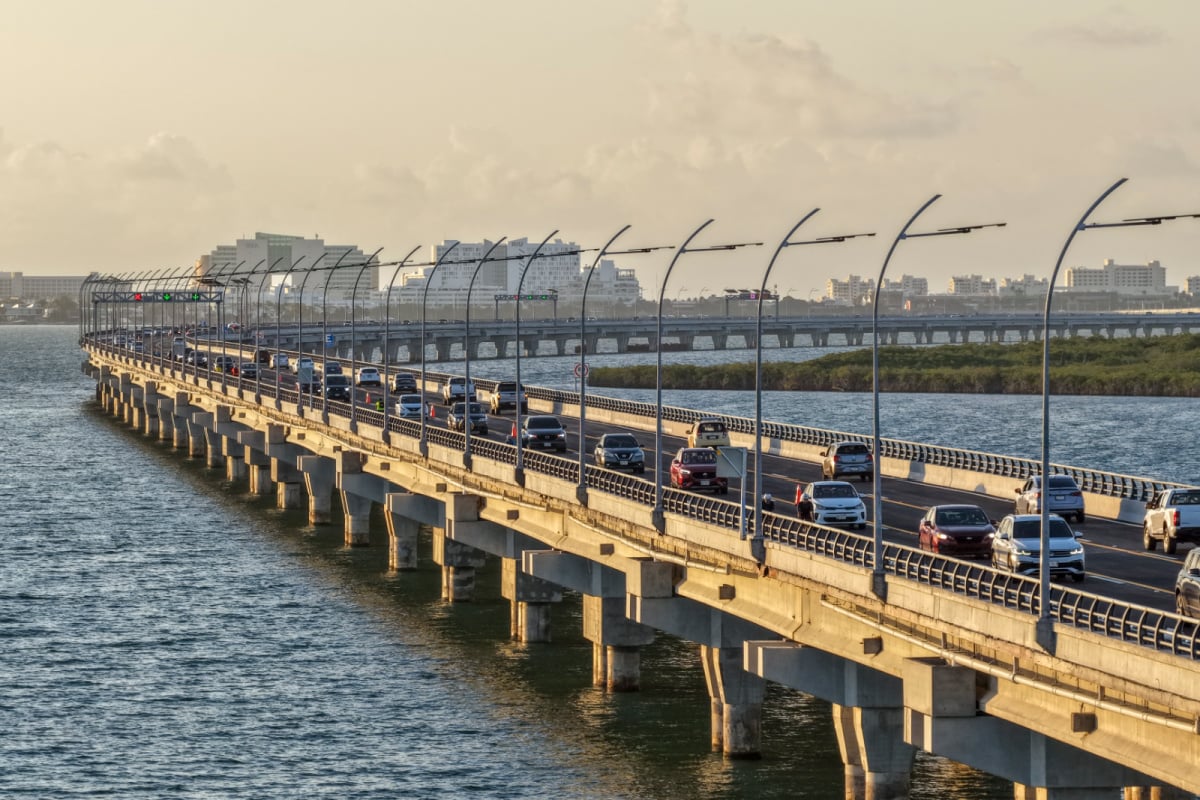
For years, local officials and tourism boards have searched for a viable solution to the mounting traffic problem. As Cancun’s popularity exploded, the existing infrastructure simply could not keep up with the sheer volume of shuttles, taxis, and buses.
But as of this summer, the logistics of arriving in the Mexican Caribbean have completely changed. The highly anticipated Nichupté Vehicular Bridge officially opened to public traffic earlier this year, and municipal transit data is already showing incredible, tangible results.
If you are heading down to the Yucatan Peninsula from the States or beyond for a late-summer escape or beginning to plan your winter getaway, here is exactly what you need to know about this massive new infrastructure project and how it will drastically speed up your arrival.

The 50% Drop in Hotel Zone Traffic
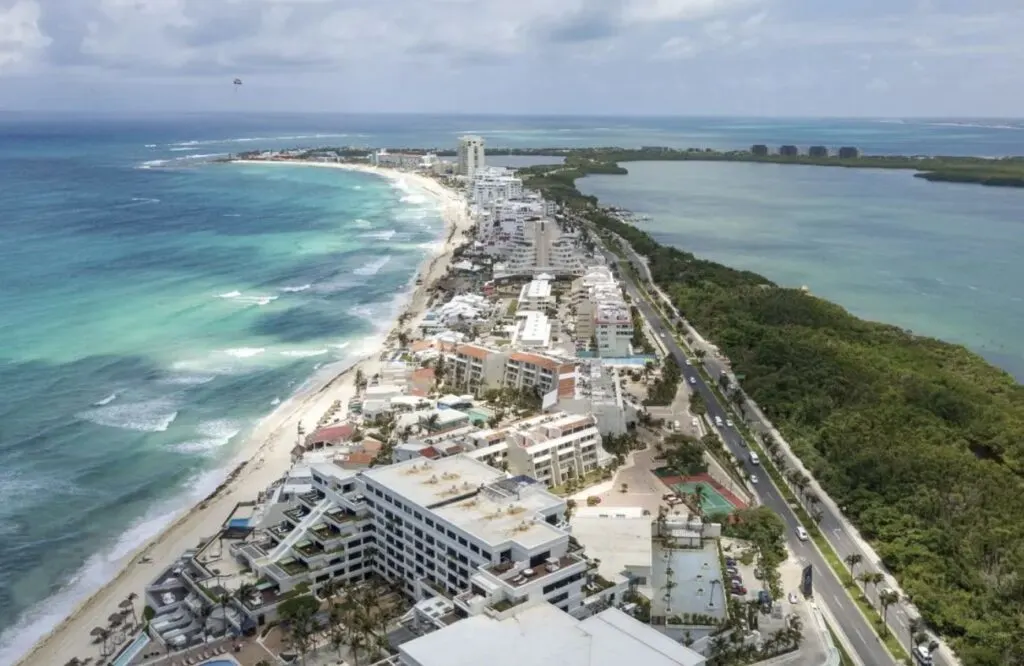
For years, access to the Hotel Zone relied almost entirely on Boulevard Kukulcán. The northern entry point—known locally as Kilometer Zero—acted as a massive, unavoidable bottleneck. Between the hours of 7:00 AM and 10:00 AM, the daily influx of resort workers, commercial delivery trucks, and arriving tourists would routinely bring traffic to an absolute standstill.
According to Ezequiel Segovia Góngora, head of Transit for the Benito Juárez municipality, the new bridge has successfully divided this daily flow and provided instant relief to the area. Recent municipal data confirms that the Nichupté Bridge has already reduced the vehicular load at Kilometer Zero by an impressive 50 percent.
Traffic that previously had to circle entirely around the airport area to enter from the southern tip is now using the new bridge to cut directly across the water, completely bypassing the most congested stretches of pavement.
An 11.2-Kilometer Shortcut Across the Lagoon
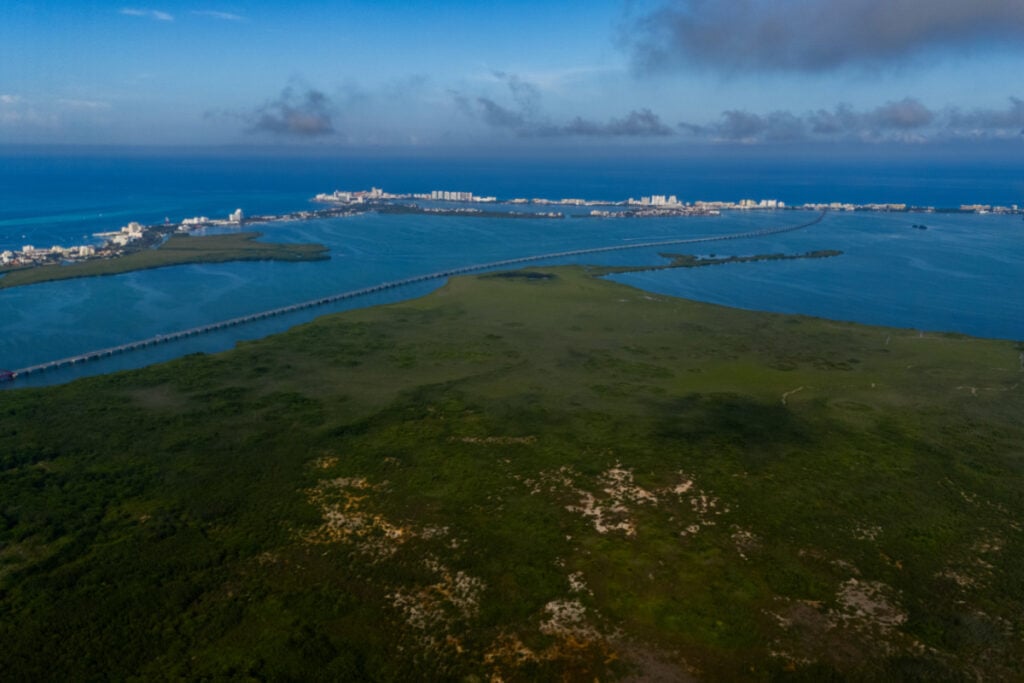
The Nichupté Vehicular Bridge is not just a simple overpass; it is one of the most ambitious and complex infrastructure projects executed in Mexico in recent history. Stretching 11.2 kilometers, it is the second-longest bridge built over water in all of Latin America.
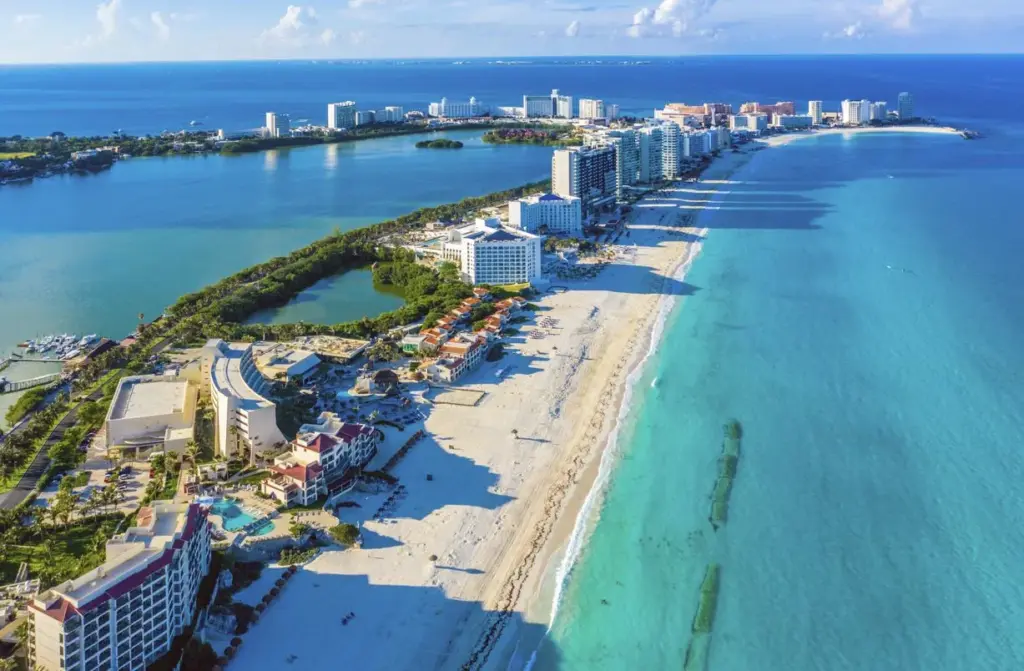
Instead of forcing all cars to enter the Hotel Zone from the extreme north or south ends, the bridge spans directly across the massive Nichupté Lagoon system. It effectively deposits vehicles right into the middle of the action near Plaza Kukulcán at Kilometer 13.
By bypassing the traditional land routes, the bridge is slashing travel times between downtown Cancun and the central Hotel Zone from over an hour during peak congestion down to just 10 to 15 minutes.
Environmental Restoration and Active Tourism
A project of this magnitude stretching across a protected lagoon naturally raised environmental concerns during its proposal phase. However, the construction was paired with a massive environmental mitigation and compensation strategy to protect the local ecosystem.
Local authorities recently reported an 89 percent survival rate in their mangrove restoration efforts linked directly to the bridge’s construction.
Furthermore, the city is not just focusing on motorized vehicles. Plans are actively underway to connect the existing Hotel Zone bike path directly with the Nichupté Bridge.
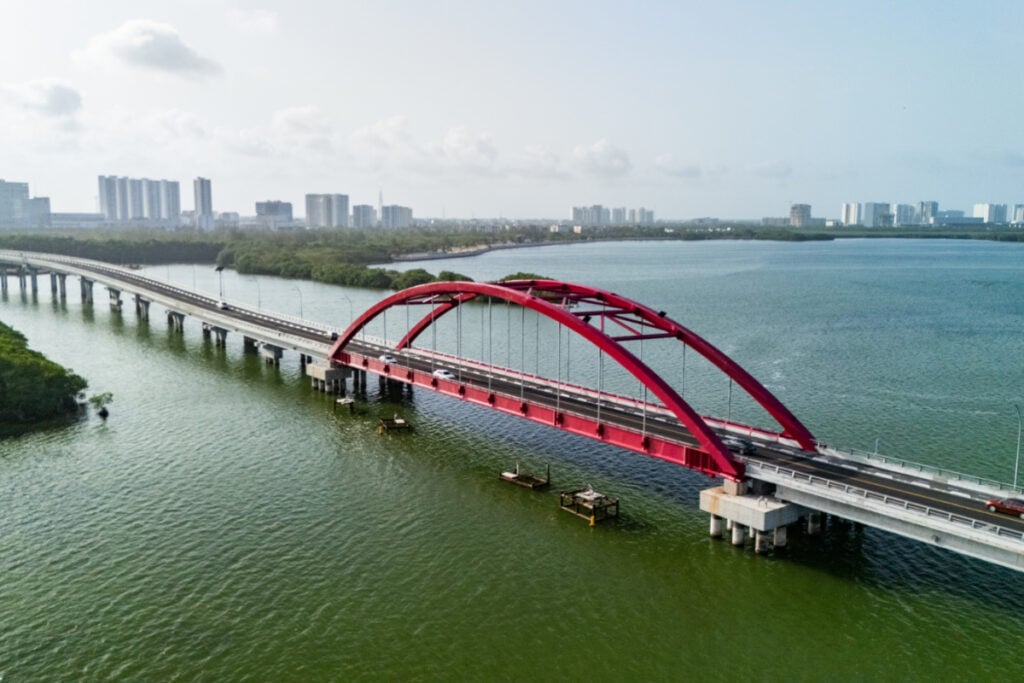
Once completed later this year, this will provide a completely safe, dedicated route for cyclists to cross the lagoon, adding a massive recreational benefit for active tourists who want to explore beyond their resort without renting a car.
The government has even launched a monthly “PuenteAndo” program, closing the bridge to cars on specific Sundays to allow thousands of pedestrians and cyclists to enjoy the panoramic water views.
What This Means For Your Airport Transfer
For the average traveler, the biggest benefit of the Nichupté Bridge is not just the sheer speed—it is the consistency.
Previously, a minor fender bender or a stalled delivery truck on Boulevard Kukulcán could paralyze the entire Hotel Zone, leaving you trapped in the back of your airport shuttle with no alternate routes available. Now, Cancun has a vital relief valve. The destination officially has three distinct entrances and exits to the tourist zone.
When you book your private transfer or hop in a taxi at the airport, your driver now has real-time options to navigate around delays. If the traditional southern entrance is backed up with arriving flights, they can easily reroute across the new bridge, bypassing the gridlock entirely. This means a much more predictable arrival time, getting you out of transit and onto the pristine white sand exactly when you planned.
Join Our Cancun Sun Community of 16,000+ Members
Get real-time answers to your travel questions from our team of local experts and thousands of fellow travelers directly inside our interactive group.
Find Your Perfect Cancun & Riviera Maya Resort In Seconds
This simple, powerful tool was built by our on-the-ground experts to match you with the ideal resort for your specific budget and travel style.
The Ultimate Cancun Trip Planner
When’s the best time to go? Our powerful month-by-month guide breaks down the weather, crowds, sargassum, and prices for your perfect trip.
Enter your email address to subscribe to The Cancun Sun’s latest breaking news affecting travelers, straight to your inbox.