
If you are planning a sunny summer getaway to Cancun or the Riviera Maya, you might want to pack a little extra flexibility in your suitcase!
Scientists at the University of South Florida recently released their summer outlook, and they are predicting that 2026 is on track to be a record-breaking year for sargassum seaweed.
Massive floating mats of this brown algae have been expanding over the last decade, and experts warn that the amount of seaweed washing up on the shores of the Caribbean will be much higher than usual by mid-summer.
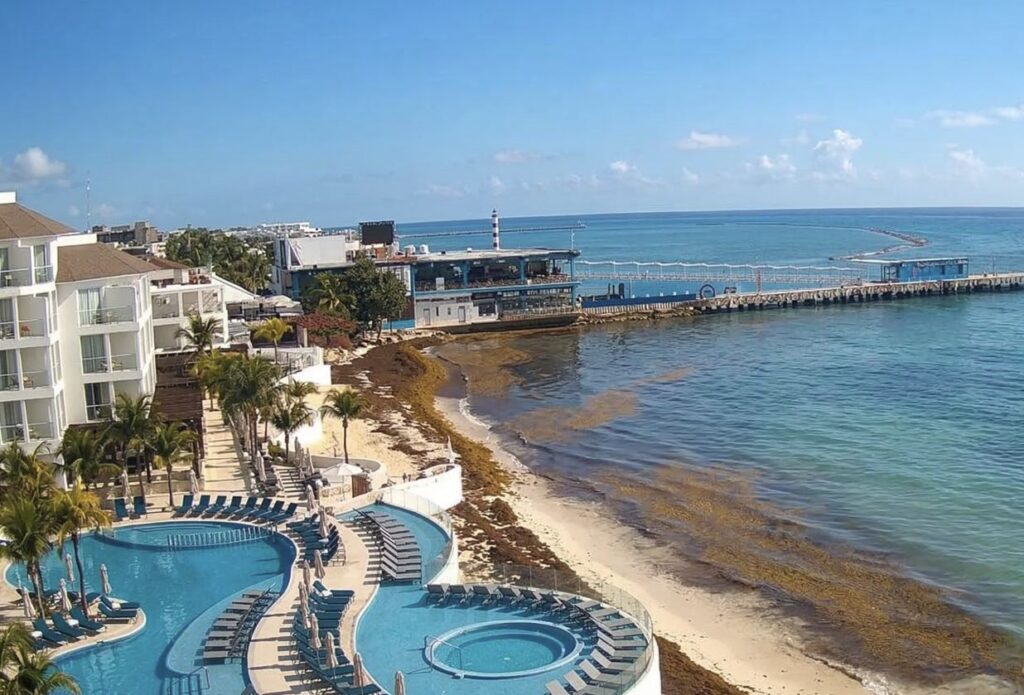
While Cancun’s beaches are world-famous for a reason, dealing with a relentless wave of seaweed can definitely throw a wrench in your beach days.
Here is everything you need to know about the current situation, why it smells the way it does, and exactly how to pivot your itinerary so your vacation remains absolutely spectacular.
How Much Seaweed Are We Actually Talking About?
When scientists use the phrase “record-breaking,” it can be hard to visualize what that actually means for your daily beach walk.
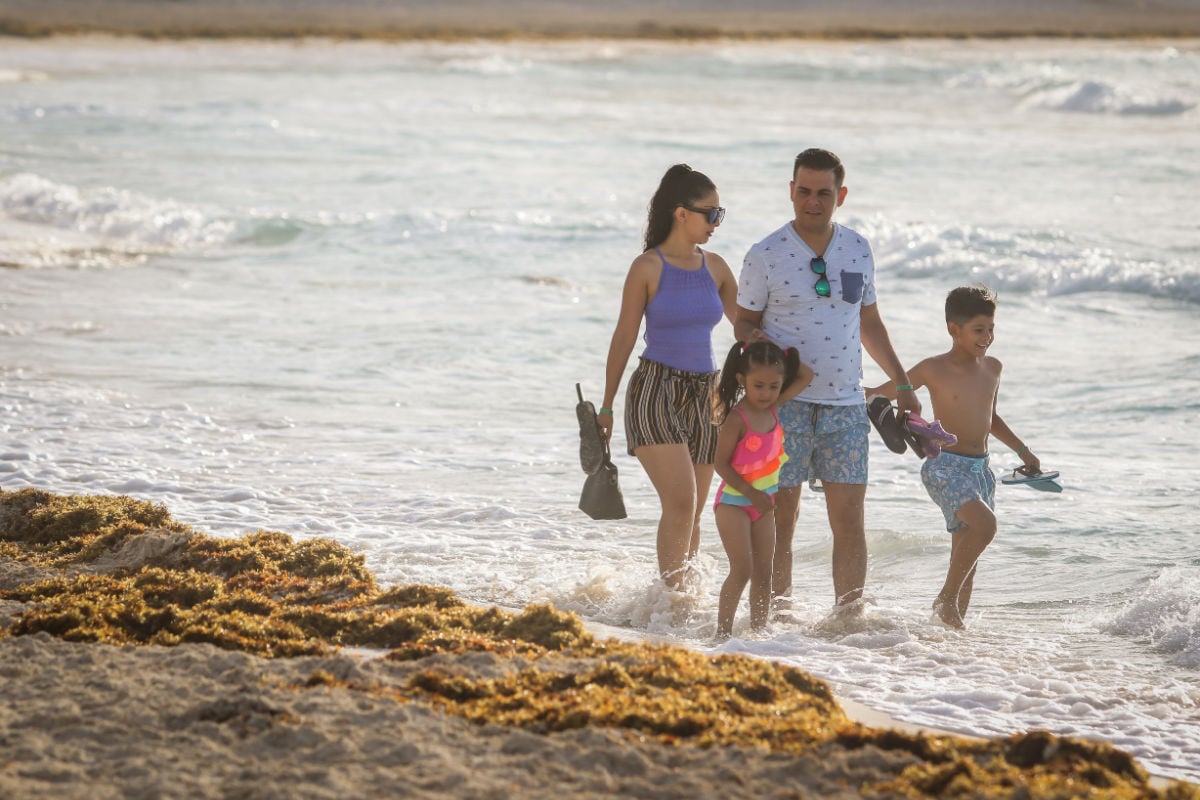
This year, forecasters estimate that a staggering 40 million metric tons of sargassum biomass will be circulating in the Atlantic Ocean. While not all of that will hit the coast, the Mexican state of Quintana Roo (home to Cancun, Playa del Carmen, and Tulum) alone is expected to see well over 90,000 tons of that seaweed wash ashore.
In practical terms, during the peak summer months, this means:
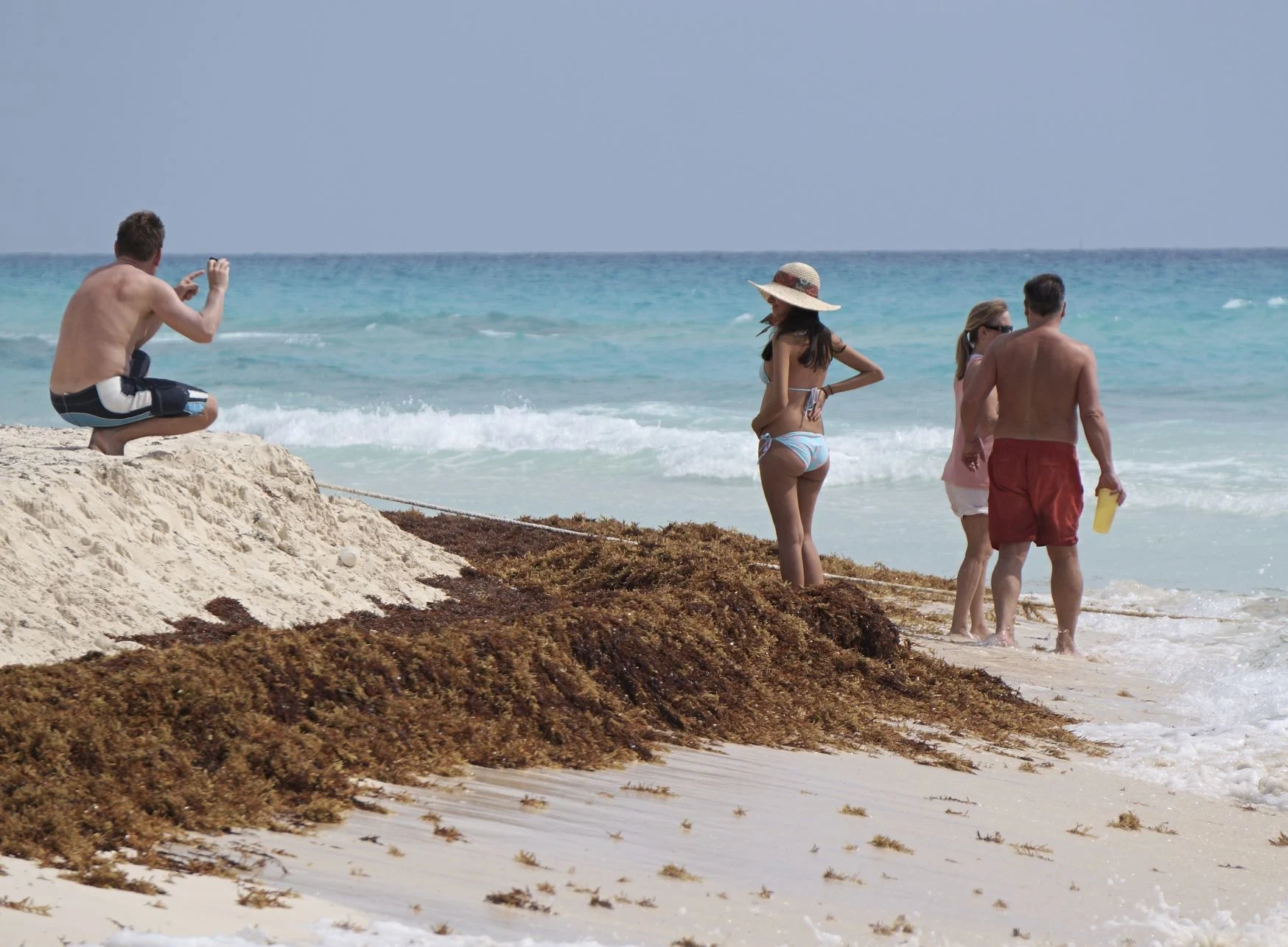
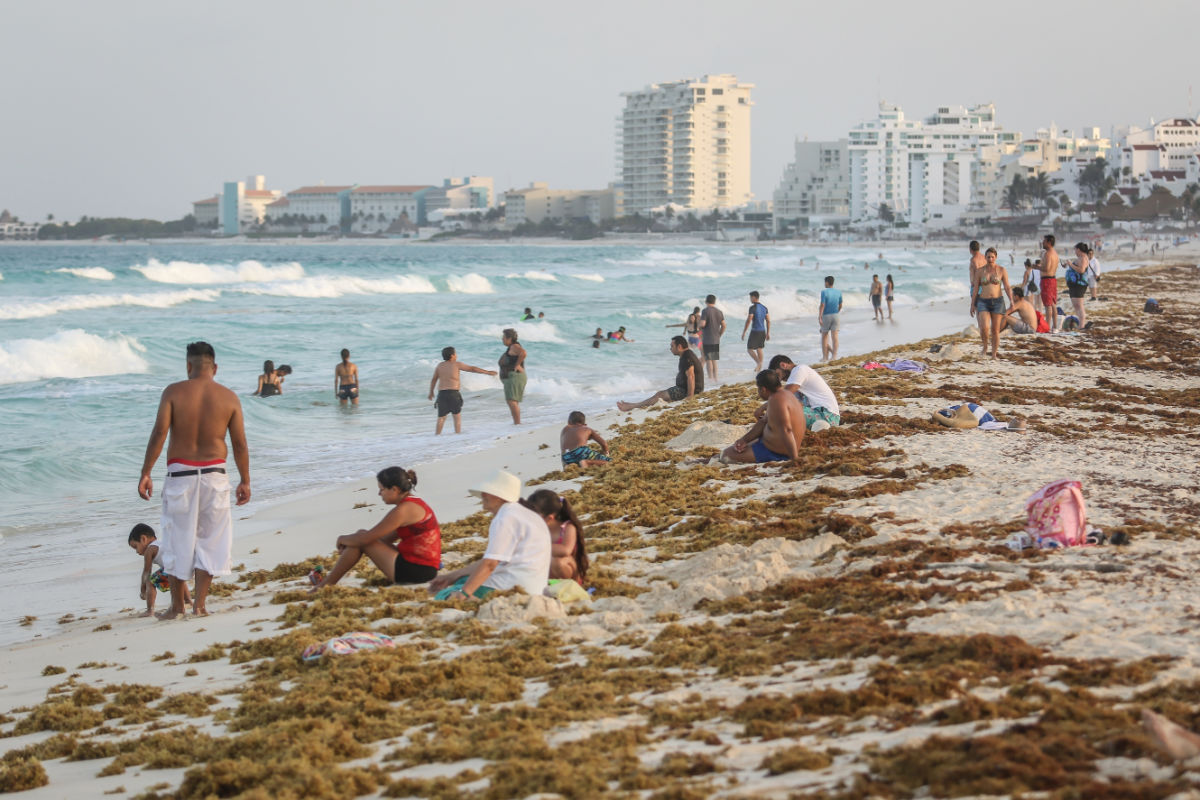
- Massive Piles: On the hardest-hit, eastern-facing beaches, sargassum can pile up on the sand up to 4 feet high, acting like a physical barricade between the resorts and the water.
- Constant Arrivals: Even when luxury resorts deploy fleets of tractors to rake the sand completely clean at sunrise, a fresh wave of seaweed often completely covers the beach again within 12 hours as the tides shift.
- Murky Water: The dense mats of algae suspended in the surf zone can turn the usually crystal-clear turquoise water into a murky, muddy-looking brown for several yards out.

The Science of the Stench: Is It Dangerous?
When sargassum is floating out in the deep open ocean, it is actually incredibly helpful!
It absorbs carbon dioxide and provides a massive floating habitat for sea turtles and tiny fish. The trouble only starts when it hits the shore.
About 48 hours after washing up onto the sand, the seaweed begins to break down under the hot tropical sun. As it decomposes, it releases a mix of natural gases.
That chemical combination is exactly what causes the powerful “rotten egg” odor that plagues heavily impacted beaches.
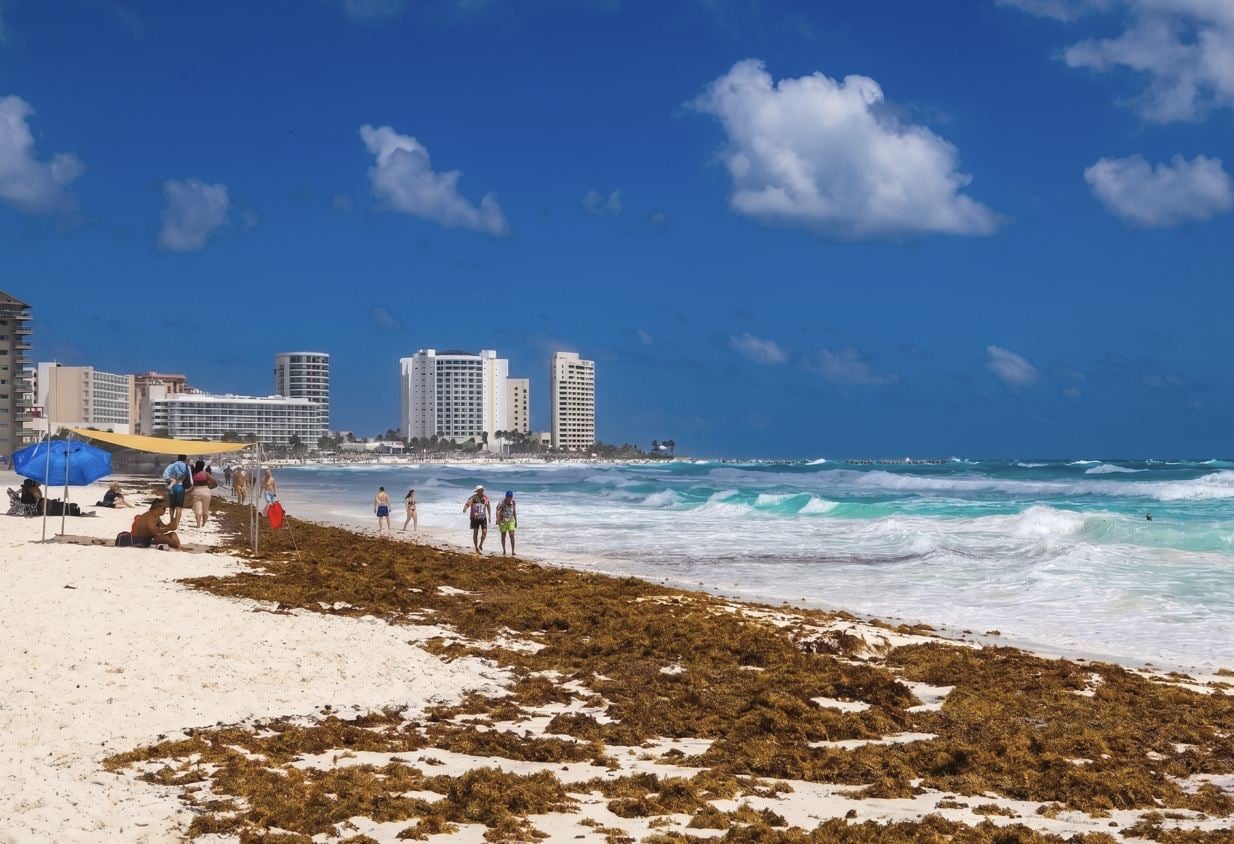
While the smell is undeniably a nuisance that can ruin a breezy beachside dinner, the good news is that the experts have noted there is “no immediate and significant exposure risk” for tourists.
However, breathing it in all day is not exactly pleasant, and wading through it is definitely not the luxury experience you paid for.
How to Save Your Vacation: 3 Seaweed-Free Alternatives
A record-breaking seaweed year absolutely does not mean your trip is ruined—it just means you need to know where the hidden gems are. Because sargassum is carried by very specific ocean currents, the impact is dictated entirely by geography.
Here is how you can easily escape the blooms and find that crystal-clear water:
- Head over to Isla Mujeres: Located just a quick 20-minute ferry ride from the Cancun Hotel Zone, Isla Mujeres is the ultimate sanctuary. Playa Norte (North Beach) is naturally shielded by the way the island is angled. Because the massive Atlantic currents sweep past the eastern edge of the island, Playa Norte remains completely blocked off from the seaweed, boasting pristine, pool-like water practically year-round.
- Dive into the Jungle Cenotes: When the ocean is looking a bit too messy, turn your back on the beach and head straight into the jungle. The Yucatan Peninsula sits on top of an incredible underground river system filled with thousands of cenotes—natural freshwater sinkholes. Because they do not connect directly to the sea, they are 100% physically immune to the sargassum crisis. Spots like Cenote Azul or Cenote Cristalino offer refreshing, perfectly clear swimming without a hint of algae.
- Explore the Leeward Side of Cozumel: If you still want that ocean snorkeling experience without the mess, take the ferry from Playa del Carmen over to the island of Cozumel. While the eastern side of the island catches the incoming seaweed, the western (leeward) side is completely protected by the island’s own landmass. The water on the western shore stays remarkably clear, offering some of the best, sargassum-free reef snorkeling in the world.
Join Our Cancun Sun Community of 16,000+ Members
Get real-time answers to your travel questions from our team of local experts and thousands of fellow travelers directly inside our interactive group.
Find Your Perfect Cancun & Riviera Maya Resort In Seconds
This simple, powerful tool was built by our on-the-ground experts to match you with the ideal resort for your specific budget and travel style.
The Ultimate Cancun Trip Planner
When’s the best time to go? Our powerful month-by-month guide breaks down the weather, crowds, sargassum, and prices for your perfect trip.
Enter your email address to subscribe to The Cancun Sun’s latest breaking news affecting travelers, straight to your inbox.