
Cancun is famous for its incredible tropical setting, where vibrant jungles meet the pristine Caribbean Sea.
Because of this unique geography, vacationers often find themselves sharing space with the local wildlife. While spotting exotic creatures can be a highlight of your trip, local environmental and safety authorities are actively urging tourists to keep a safe distance from certain species.
Whether you are exploring the hotel zone lagoons or lounging on the beach, keeping an eye out for these 3 specific animals will keep both you and the local ecosystem safe.
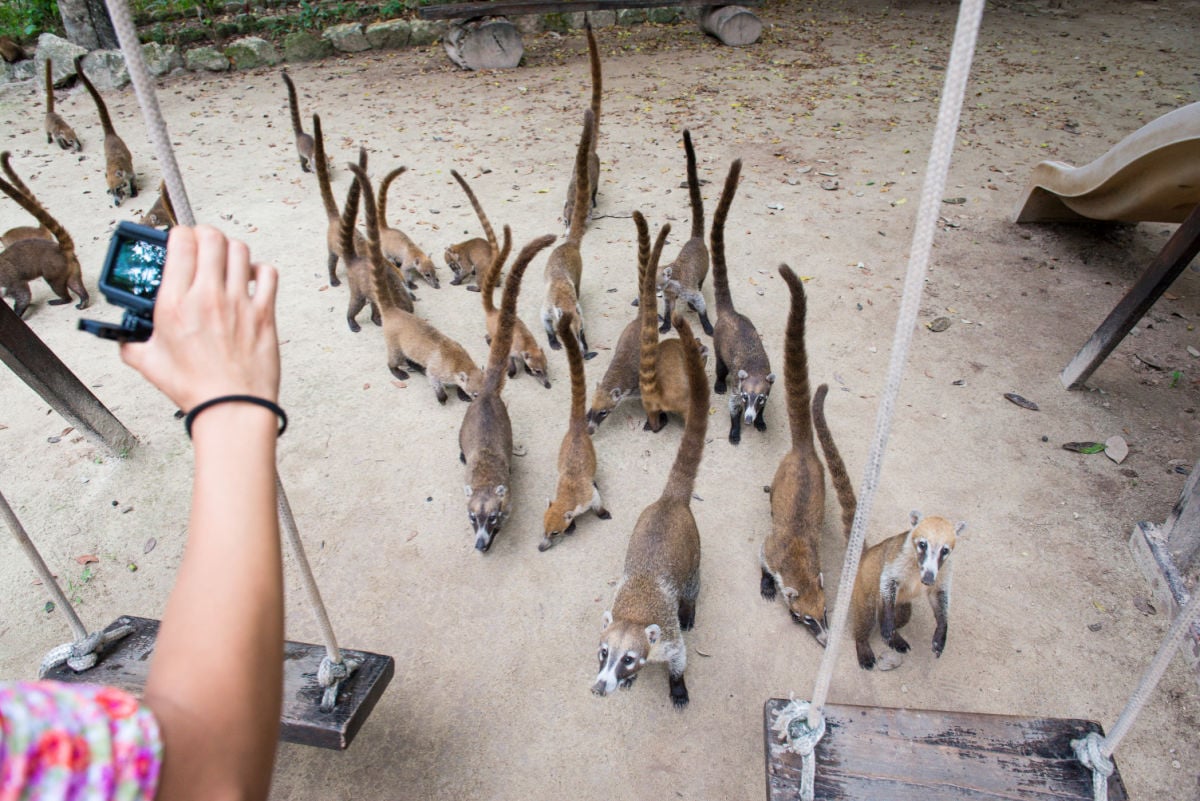
1. White-Nosed Coatis (Tejones)
If you spend any time near the mangroves, outdoor shopping centers, or eco-resorts, you are highly likely to run into white-nosed coatis. Locally known as tejones or cuatís, these medium-sized omnivores look like a fascinating mix between a lemur and a raccoon, sporting long ringed tails and flexible, inquisitive snouts.
Because they look incredibly cute and often seem comfortable around people, many tourists make the mistake of treating them like stray pets.
However, Cancun environmental and animal welfare authorities have issued an official warning urging the public to stop feeding, touching, or approaching them.
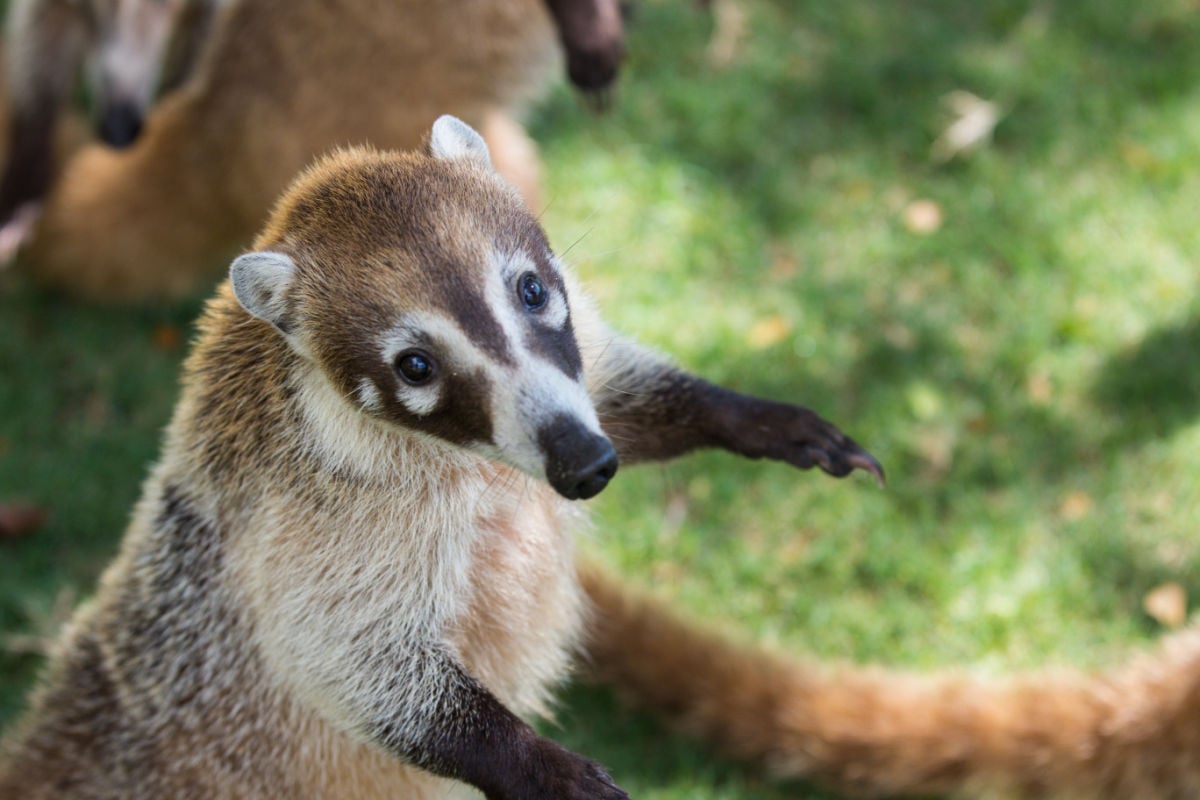
- The Danger to Coatis: When humans feed them processed snacks, it causes severe nutritional deficiencies and digestive issues. It also destroys their natural hunting instincts, creating a dangerous dependency that draws them out of the mangroves and onto busy urban roads where they risk being struck by vehicles.
- The Danger to You: Coatis are strictly wild animals. If they feel cornered, startled, or frustrated because you ran out of food, they can become highly aggressive. They possess sharp claws and teeth that present a serious scratch or bite hazard to humans and domestic pets.
2. Crocodiles
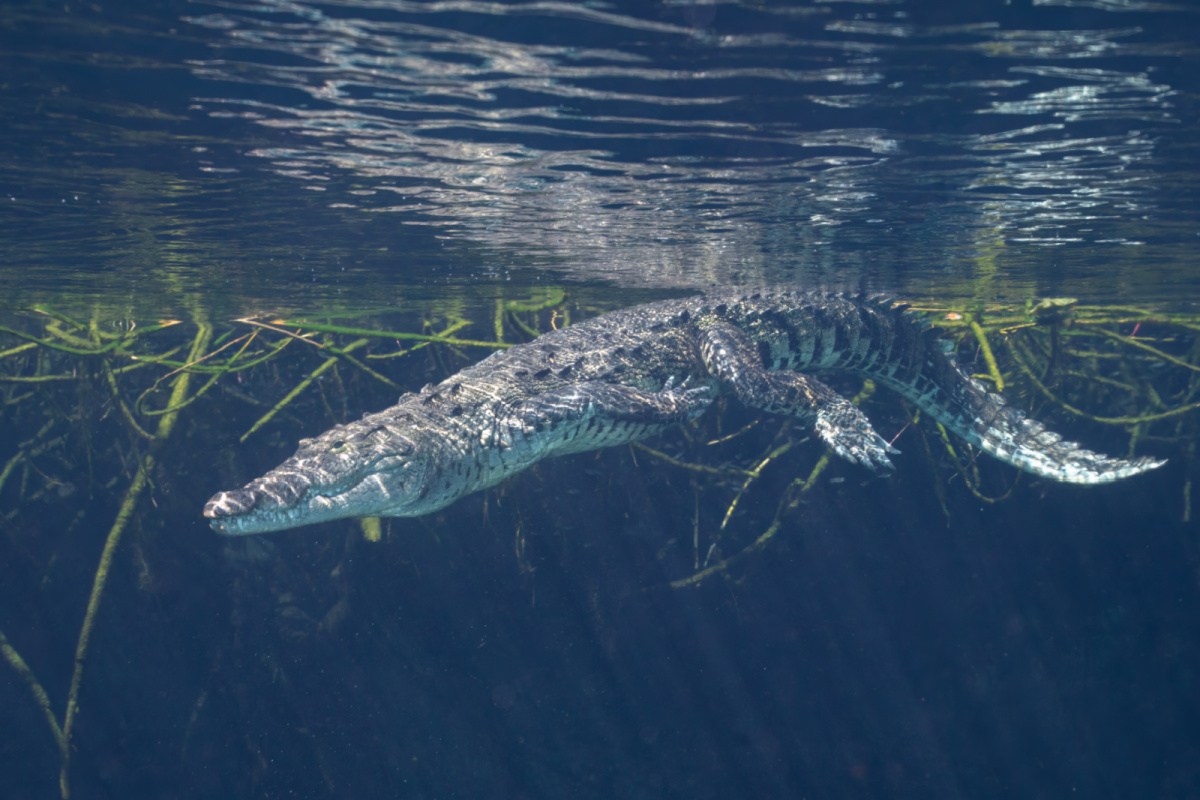
Cancun’s Hotel Zone is uniquely positioned on a narrow strip of land sandwiched between the open ocean and the massive Nichupté Lagoon system. While the ocean side is crocodile-free, the mangrove-lined lagoon side is the natural habitat of the American Crocodile.
Local authorities place highly visible warning signs along the lagoon banks, golf courses, and marina docks, but some tourists still ignore them for photos or evening walks.
- What to Know: These crocodiles are apex predators and are masters of camouflage, often floating just beneath the surface near the water’s edge. They are most active during the evening and night hours.
- Safety Rule: Never wade, swim, or stand near the edge of the lagoon waters, especially after dark. If you are dining at one of the many gorgeous waterfront restaurants along the lagoon, admire the scenery from the safety of the deck and never throw food into the water, as this illegally conditions the crocodiles to associate humans with a meal.
3. Jellyfish (And the Beach Flag System)
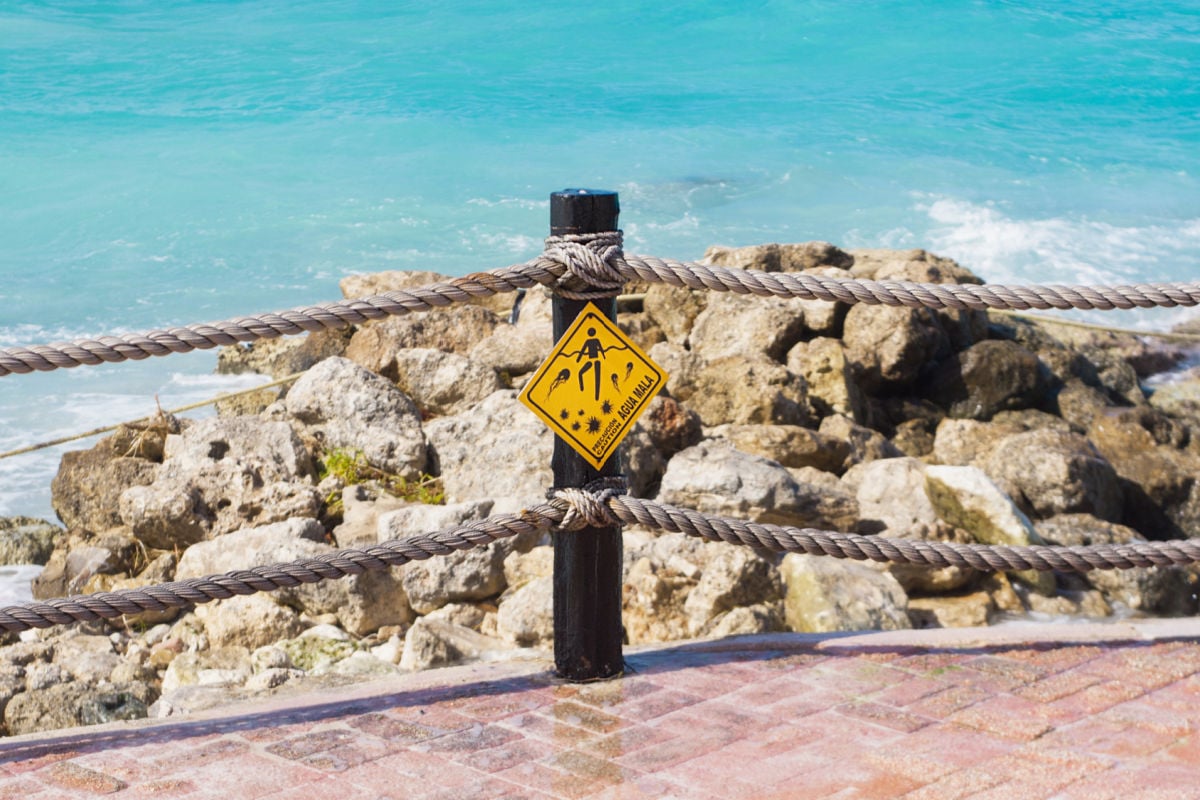
While the ocean side of Cancun is free of crocodiles, it does occasionally play host to jellyfish blooms, particularly during the warm summer months when changing currents push them closer to the shoreline.
To protect swimmers, Cancun’s lifeguards and civil protection authorities utilize a strict beach warning flag system. If jellyfish are present in high numbers, you will see a White Flag flying on the beach.
- The Hazard: The most common jellyfish in the area can deliver a painful, burning sting. If you happen to wade through a bloom, the stinging cells can cause intense skin irritation, swelling, and allergic reactions.
- What to Do: If you see a white flag, it is best to stay out of the surf and enjoy the resort pool instead. If you do get stung, do not rub the area with fresh water or a towel, as this triggers dormant stinging cells to fire. Instead, rinse the area with seawater, apply vinegar or rubbing alcohol to deactivate the venom, and seek assistance from a beach lifeguard or hotel medical staff.
Join Our Cancun Sun Community of 16,000+ Members
Get real-time answers to your travel questions from our team of local experts and thousands of fellow travelers directly inside our interactive group.
Find Your Perfect Cancun & Riviera Maya Resort In Seconds
This simple, powerful tool was built by our on-the-ground experts to match you with the ideal resort for your specific budget and travel style.
The Ultimate Cancun Trip Planner
When’s the best time to go? Our powerful month-by-month guide breaks down the weather, crowds, sargassum, and prices for your perfect trip.
Enter your email address to subscribe to The Cancun Sun’s latest breaking news affecting travelers, straight to your inbox.