
We at The Cancún Sun want you to stay safe—and spotting a white flag on Cancún & Riviera Maya beaches signals hidden marine threats you need to know about to keep your beach day fun and pain-free.
Beach flags are your eyes in the water—they’re updated in real time by lifeguards and Civil Protection teams to keep you informed about both surf and biological hazards.
While surf-related flags like green, yellow, and red alert you to wave intensity, the white flag signals marine-life dangers that often go unnoticed.
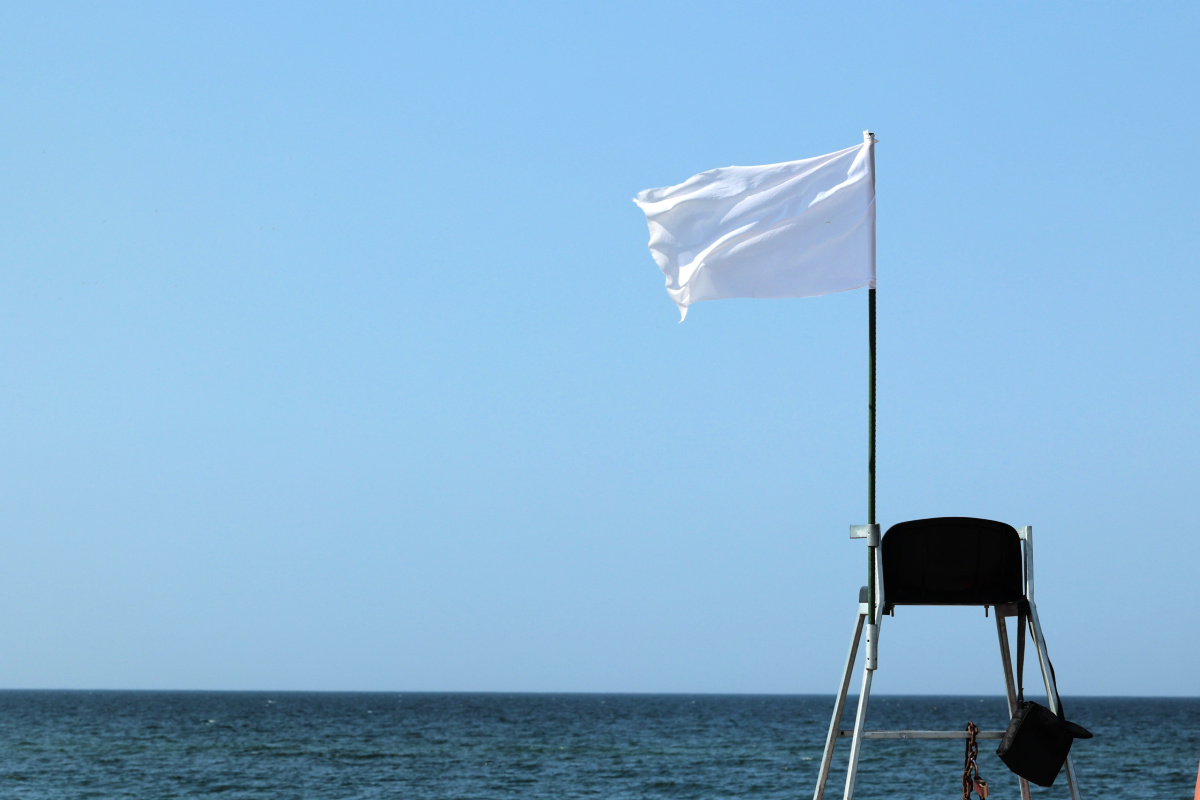
What Does the White Flag Mean?
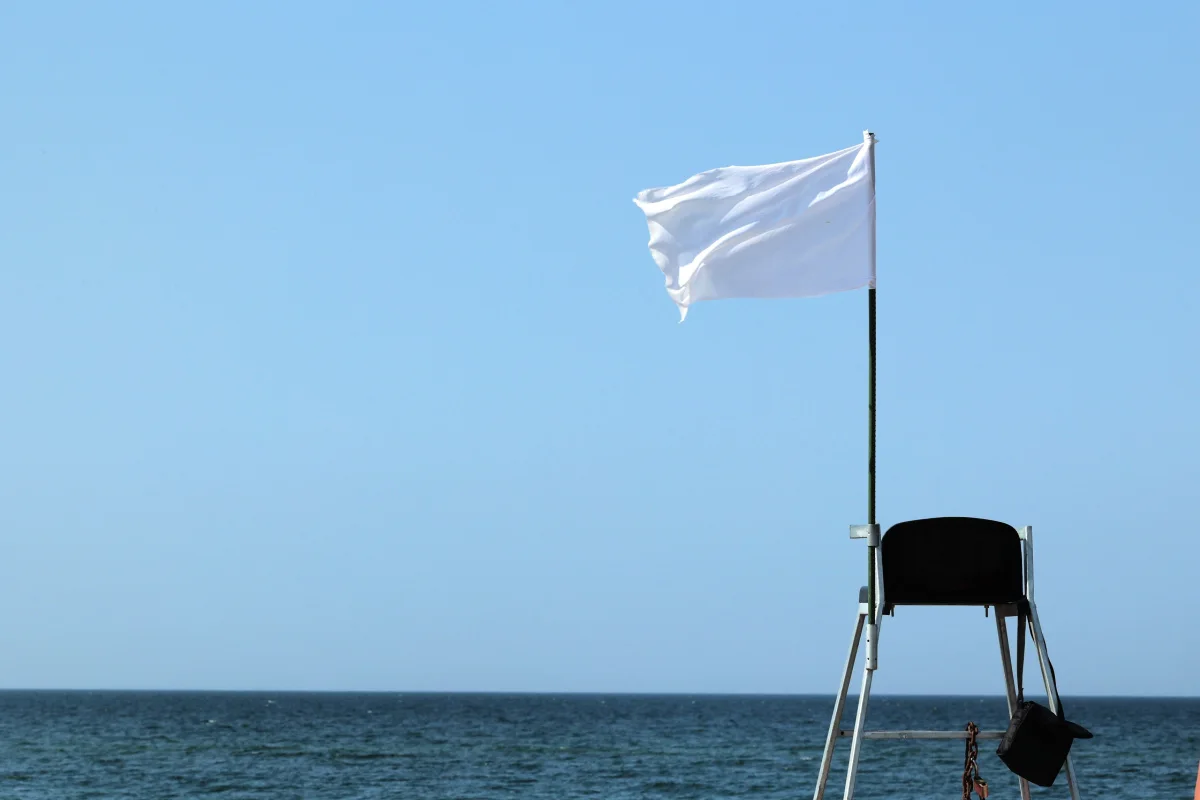
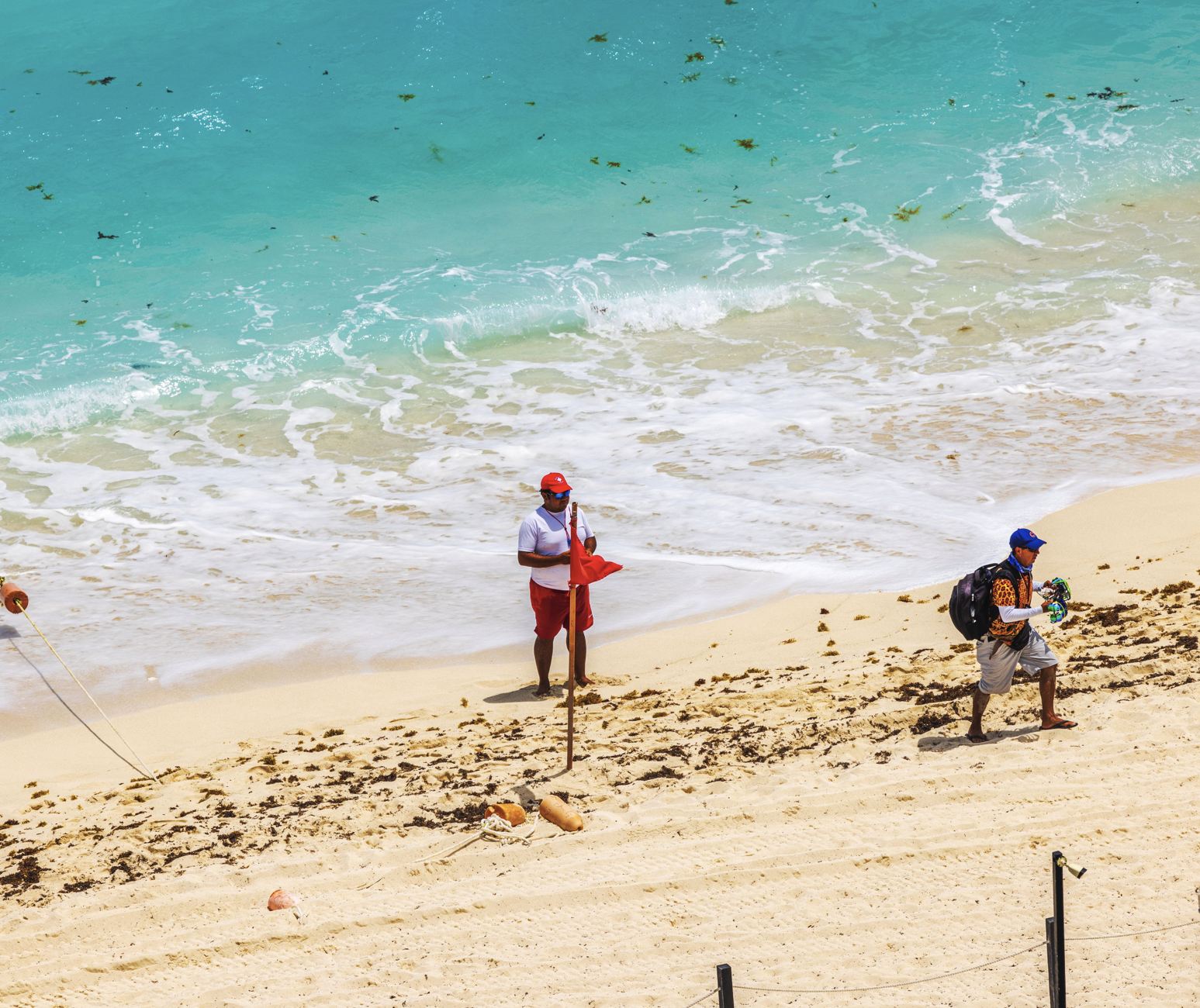
A white flag on the beach signals that dangerous marine life has been spotted either in the water or washed ashore.
This warning is separate from surf conditions, focusing solely on creatures that can sting or bite. While many white-flag alerts involve common jellyfish, more serious hazards like the Portuguese man-of-war have also been recorded by local authorities as recently as March 2025. Jellyfish stings occur when microscopic nematocysts fire venom into your skin, causing a painful rash and swelling that can last days if not treated properly.
Jellyfish blooms can be unpredictable and often spike in response to shifting currents and water temperatures. Authorities issue swimmer alerts throughout the season whenever large numbers of stinging creatures appear, so don’t assume calm surf means safe water just because the waves look friendly.
How to Stay Safe When You See a White Flag
Flags are updated hourly by lifeguards stationed along popular beaches—keep an eye on the flag at the lifeguard stand throughout your visit.
A white flag doesn’t mean you must pack up entirely, but you should adjust your beach plans to avoid painful encounters:
- Stay Out of the Water. Even if the surf looks calm, avoid swimming when a white flag is flying. Jellyfish and sea lice drift unpredictably with currents, and stings can be extremely painful, especially for children and first-time swimmers.
- Watch Your Step. Jellyfish and broken tentacles can wash ashore and continue to sting on the sand. Keep your sandals on when walking near the waterline and inspect the sand before sitting down.
- Use Protective Gear. If you still want to wade in shallow areas, wear a full-body rash guard or “stinger suit” to minimize skin exposure.
If you or someone you’re with gets stung, quick first aid can ease the pain and prevent complications:
- Rinse the area with seawater to remove tentacles gently—never use fresh water, which can trigger more nematocysts.
- Remove visible tentacles using tweezers or gloved hands; avoid rubbing, which can activate remaining nematocysts.
- Soak the sting in hot water (110–113 °F / 43–45 °C) for 20–45 minutes to neutralize venom and ease pain.
- Seek medical help if you experience difficulty breathing, chest pain, or allergic reactions such as hives or swelling.
Understanding the Full Flag System in Cancún & the Riviera Maya
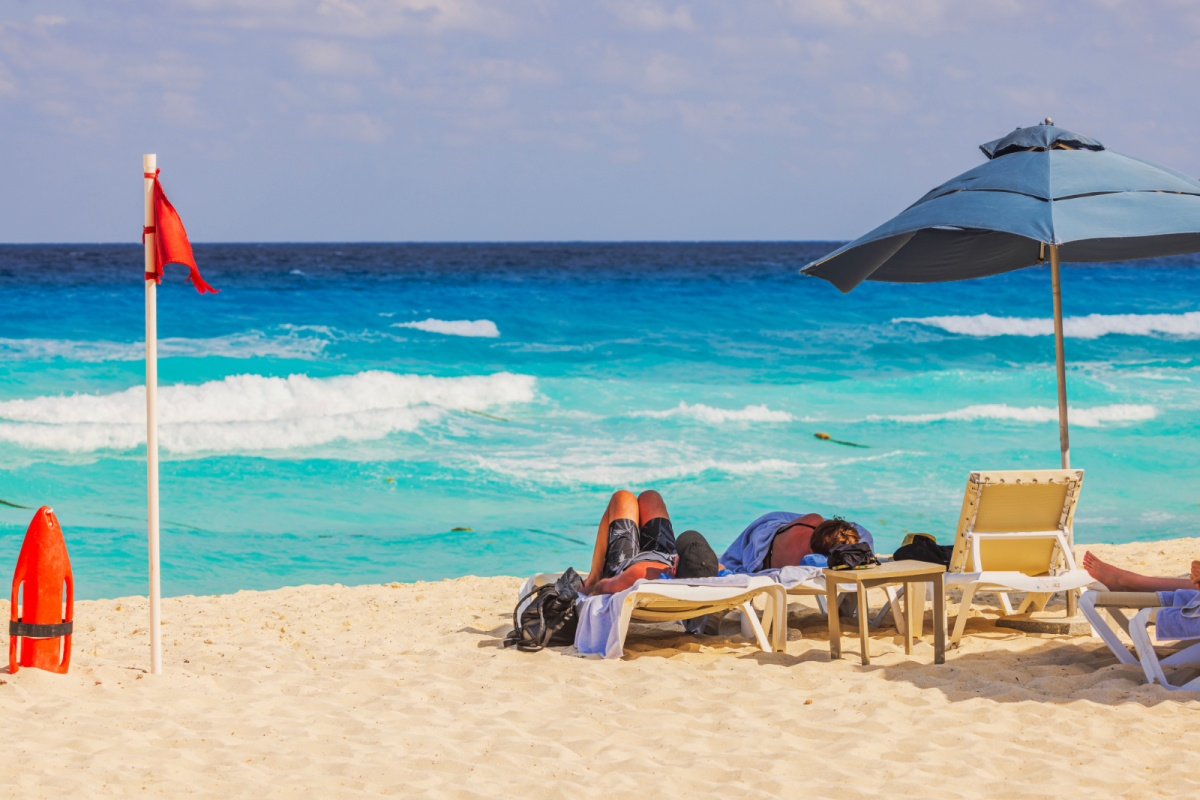
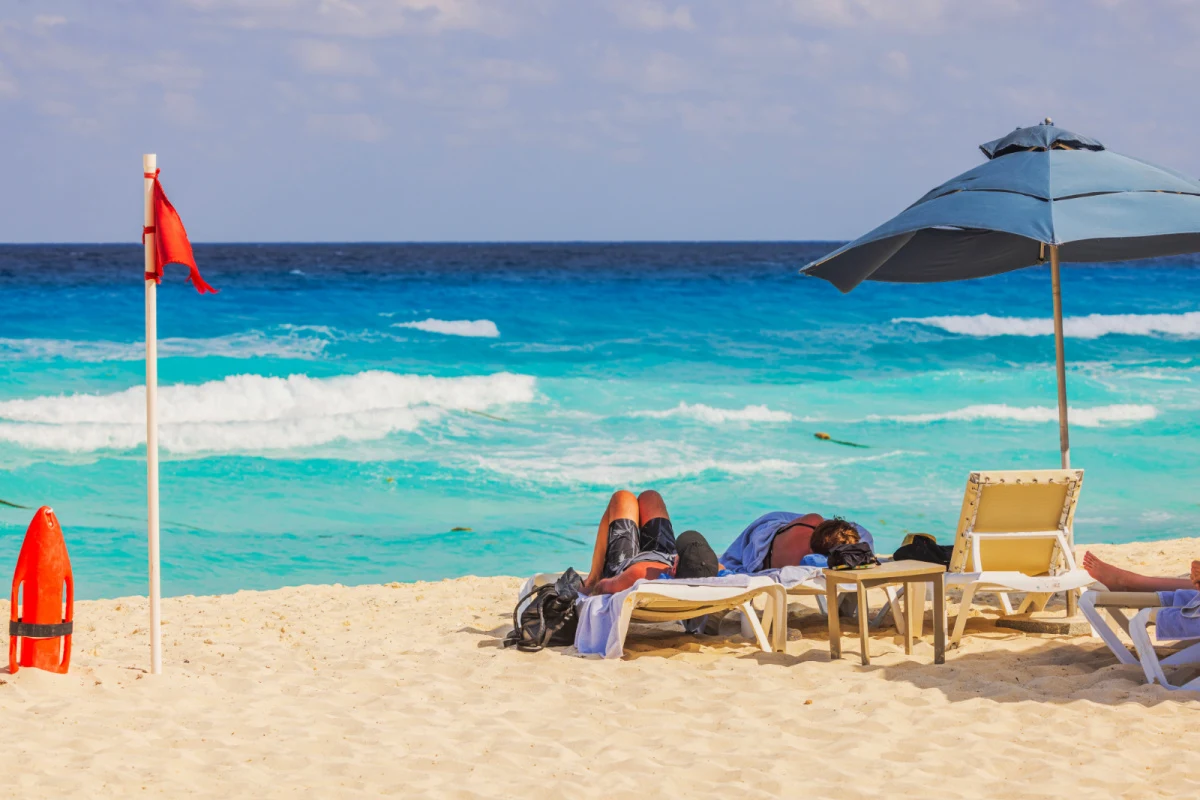
Beach flags use colors to signal current conditions—here’s what each color means in Cancún & the Riviera Maya. Unlike some U.S. systems that reserve purple flags for marine life, Cancún simplifies this by using white for any marine-life hazard:
- 🟢 Green Flag: Water conditions are safe for swimming.
- 🟡 Yellow Flag: Swim with caution; moderate surf or currents present.
- 🔴 Red Flag: Swimming is prohibited due to hazardous conditions.
- ⚫ Black Flag: Beach and water are closed—do not enter.
- ⚪ White Flag: Dangerous marine life (typically jellyfish or sea lice) has been spotted—entering the water is not recommended.
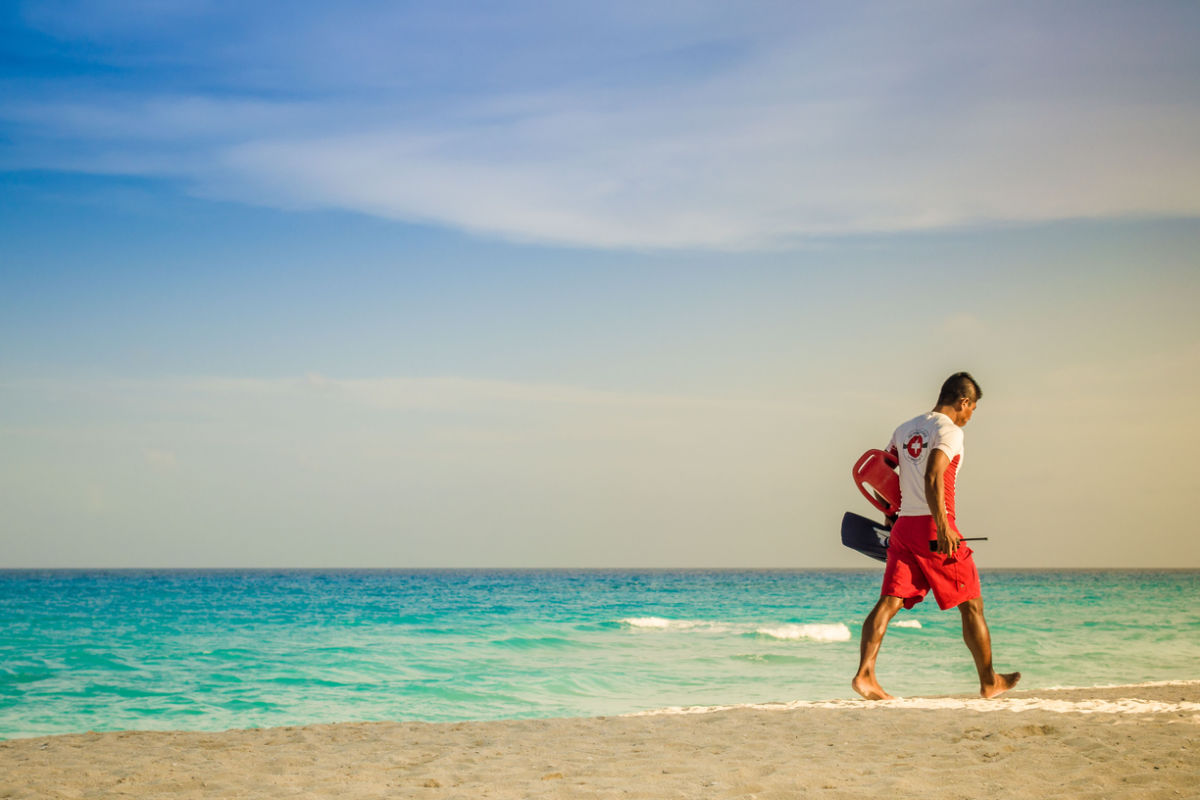
Cancún staffs lifeguards on all major beaches in the Hotel Zone—you’ll find flags at main entrances and near lifeguard towers.
If flags aren’t visible, ask a lifeguard or beach patrol before jumping in.
Beach Day Alternatives When the Water’s Off-Limits
When the white flag is flying, swimming may be off the table—but Cancún & the Riviera Maya still offer unforgettable experiences. Consider swapping your beach chair for one of these adventures:
- Cenote Exploration: Book a cenote tour to explore sinkholes like Dos Ojos or Cenote Azul—tours typically include gear, transportation, and guided entry.
- Visit a Magic Town: Take a day trip to Tulum Pueblo—a designated Pueblo Mágico since 2015—to explore Mayan ruins, vibrant street art, and local markets just 1.5–2 hours south of Cancún.
- Sargassum-Avoidance Tour: Instead of battling seaweed, join a customized cenote or offshore snorkeling tour designed to bypass sargassum blooms and showcase the region’s best reefs.
- Lagoon Kayaking: Explore Nichupté Lagoon by kayak or paddleboard—small-group tours run twice daily and let you spot wildlife like herons and baby crocodiles in protected mangrove channels.
Whether you’re diving into a cenote, paddling a tranquil lagoon, or wandering the colorful streets of Tulum Pueblo, you can still make the most of your Cancún & Riviera Maya getaway—minus the stings.
The Ultimate Cancun Trip Planner
When’s the best time to go? Our powerful month-by-month guide breaks down the weather, crowds, sargassum, and prices for your perfect trip.
Find Your Perfect Cancun & Riviera Maya Resort In Seconds
This simple, powerful tool was built by our on-the-ground experts to match you with the ideal resort for your specific budget and travel style.
Subscribe to our Latest Posts
Enter your email address to subscribe to The Cancun Sun’s latest breaking news affecting travelers, straight to your inbox.