
When you touch down at Cancun International Airport and step out into the tropical heat, there is only one thing on your mind: getting to your resort, changing into your swimsuit, and heading straight for that hypnotic, neon-turquoise water. The Mexican Caribbean looks like a desktop wallpaper come to life. The sand is cool and powdery underfoot, the water is warm, and from your balcony, the sea looks completely inviting.
That postcard appearance lures thousands of travelers into a false sense of security every single year.
The ocean along the Cancun Hotel Zone is as powerful as it is stunning. Hidden beneath those breathtaking shades of blue are deceptive rip currents, sudden drop-offs, and shifting tides that catch even Olympic-level swimmers off guard. There is one critical beach warning system that travelers routinely ignore, misunderstand, or brush off—and doing so can turn a dream vacation into a tragedy in a matter of seconds.
That warning system is the municipal beach flag network.
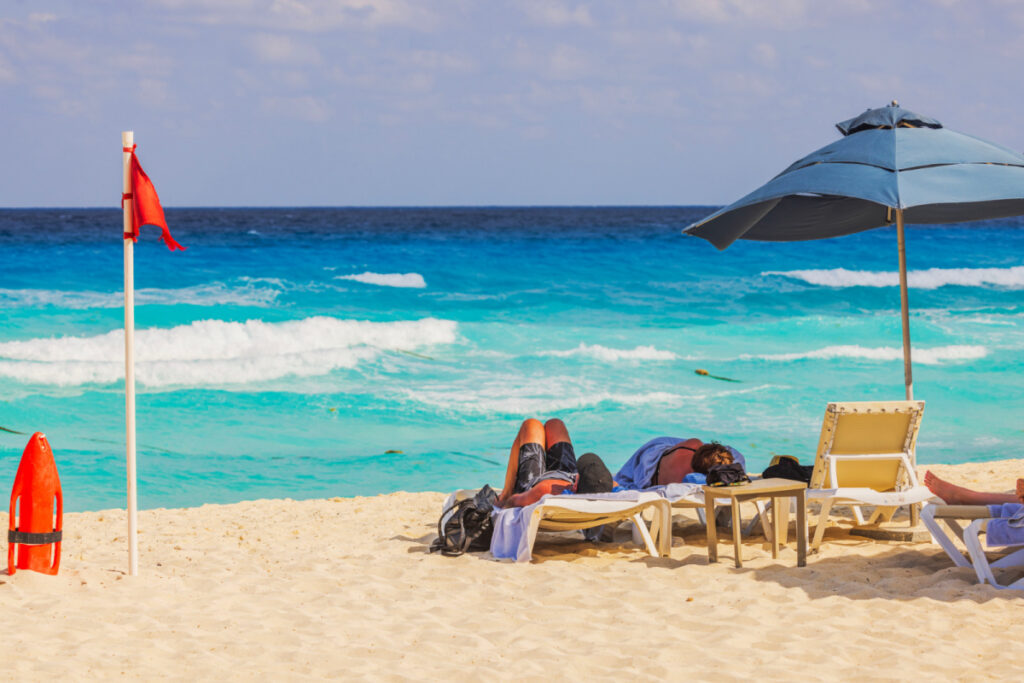
Understanding how lifeguards and civil protection authorities communicate ocean conditions is not just a polite recommendation. It is the single most important safety rule you need to respect every time your feet hit the sand.
The Geography of Cancun’s Coastline: The “7” Shape Matters
To understand why the beach flags exist, you first have to understand the geography of Cancun’s Hotel Zone. The island is shaped like the number “7,” connected to the mainland by two bridges across the Nichupté Lagoon.
The top, horizontal bar of the “7” faces north toward Isla Mujeres. Beaches located along this northern strip—such as Playa Las Perlas, Playa Linda, and Playa Tortugas—are naturally protected by the island. The water here is generally shallow, flat, and behaves almost like a massive swimming pool.
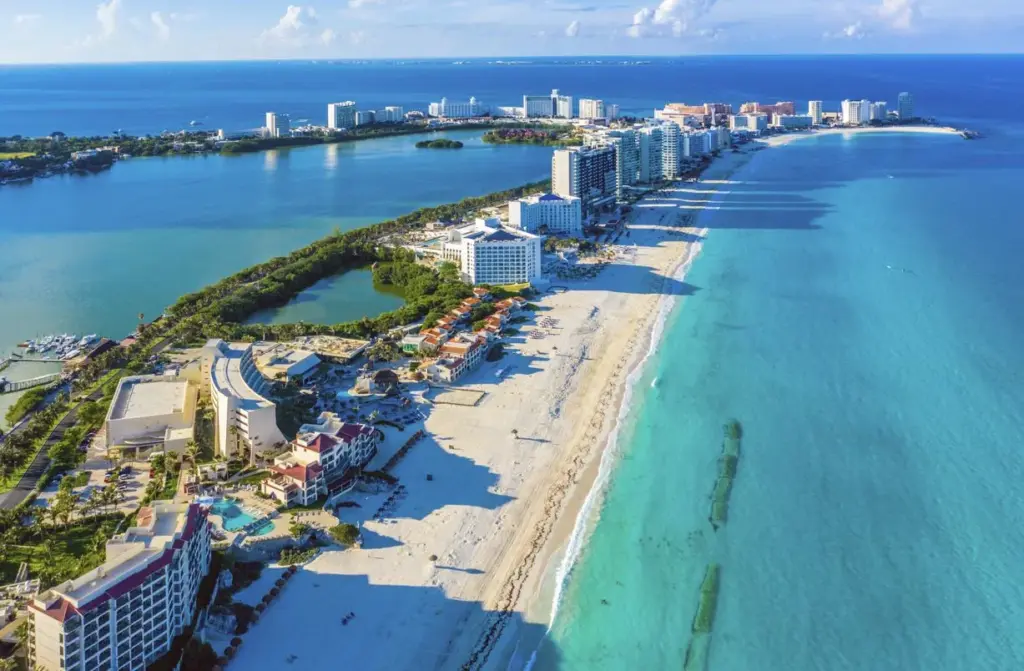
The long, vertical leg of the “7” faces directly east into the open Caribbean Sea. Beaches along this eastern stretch—including Playa Gaviota Azul, Playa Chac Mool, Playa Marlin, Playa Ballenas, and Playa Delfines—take the full, unbridled force of the open ocean.
Because there is no barrier reef or island to break the incoming swells, the waves break directly onto the shore, creating powerful undertows and invisible rip currents. What looks like a gentle rolling wave from your beach lounger often packs enough hydraulic power to sweep an adult off their feet in ankle-deep water.
Decoding the Flags: What Every Color Actually Means
Local lifeguards and Civil Protection officers monitor surf conditions throughout the day, adjusting the warning flags stationed along public beaches and in front of beachfront resorts. Ignoring these flags is the leading contributing factor in ocean rescues throughout Quintana Roo.
- 🟢 Green Flag (Low Hazard): Ocean conditions are safe and calm. Swimming is encouraged, though standard water awareness is still advised. You will see this flag far more often along the northern, protected shores than on the open-ocean eastern side.
- 🟡 Yellow Flag (Medium Hazard): Use caution. Moderate surf and currents are present. Strong swimmers can enter, but weak swimmers and children should stay close to the shore or out of the water entirely. If you step in, keep your feet firmly on the sand.
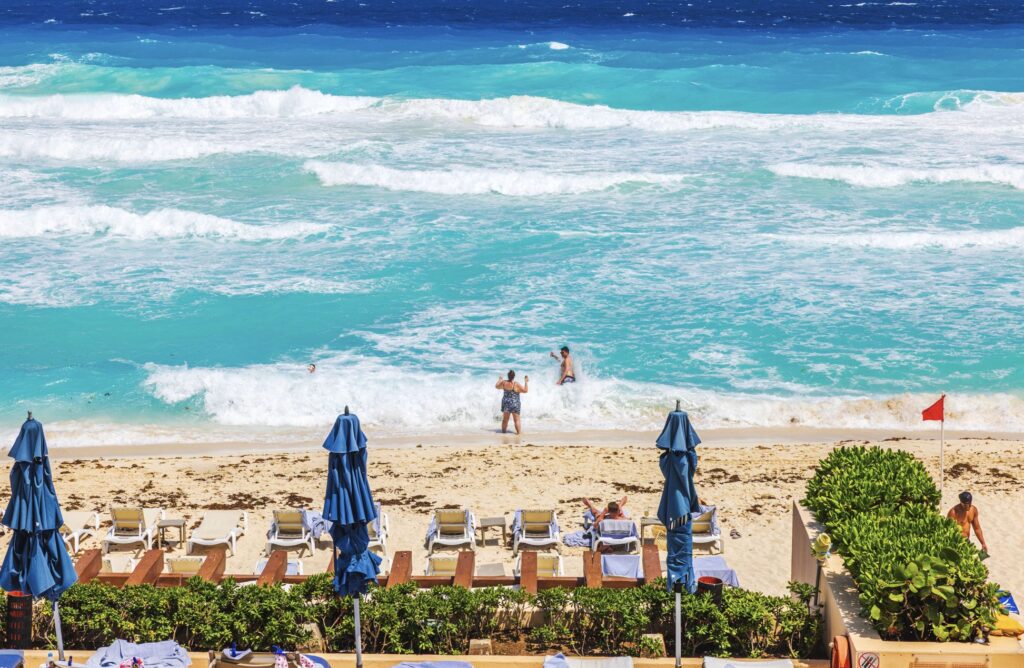
- 🔴 Red Flag (High Hazard): Severe danger. Strong waves and high-velocity rip currents are actively running. Swimming is strictly discouraged and often prohibited. When a red flag is posted, you should not venture past your knees—period.
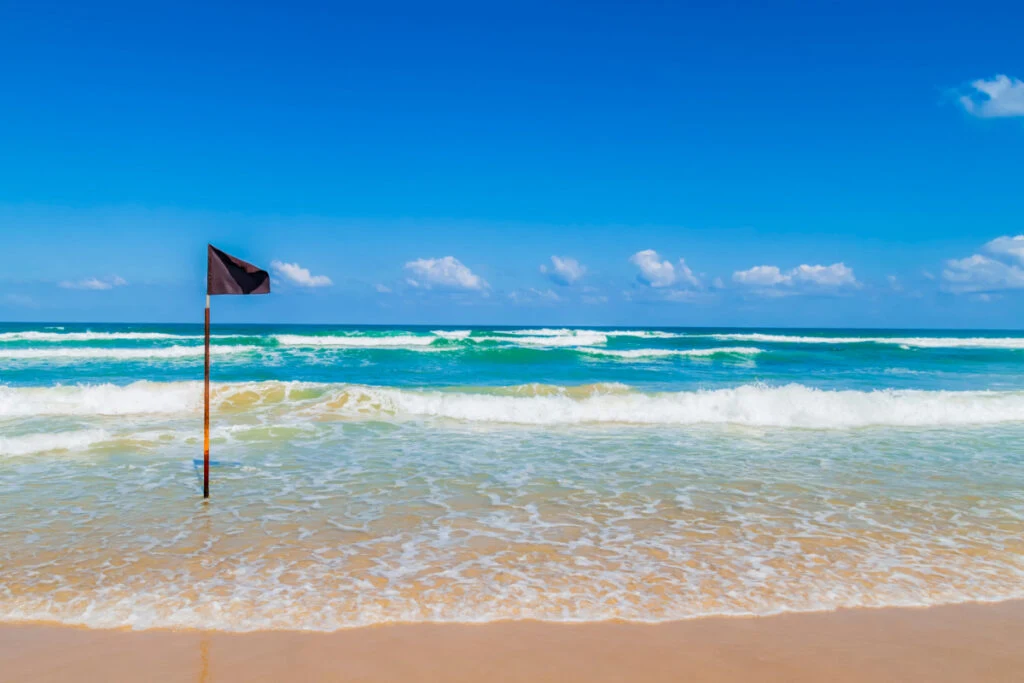
- ⚫ Black Flag (Extreme Hazard): The absolute highest warning level. The beach and water are completely closed. Conditions are life-threatening, and lifeguards may not be able to enter the water to assist you without risking their own lives. Entering the ocean under a black flag is reckless and prohibited by local authorities.
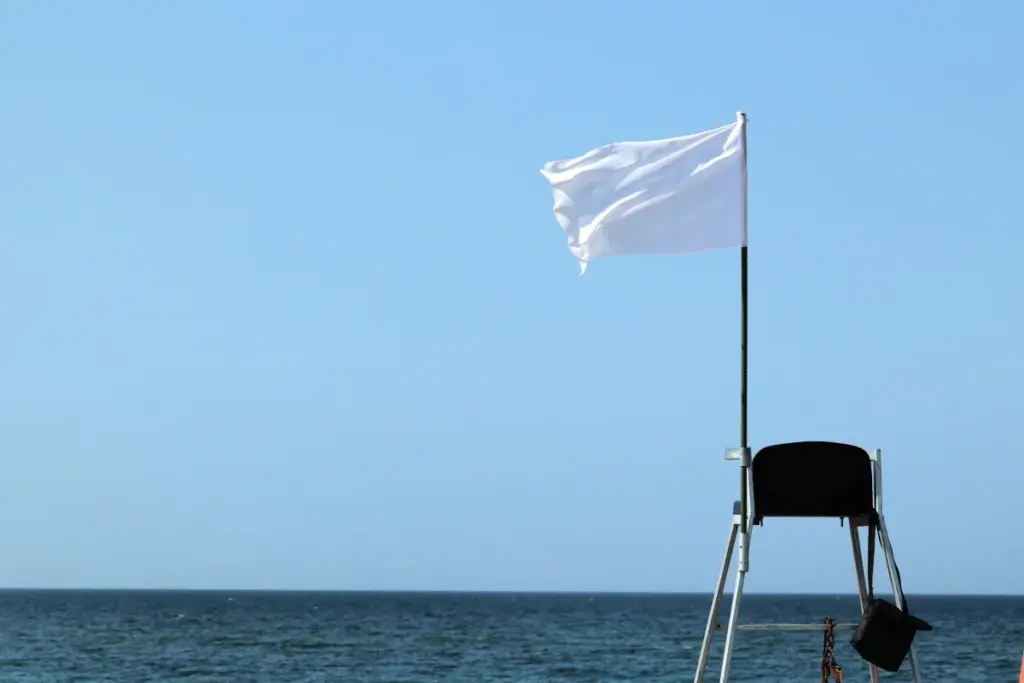
- ⚪ White Flag (Marine Hazard): Indicates the presence of dangerous marine fauna in the surf zone, most commonly jellyfish, Portuguese man-o’-war, or stingrays.

Why the Red and Black Flags Are Ignored
The biggest problem lifeguards face every season is traveler psychology. When vacationers drop thousands of dollars on an oceanfront suite, they feel entitled to swim in the sea. They look out at a red flag, see twenty other tourists wading waist-deep, and assume everything is fine.
“If other people are out there, how bad can it really be?”
The reality is that rip currents do not pull you under water; they pull you away from shore at speeds up to eight feet per second—faster than any Olympic sprinter can swim. When an unsuspecting swimmer gets swept out, panic sets in immediately. They exhaust themselves trying to fight the current straight back to the beach, run out of energy, and begin to submerge.
Compounding this danger is the resort party environment. Alcohol severely impairs judgment, slows reaction times, and drains stamina. Grabbing an all-inclusive cocktail and marching past a red flag into pounding surf is a recipe for disaster.
Rules for a Safe Beach Escape
You do not have to avoid the ocean entirely to stay safe—you simply need to treat the Caribbean Sea with the respect it commands.
- Check the Flag Before You Touch the Water: Do not assume yesterday’s calm conditions apply today. Wind, storms hundreds of miles away, and changing tides cause flags to change multiple times in a single afternoon.
- Swim Near an Active Lifeguard Tower: Official municipal lifeguards generally patrol between 9:00 AM and 5:00 PM. Never swim at dusk, at night, or when lifeguard towers are unmanned.
- Know the Rip Current Escape: If you find yourself being pulled out to sea, never fight the current directly toward shore. Stay calm, float on your back to conserve energy, and swim parallel to the shoreline until you break free of the pull, then angle back toward the sand.
- When in Doubt, Head North or Go to a Cenote: If your resort beach is flying a red or black flag, do not risk it. Take a quick cab up to the calmer northern beaches like Playa Las Perlas, hop on the ferry to Playa Norte on Isla Mujeres, or head inland to spend the afternoon swimming in a freshwater cenote.
Safe To Swim
Ocean conditions are calm and clear. Swimming is highly encouraged, though standard water awareness is still advised on the protected northern shores.
Use Caution
Swimming is permitted but requires elevated care. Moderate surf is present, so keep weak swimmers and children out of the deeper water.
Extreme Danger
Water conditions are actively hazardous due to strong waves and severe rip currents. Swimming is strictly discouraged and often prohibited.
Beach Closed
The absolute highest level of danger. The beach is completely closed due to life threatening conditions. Do not enter the water under any circumstances.
Marine Warning
Alerts beachgoers to the presence of dangerous marine life in the surf zone, such as sudden jellyfish blooms, stingrays, or a Portuguese man o war.
The turquoise waters of Cancun are world-class, but the ocean always wins. Read the flags, respect the warnings, and make sure you head home with great memories instead of a close call.
Join Our Cancun Sun Community of 16,000+ Members
Get real-time answers to your travel questions from our team of local experts and thousands of fellow travelers directly inside our interactive group.
Find Your Perfect Cancun & Riviera Maya Resort In Seconds
This simple, powerful tool was built by our on-the-ground experts to match you with the ideal resort for your specific budget and travel style.
The Ultimate Cancun Trip Planner
When’s the best time to go? Our powerful month-by-month guide breaks down the weather, crowds, sargassum, and prices for your perfect trip.
Enter your email address to subscribe to The Cancun Sun’s latest breaking news affecting travelers, straight to your inbox.