
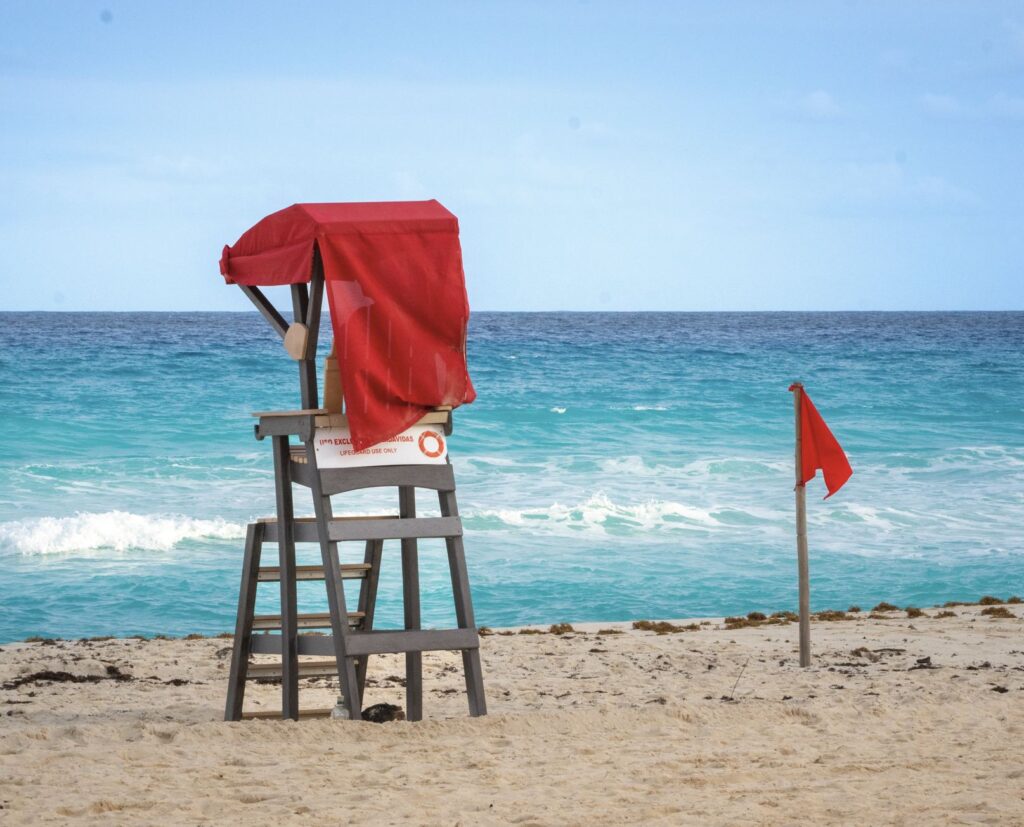
The red flag is the most misunderstood warning sign on a Mexican Caribbean vacation.
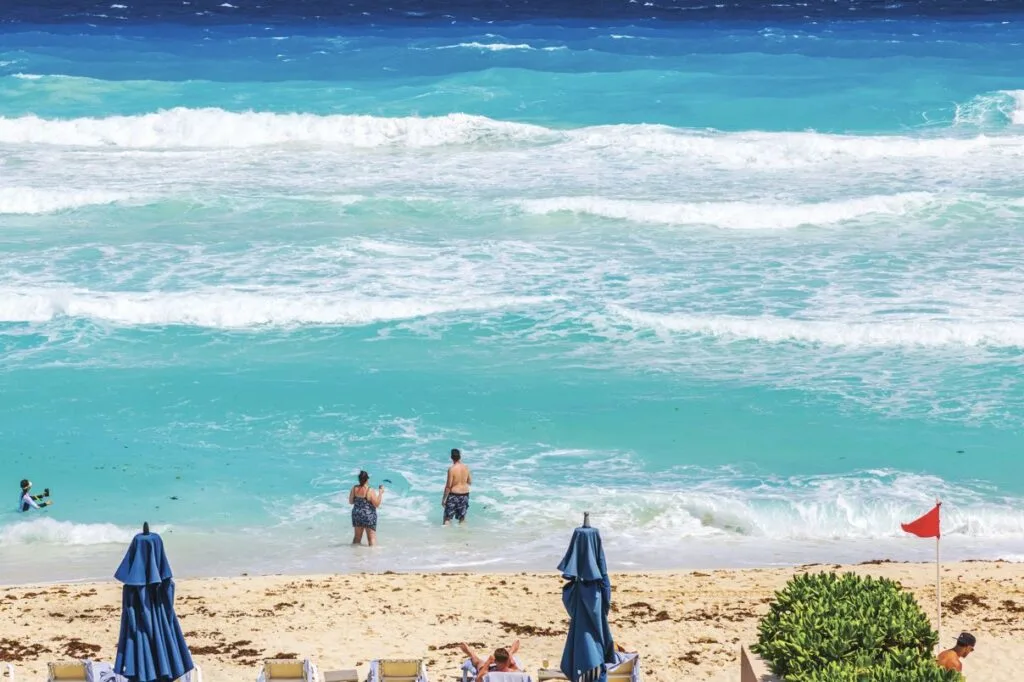
Most tourists assume a red flag means the water is closed for swimming. But if you are standing on the sand in Cancun, Playa del Carmen, or Tulum during the winter months, you will likely see a red flag flying while dozens of people are still in the water.
So, what is the actual rule? Are those tourists breaking the law, or is it safe to swim? Here is the boots-on-the-ground reality of how the flag system works, and why you cannot afford to ignore it.

The Reality Of The Red Flag
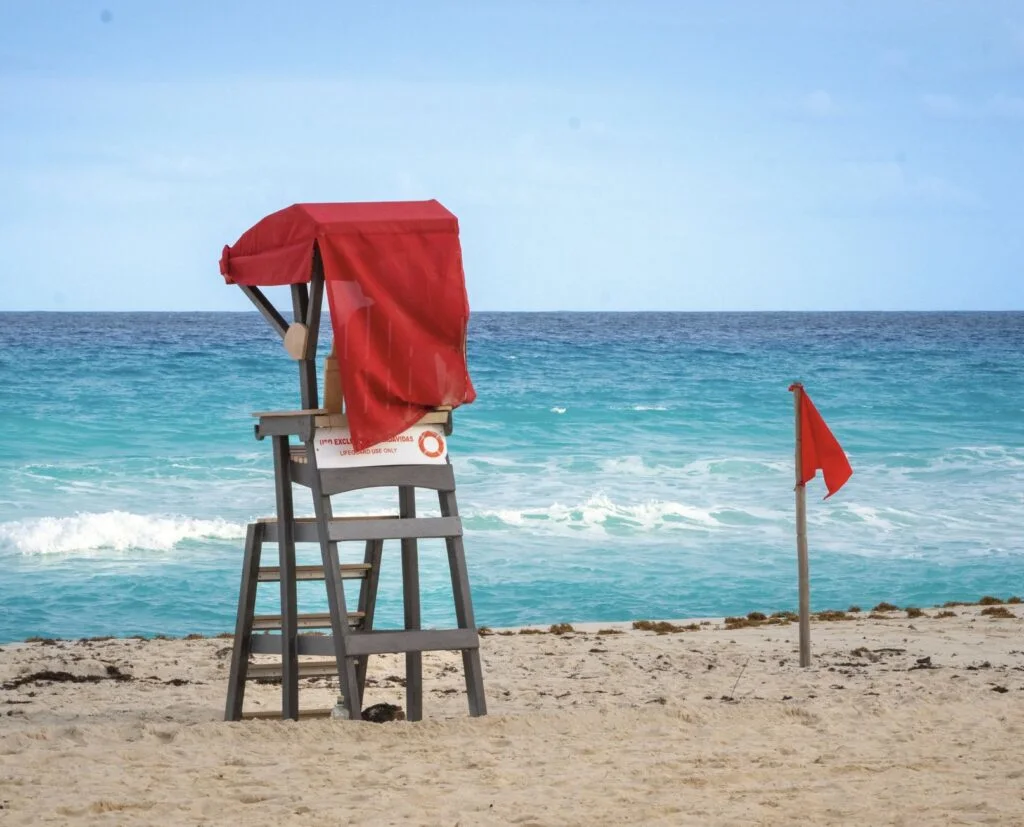
In the Riviera Maya, a red flag does not mean the ocean is closed. It signifies extreme caution.
It is a direct warning from local authorities that the current ocean conditions—such as severe undertows, aggressive shore breaks, or high surf—are highly volatile. During the winter season (December through March), frequent weather fronts known as “Nortes” push down from the north, whipping up strong coastal winds and creating a choppy, unpredictable ocean. This makes the red flag a daily fixture.
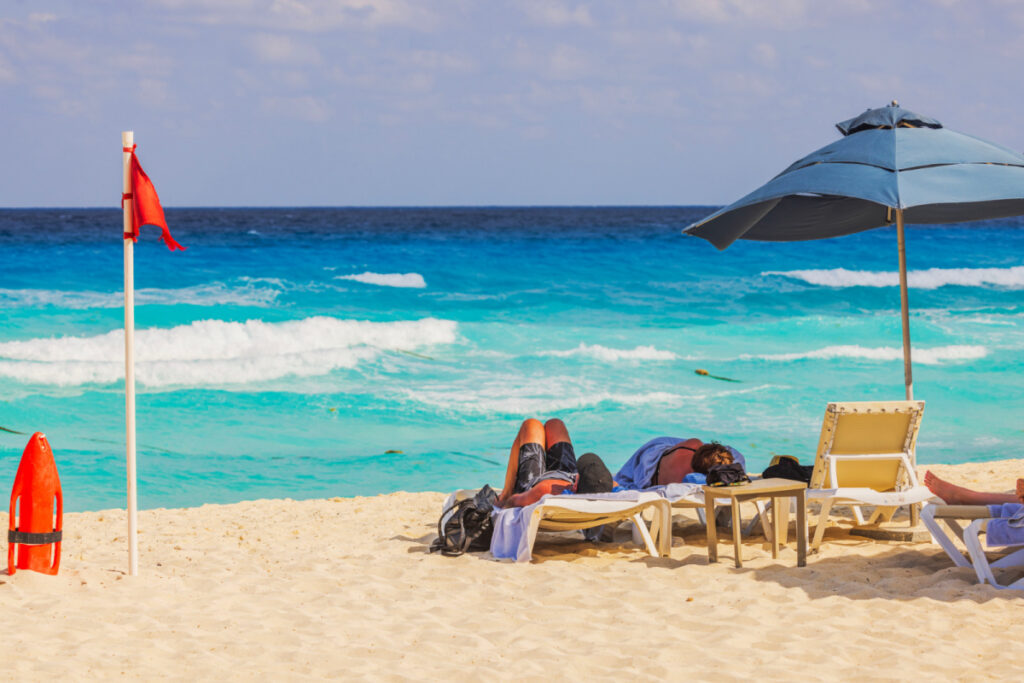
Because it is not an outright prohibition, you are technically allowed to enter the water. The decision is left entirely to your own assessment of your swimming skills. When you hear a lifeguard blow their whistle on a red flag day, they are not ordering the entire beach to evacuate. They are targeting specific swimmers who have waded out past the safe break line and are putting themselves in an unmanageable position.
A Firsthand Lesson In Shore Breaks
You do not want to learn this lesson the hard way. My wife and I found out firsthand that a Cancun red flag is no joke.

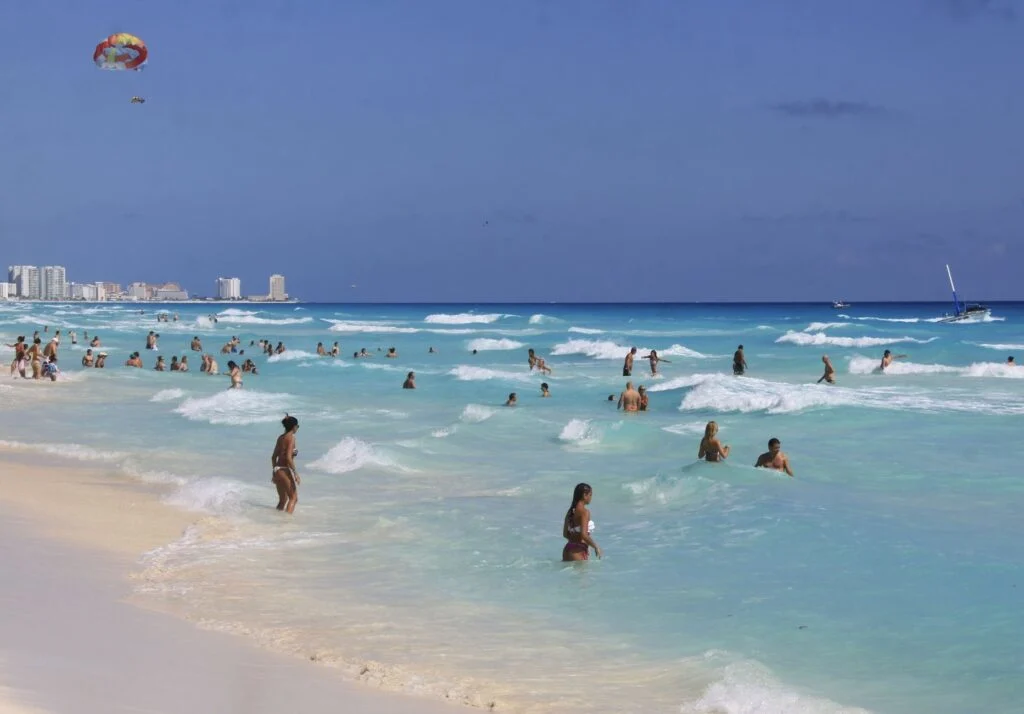
We waded into what looked like a manageable section of the ocean, completely underestimating the sheer physical power of the waves churning near the shore break. Within seconds, a massive surge and the resulting undertow knocked us completely off our feet.
It was an instantaneous reminder of how fast you lose control in the surf. We immediately packed up and moved to a calmer area of the beach. As we left, we watched other overly confident tourists wading out much further than we had, completely ignoring the conditions until the lifeguard aggressively whistled them back. Technically, you can swim under a red flag, but it is incredibly dangerous. The ocean does not care about your vacation itinerary.
The Complete Cancun Flag System
How To Spot The Danger And Where To Go Instead
If you do decide to wade into the surf on a red flag day, you must know how to identify a rip current before you get wet. These powerful, narrow channels of water pull directly away from the beach, and they are the primary reason lifeguards hoist the red fabric. Before stepping off the sand, scan the ocean. Look for a break in the incoming wave pattern, a localized area of churning or discolored water, or a line of seafoam moving rapidly seaward.
If you get caught in one, the absolute worst thing you can do is panic and try to swim straight back toward your towel. The ocean will exhaust you and win that fight every single time. Instead, you must float, stay calm, and swim strictly parallel to the shore until you break free of the current’s pull, then angle your way back to the beach.
The Ultimate Cancun Trip Planner
When’s the best time to go? Our powerful month-by-month guide breaks down the weather, crowds, sargassum, and prices for your perfect trip.
Find Your Perfect Cancun & Riviera Maya Resort In Seconds
This simple, powerful tool was built by our on-the-ground experts to match you with the ideal resort for your specific budget and travel style.
Subscribe to our Latest Posts
Enter your email address to subscribe to The Cancun Sun’s latest breaking news affecting travelers, straight to your inbox.