
If you have spent any time researching a vacation to the Mexican Caribbean over the last few years, you are undoubtedly familiar with the region’s most persistent environmental nemesis: sargassum.
Historically, this foul-smelling, brown macroalgae has been strictly a summertime problem. Travelers have long operated under the assumption that once the autumn winds arrive, the seaweed vanishes, leaving the beaches of Cancun, Playa del Carmen, and Tulum perfectly pristine for the peak winter travel season. However, this year, Mother Nature is refusing to play by the traditional seasonal rules.
In a highly unusual move for this time of year, the Mexican Navy (SEMAR) has just issued a sobering forecast. Authorities are officially bracing for a significant, unseasonal influx of sargassum aimed directly at the Quintana Roo coastline just as the December holiday rush begins.
Here is exactly what the Mexican Navy is doing to intercept the seaweed, the staggering record-breaking numbers from this year, and how you can strategically plan your winter vacation to avoid the mess.

A Record-Breaking Year for Seaweed
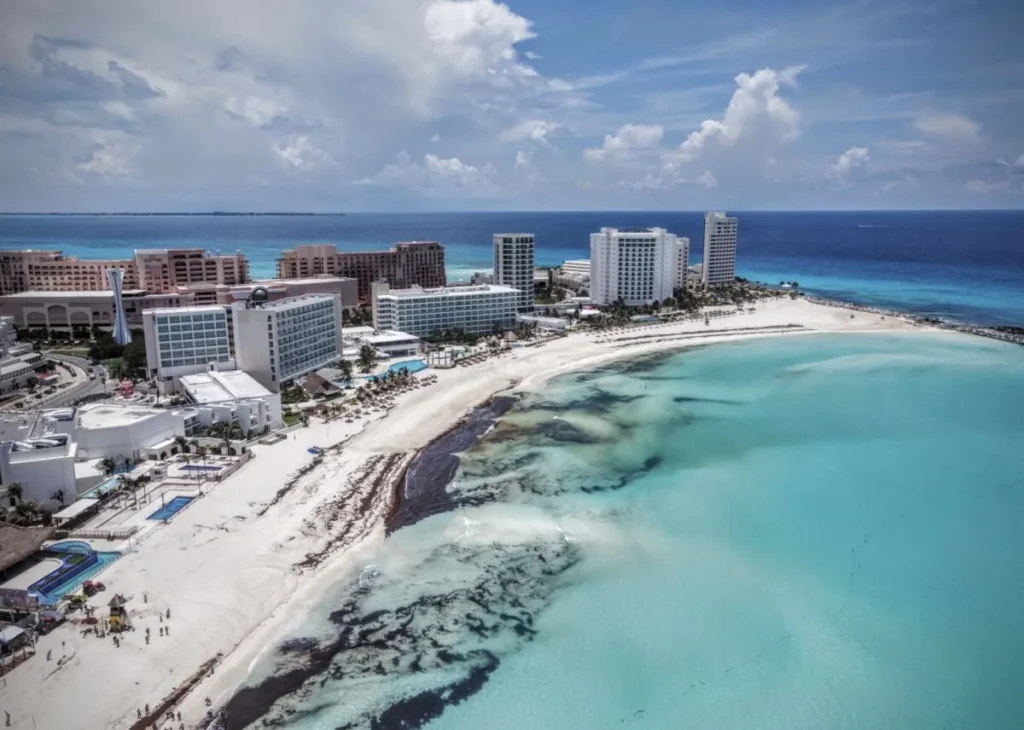
To understand why the Navy is on such high alert heading into the winter holidays, you have to look at the sheer volume of macroalgae that has already bombarded the state this year.
According to the latest naval reports, Quintana Roo has already exceeded a staggering 156,600 tons of sargassum collected from its coastlines in 2026. To put that into perspective, the Mexican Navy alone was responsible for manually and mechanically hauling away more than 70,230 tons of that total. That single figure represents almost four times the 18,500 tons the agency removed during the entirety of 2015.
The ecosystem is clearly shifting, and the volume of sargassum multiplying in the Atlantic Ocean is reaching unprecedented levels. Because the seaweed continues to heavily accumulate offshore, naval monitoring systems are now forecasting a significant wave of algae to wash ashore toward the end of December. This presents a massive logistical challenge for local municipalities right as hotel occupancies are expected to hit 100 percent for Christmas and New Year’s Eve.
The Naval Armada Fighting the Tide
The fight against sargassum is no longer just left to hotel workers with pitchforks and wheelbarrows.
The Mexican government is treating this environmental phenomenon as a full-scale coastal invasion, deploying heavy naval assets to protect the region’s multi-billion-dollar tourism economy.
To contain the impending winter advance, the naval strategy is relying on a massive offshore fleet. SEMAR has officially deployed 11 specialized coastal sargassum collection vessels, one massive ocean-going ship, three amphibious ships, and 18 smaller rapid-response boats.
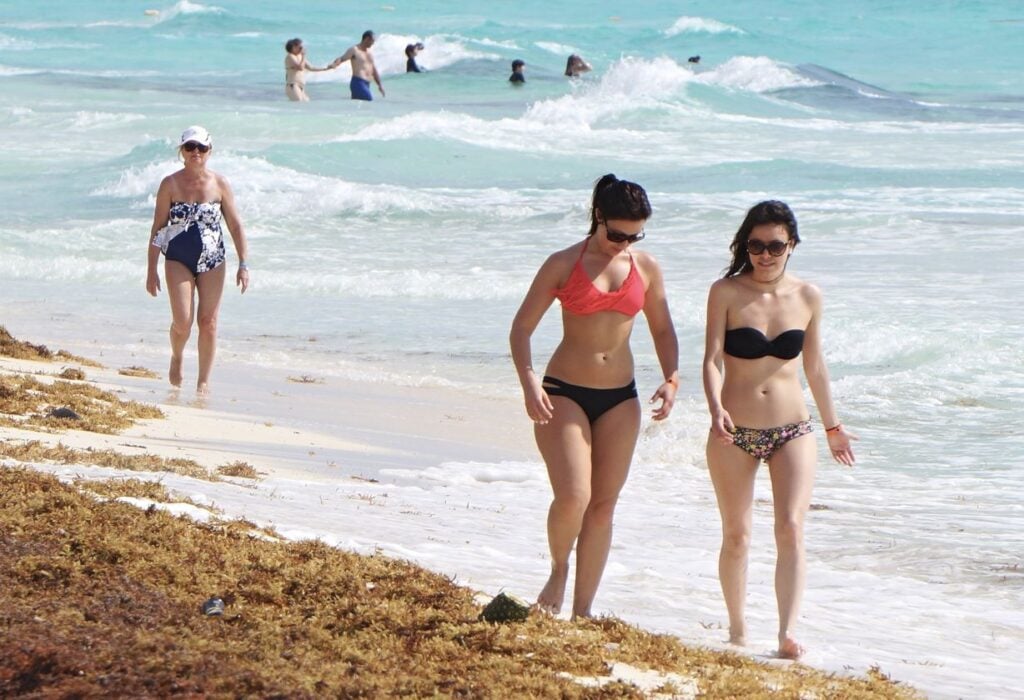
Before the seaweed even has a chance to reach the resorts, the Navy is attempting to intercept it at sea. They have installed a staggering 13,560 meters (over 8.4 miles) of specialized floating containment barriers just off the coastline. The entire operation is guided by advanced satellite monitoring, which tracks massive sargassum blooms in real-time, allowing ship captains to anticipate the algae’s movement and position their collection vessels perfectly to intercept it.
When the seaweed does manage to breach the barriers, the military steps in on land. The Navy has deployed specialized Emergency Collection Groups consisting of 191 active naval personnel who work alongside local municipal crews to mechanically and manually clear the sand before tourists wake up for their morning beach walks.

Boots-On-The-Ground Travel Tactics
If you have already booked your flights to the Mexican Caribbean for December, do not panic and cancel your trip. A sargassum alert does not mean the entire state will be unswimmable; it just means you need to be a smarter traveler. If the winter seaweed surge materializes, utilize these geographical travel hacks:
- Head to the Islands: Sargassum is driven by ocean currents that slam directly into the east-facing mainland coast. Because of this, the western-facing shores of nearby islands are almost always perfectly clear. If Cancun is covered in seaweed, jump on the ferry to Isla Mujeres and head to Playa Norte. If Playa del Carmen is overrun, take the ferry across to the sheltered western beaches of Cozumel.
- Pivot to the Cenotes: Quintana Roo is home to thousands of spectacular underground freshwater sinkholes called cenotes. They are completely landlocked and 100 percent immune to sargassum. If your resort beach is looking rough, hire a driver for the day and explore the crystal-clear waters of the Ruta de los Cenotes near Puerto Morelos.
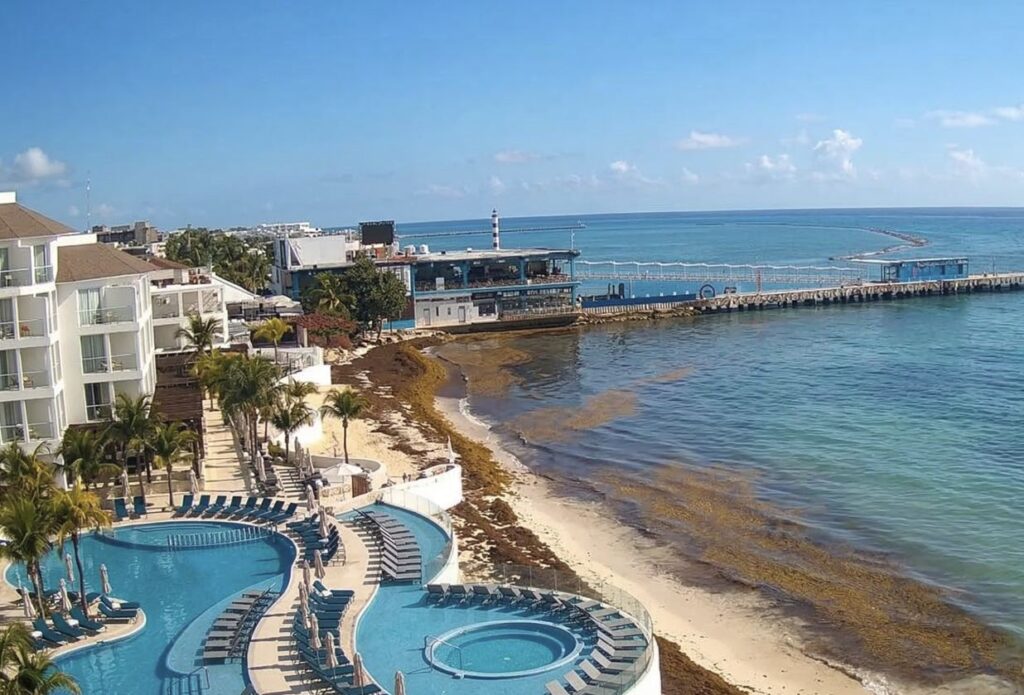
- Check the Webcams: Sargassum does not hit the coastline evenly. Tulum might be drowning in it while the Cancun Hotel Zone remains perfectly clear. Before you leave your hotel for a beach day, check local live webcams or dedicated sargassum tracking groups on Facebook to see exactly which beaches are clean that morning.
The Mexican Navy is doing everything in its immense power to keep the beaches pristine for the holiday season. By packing a flexible itinerary and utilizing the islands, you can guarantee a flawless winter vacation regardless of what washes ashore.
Winter Influx Expected
The Mexican Navy issued a sobering forecast bracing for a significant sargassum wave hitting the coastline just as the December holiday rush begins.
156k Tons Collected
Quintana Roo exceeded 156,600 tons of macroalgae in 2026, creating massive logistical challenges as hotel occupancies hit 100 percent.
8 Miles of Barriers
SEMAR deployed 11 collection vessels, rapid-response boats, and over 8.4 miles of floating barriers to intercept seaweed before it reaches resorts.
Head to the Islands
Ocean currents slam the east coast, making the western shores of nearby islands like Isla Mujeres and Cozumel almost always perfectly clear.
Pivot to the Cenotes
Explore landlocked underground freshwater sinkholes along the Ruta de los Cenotes which remain completely unaffected by ocean seaweed.
Join Our Cancun Sun Community of 16,000+ Members
Get real-time answers to your travel questions from our team of local experts and thousands of fellow travelers directly inside our interactive group.
Find Your Perfect Cancun & Riviera Maya Resort In Seconds
This simple, powerful tool was built by our on-the-ground experts to match you with the ideal resort for your specific budget and travel style.
The Ultimate Cancun Trip Planner
When’s the best time to go? Our powerful month-by-month guide breaks down the weather, crowds, sargassum, and prices for your perfect trip.
Enter your email address to subscribe to The Cancun Sun’s latest breaking news affecting travelers, straight to your inbox.