
If you are finalizing your winter vacation plans for the Mexican Caribbean, the most anxiety-inducing wildcard is always the same: sargassum. Nobody wants to spend their hard-earned travel budget on a luxury beachfront resort only to arrive and find the shoreline completely choked by foul-smelling brown macroalgae.
Fortunately, as the region prepares for the massive influx of fall and winter travelers, Mother Nature is currently cooperating. The state has released its latest coastal monitoring data, and the results are incredibly promising for tourists arriving this month. The Mexican Caribbean is officially kicking off the high season with the vast majority of its most popular beaches categorized as completely clean or experiencing very low levels of seaweed.
Here is a breakdown of exactly where you can find the clearest water right now, which areas are still battling the algae, and how to track the changing conditions during your trip.
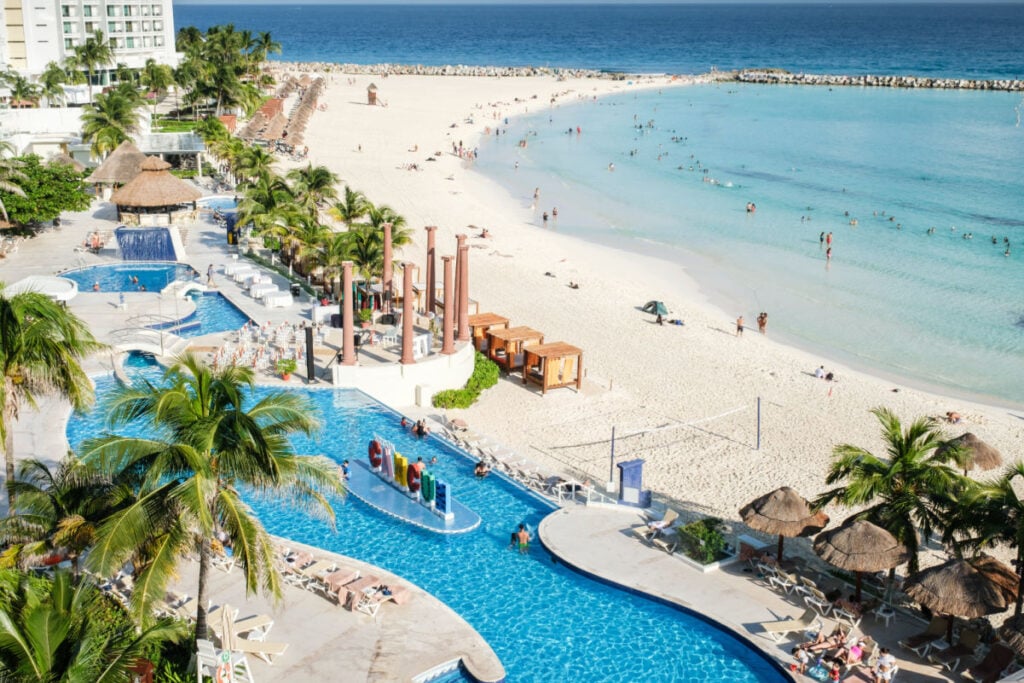
The Northern Coast is Wide Open
The environmental authorities and coastal monitoring committees actively track conditions across 140 distinct beach areas—100 in the northern half of the state and 40 in the south. Right now, 85 of those beaches are flashing a “green light,” meaning they offer optimal tourist conditions with minimal to zero sargassum present.
If your flight is landing at Cancun International Airport, you are in the best possible position. The entire northern region of Quintana Roo is boasting spectacular conditions. The idyllic islands of Holbox (specifically the ferry area) and Isla Contoy are reporting absolutely zero sargassum.
Moving down the mainland coast, an extensive, pristine strip covers Punta Mosquito, Chiquilá, Isla Blanca, and Costa Mujeres. Inside the famous Cancun Hotel Zone, travelers can expect perfectly clear shores at major public hotspots, including Playa Las Perlas, Playa Tortugas, and the iconic Playa Delfines. The favorable conditions also extend further south through key stretches of Puerto Morelos, the Riviera Maya, Tulum, and across the water to Cozumel.


Mixed Results in the South
While the north is largely clear, the southern half of the Mexican Caribbean requires a bit more strategic planning. Because of the way deep-ocean currents push the macroalgae toward the coast, the southern beaches often act as a massive net, catching the brunt of the sargassum before it can drift north.
There are still pristine pockets to be found. Two highly popular southern beaches—Mahahual Norte and Banco Chinchorro Norte—are currently completely free of seaweed. Just down the coast, Mahahual Blue Kay, Mahahual Pargo, and the main stretch of Playa Mahahual are registering very low levels, making them excellent options for travelers exploring the Costa Maya region.

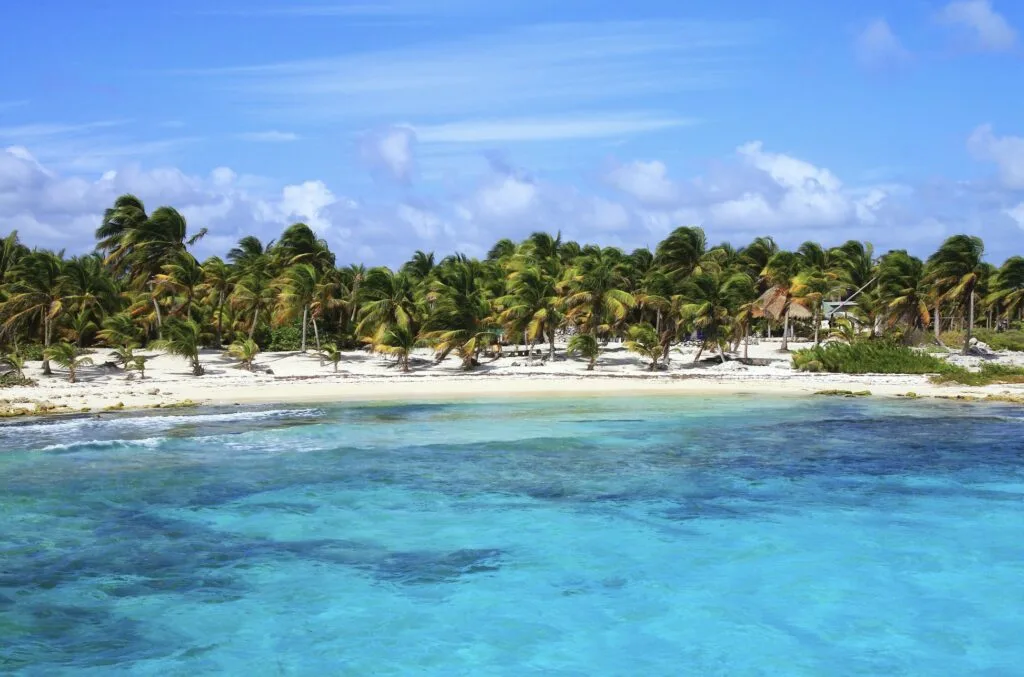
However, the latest technical reports warn that a few specific southern sectors are still battling heavy accumulations. Sixteen beach areas are currently registering “abundant” concentrations, and nine have triggered a “red light” for excessive sargassum. These heavily impacted zones are concentrated around Xcalak, Río Huache, and the Canal de Zaragoza. In these specific red zones, emergency cleaning brigades are maintaining intensive, daily containment operations to haul the organic material off the sand.
Boots-On-The-Ground Travel Tactics
The ocean is a dynamic environment, and a sudden shift in wind direction or an incoming cold front can push an offshore sargassum bloom onto the beach overnight.
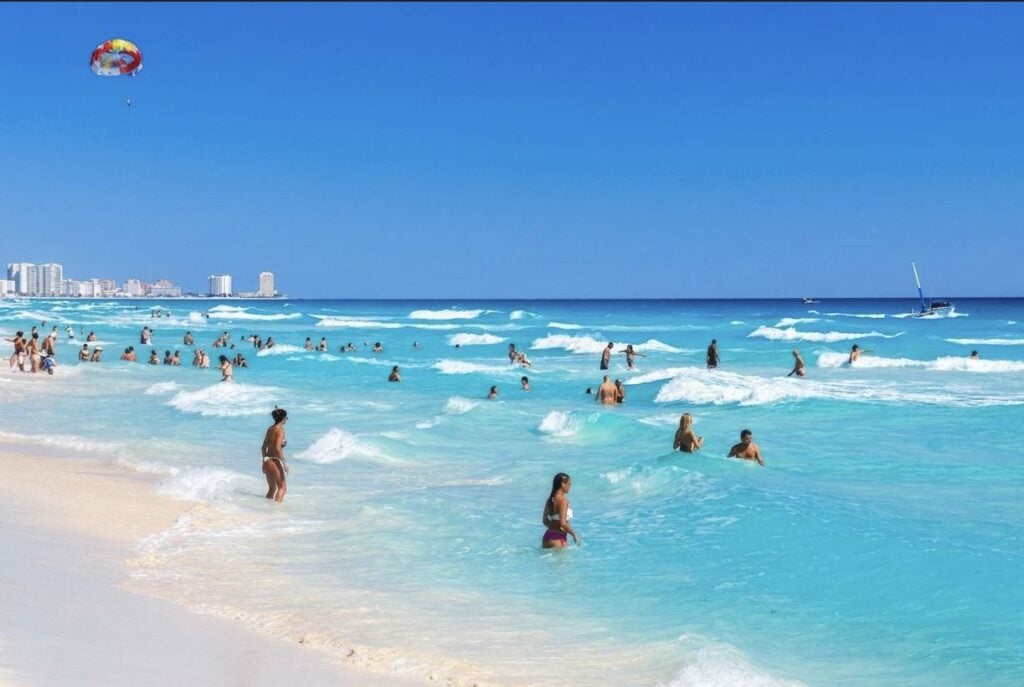
To completely optimize your tourist experience and avoid a ruined beach day, you must treat sargassum tracking the same way you treat the weather forecast. Environmental authorities urge all visitors and local tour providers to consult the official Sargassum Traffic Light Map daily before planning aquatic activities.
If you wake up and your resort beach is suddenly experiencing a heavy influx, pivot your itinerary. Book a catamaran trip to Isla Mujeres, explore the inland freshwater cenotes that are 100 percent immune to seaweed, or head to the western-facing beaches of Cozumel. With 85 beaches currently in the green, finding a spectacular stretch of sand this winter just requires a quick check of the daily map.
Eighty-Five Green Beaches
Eighty-five out of 140 monitored beaches display a green light with minimal to zero sargassum, including Holbox and Isla Contoy.
Pristine Public Hotspots
Travelers can expect perfectly clear water at Playa Las Perlas, Playa Tortugas, Playa Delfines, and across Puerto Morelos and Tulum.
Strategic Planning Needed
Southern beaches catch the brunt of incoming macroalgae, though pristine pockets like Mahahual Norte remain completely free of seaweed.
Red Light Zones
Sixteen sectors show abundant seaweed and nine triggered a red light around Xcalak and Rio Huache, where crews haul organic material daily.
Daily Tracking Tactics
Treat sargassum like the weather forecast by checking the official daily traffic light map and visiting inland cenotes if winds shift.
Join Our Cancun Sun Community of 16,000+ Members
Get real-time answers to your travel questions from our team of local experts and thousands of fellow travelers directly inside our interactive group.
Find Your Perfect Cancun & Riviera Maya Resort In Seconds
This simple, powerful tool was built by our on-the-ground experts to match you with the ideal resort for your specific budget and travel style.
The Ultimate Cancun Trip Planner
When’s the best time to go? Our powerful month-by-month guide breaks down the weather, crowds, sargassum, and prices for your perfect trip.
Enter your email address to subscribe to The Cancun Sun’s latest breaking news affecting travelers, straight to your inbox.