
It is the classic vacation fantasy. You picture a moonlit stroll along the Caribbean shoreline. You hear the waves crashing. It sounds romantic. It sounds peaceful.
In Cancun, it can be a tragic mistake. To be honest, I’ve had a few rouge waves hit me during the day and give me a good enough scare. I definitely wouldn’t tempt fate at night.
Mexican beaches are federal property. Technically, you have the right to be there 24 hours a day. But the operational reality changes the moment the sun goes down. For years, the beaches of the Hotel Zone have effectively become a “No-Go Zone” after sunset.

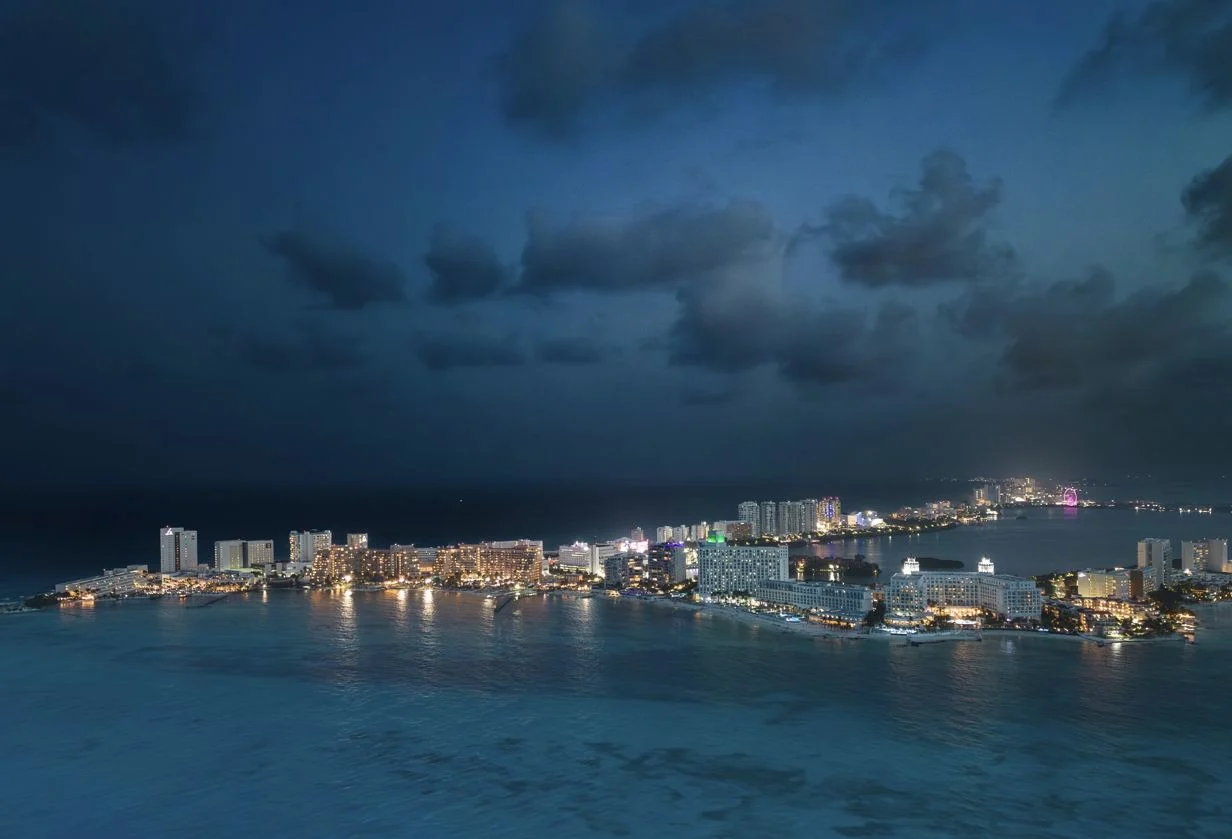
This isn’t about a new rule. It is about self-preservation. From standing environmental lighting laws to biological hazards that migrate shoreward at night, the beach transforms into a genuine danger zone after 7:00 PM.
Here is the deep dive on why you need to keep your feet on the pavement, not the sand, after dark.
1. The “Blackout” Mandate (Environmental Law)
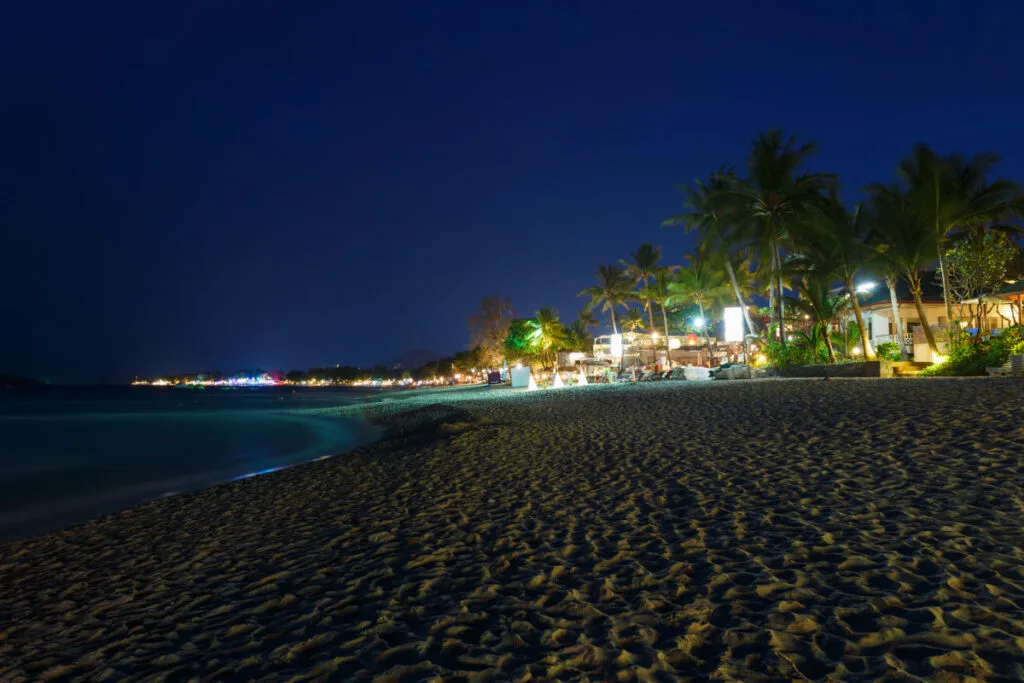
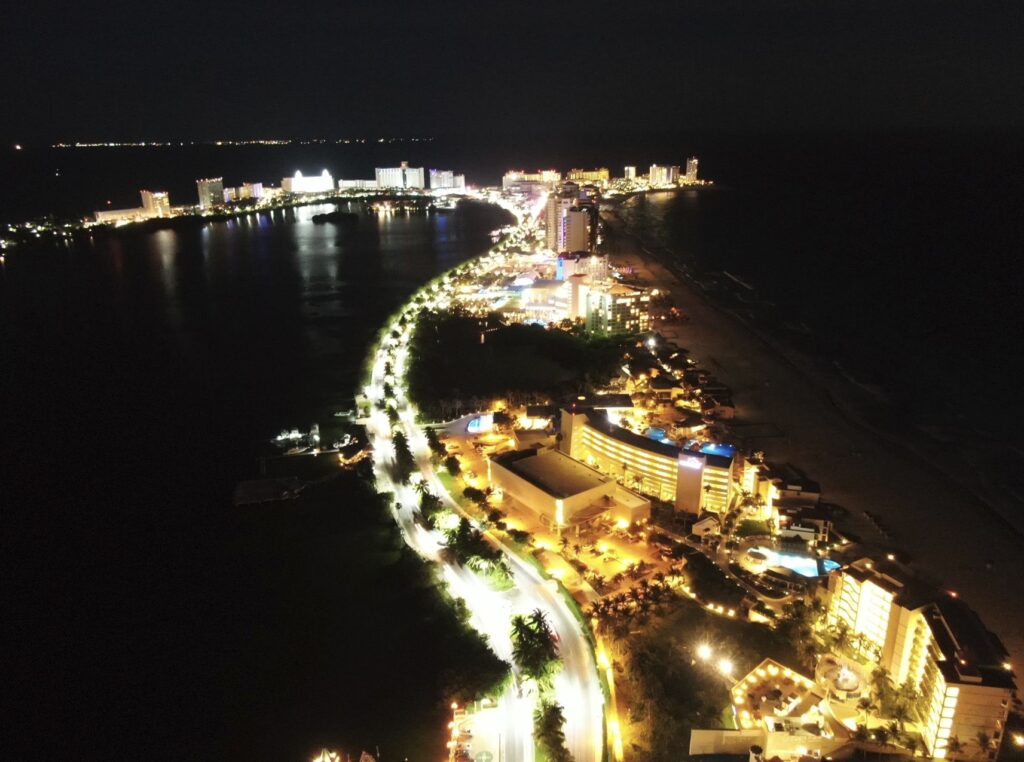
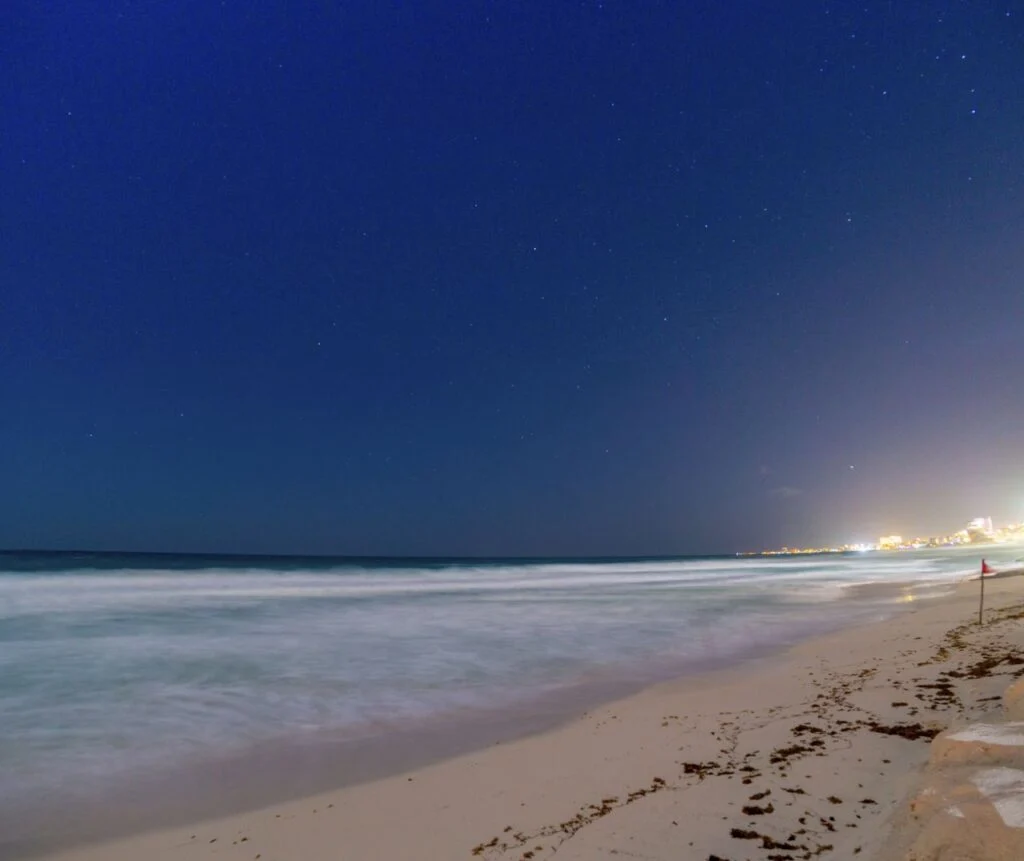
The first thing travelers notice when they step onto the sand at night is the darkness. It is absolute. This is not a lack of infrastructure or a power outage. It is a federal mandate enforced by SEMARNAT (Mexico’s Environment Ministry).
Cancun strictly adheres to environmental standards for the protection of sea turtles. Artificial light disorients hatchlings, causing them to move toward hotels instead of the ocean. To prevent this, beachfront properties are legally required to keep their high-intensity floodlights off or pointed away from the sand to comply with the law.
The Safety Implication: You are walking into a mandated “Blackout Zone.”
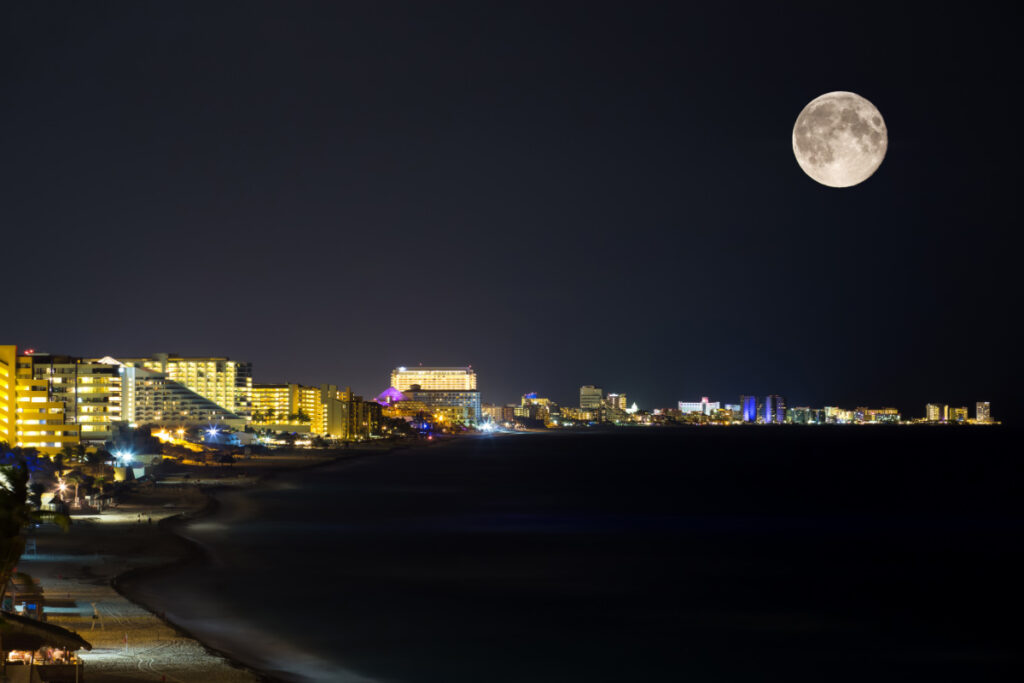
- Debris Visibility: Without floodlights, you cannot see washed-up driftwood, broken glass, or sharp plastic debris until you step on it.
- The Scarp Factor: The sand profile in Cancun changes daily due to erosion. Sudden 3-foot drop-offs (scarps) that were not there in the morning can form by evening. In the dark, a simple walk can end in a twisted ankle or a broken bone.
- Maintenance Schedules: While heavy cleaning machinery operates at sunrise to clear sargassum, the debris that washes up during the day and evening remains on the sand until the next morning. You are walking through the day’s accumulation of flotsam in zero-visibility conditions.

2. The Invisible Biological Threat (The “White Flag” Reality)
During the day, the crystal-clear water allows you to spot marine life easily. At night, that visual protection is gone, and the biological landscape shifts.
While the international standard for marine pests is the Purple Flag, Cancun and the wider Quintana Roo region utilize a specific local protocol: the White Flag. This signal warns of the presence of jellyfish (aguamalas) and stingrays.
Marine biologists note that many species of marine life migrate closer to the shoreline at night to feed in the cooler, shallower waters.
The Risk:
- Sea Urchins: These spiny creatures often inhabit the rocky transition zones where sand meets reef. Stepping on one in the dark results in a painful puncture wound that is prone to infection and often requires surgical removal of the spines.
- Stingrays: Rays bury themselves in the sand in the shallows to hunt. If you step on one in the dark, the defensive barb strike is immediate and excruciating.
- The Response Gap: Getting stung or injured at 2:00 AM on a dark beach complicates the medical response. You are far from the lobby, and paramedics cannot easily drive an ambulance onto soft sand to reach you.

3. The Riptide Factor (Zero Supervision)
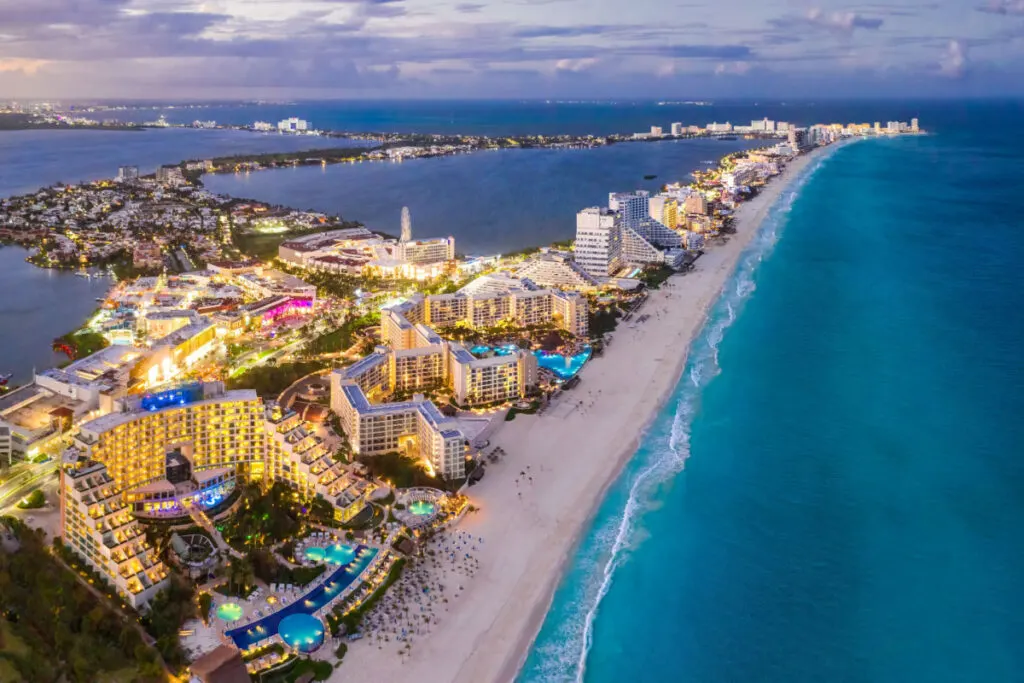
The Caribbean Sea is not a swimming pool. The currents in Cancun are powerful, and riptides can form instantly, regardless of the time of day or the calmness of the surface.
The Operational Reality:
- Lifeguard Hours: The lifeguard towers in Cancun are strictly staffed for daylight hours, typically ending by the latest 7 pm. If you enter the water after this time, you are completely on your own.
- The “Sound Masking” Effect: The sound of crashing waves at night is deafening. If you get into trouble in the water, or even on the shoreline, your shouts for help will likely be drowned out by the surf.
- Visual Disconnect: Even if you are a strong swimmer, the darkness eliminates your ability to spot the “rip.” This is the channel of calm-looking water that signals a current. You can be pulled out to sea without ever seeing the danger until it is too late.

4. The “Gray Zone” Vulnerability (Jurisdiction)
Hotels in Cancun are fortresses of security. They have cameras, guards, and perimeter checks. The beach, however, is a “Gray Zone.”
Because the beach is the Federal Maritime Terrestrial Zone (ZOFEMAT), hotel security guards generally do not patrol the sand itself. They stay on the hotel property line (the seawall, the deck, or the rope line).
The Risk: This creates a strip of unmonitored territory between the safety of the hotel and the ocean.
- Opportunistic Theft: Thieves know that tourists often leave bags, shoes, or phones on the sand to go for a “quick dip” or a walk. The darkness provides cover, and the noise of the ocean masks the sound of an approach.
- Isolation: Tourists who wander away from the hotel lights to find a “private spot” are leaving the security umbrella entirely. You are effectively leaving the resort and entering an unlit public park in a foreign country at night.
The Verdict
The beach is for the day. The pool decks, bars, and illuminated walkways are for the night.
Don’t be the tourist who ends their vacation with a medical emergency or a lost wallet just because you wanted a moonlit walk. Respect the elements. Respect the darkness.
The Ultimate Cancun Trip Planner
When’s the best time to go? Our powerful month-by-month guide breaks down the weather, crowds, sargassum, and prices for your perfect trip.
Find Your Perfect Cancun & Riviera Maya Resort In Seconds
This simple, powerful tool was built by our on-the-ground experts to match you with the ideal resort for your specific budget and travel style.
Subscribe to our Latest Posts
Enter your email address to subscribe to The Cancun Sun’s latest breaking news affecting travelers, straight to your inbox.
B
Wednesday 11th of February 2026
Odd that playa El nino has bright lights all night. Other exceptions?