
If you are planning a trip to the Mexican Caribbean, there is one word that dictates the success of your beach days more than the weather forecast: sargassum.
This naturally occurring brown algae has evolved from a seasonal nuisance into a massive logistical crisis for the region. Driven by rising ocean temperatures, massive floating islands of seaweed drift toward the coast, threatening to turn pristine white-sand beaches into unswimmable zones. Sargassum season has started early this year and will unfortunately get worse until peaking in July and August.
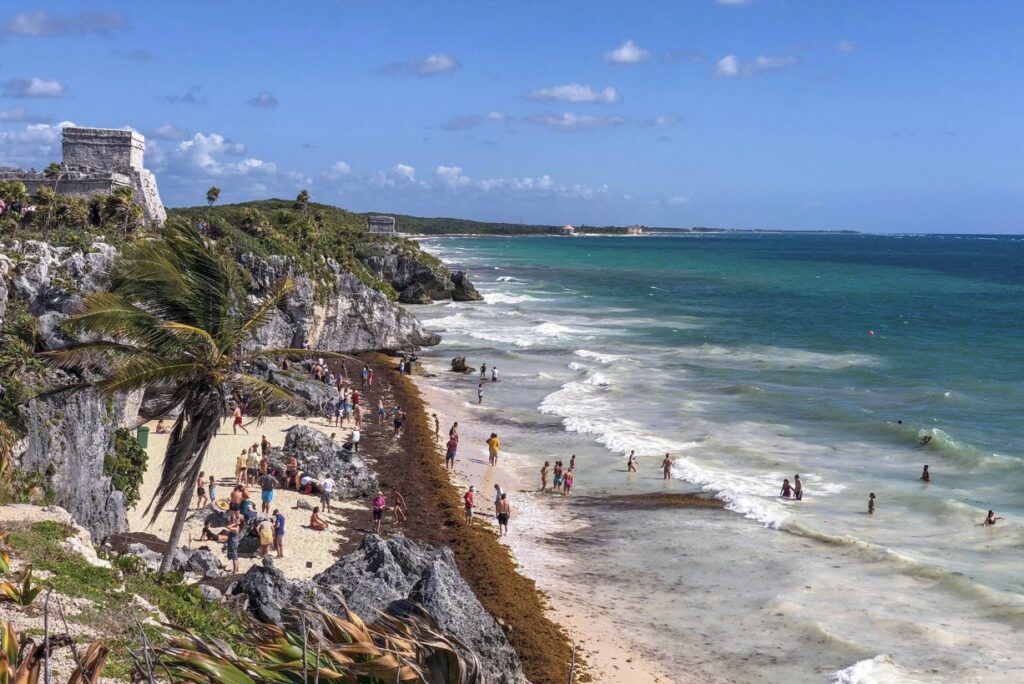
Here is the unfiltered ground truth on exactly which beaches take the heaviest hits based on prior years sargassum accumulations, where you can escape the seaweed entirely, and the high-tech defense plan currently being deployed in the water by officials.
The Impact Zones: From Red Alerts to Safe Havens
The Red Zone: The 3 Hardest-Hit Areas
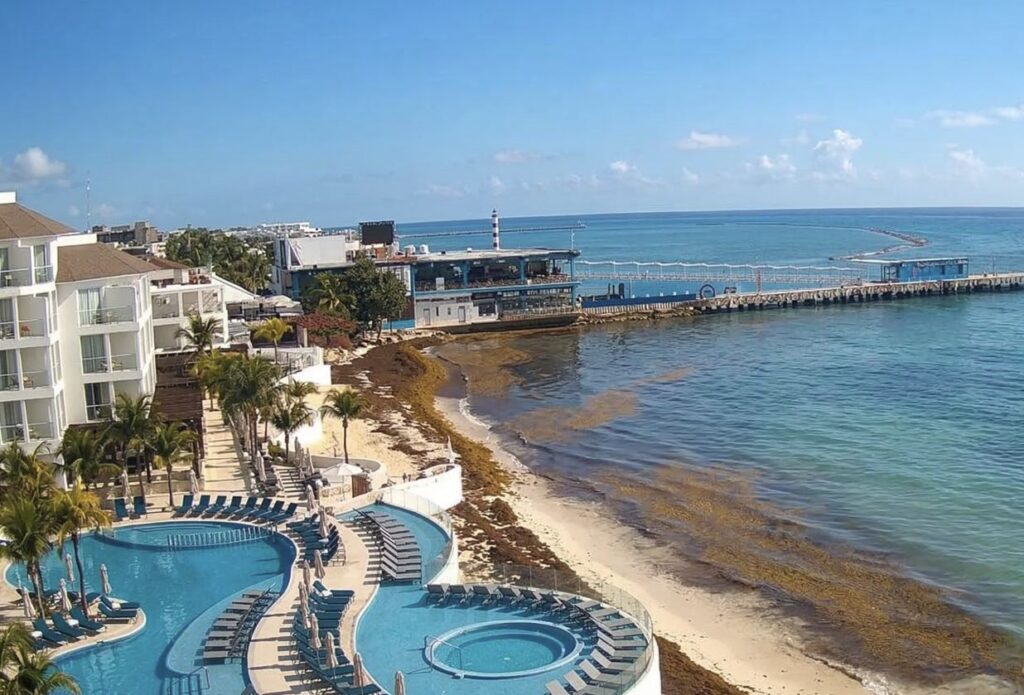
If you are booking a resort in Puerto Morelos, Playa del Carmen, or Tulum, you need to manage your expectations. Due to their geographical positioning facing directly east into the open Caribbean Sea, these three hotspots bear the absolute brunt of the incoming sargassum drift.
During peak surges, the ocean waters in these areas can become fully unswimmable. Massive, thick mats of brown algae completely choke the shoreline, blocking out the trademark turquoise water. When these heavy accumulations breach the sand, they bake and rot under the intense Mexican sun. This releases a foul, sulfur-like odor that can ruin the atmosphere of even the most luxurious beachfront resorts.
You can check the current beach conditions at your resort using our new Live Sargassum Webcam Finder which matches you to the closest live feed.
The Moderate Zone: The Cancun Hotel Zone
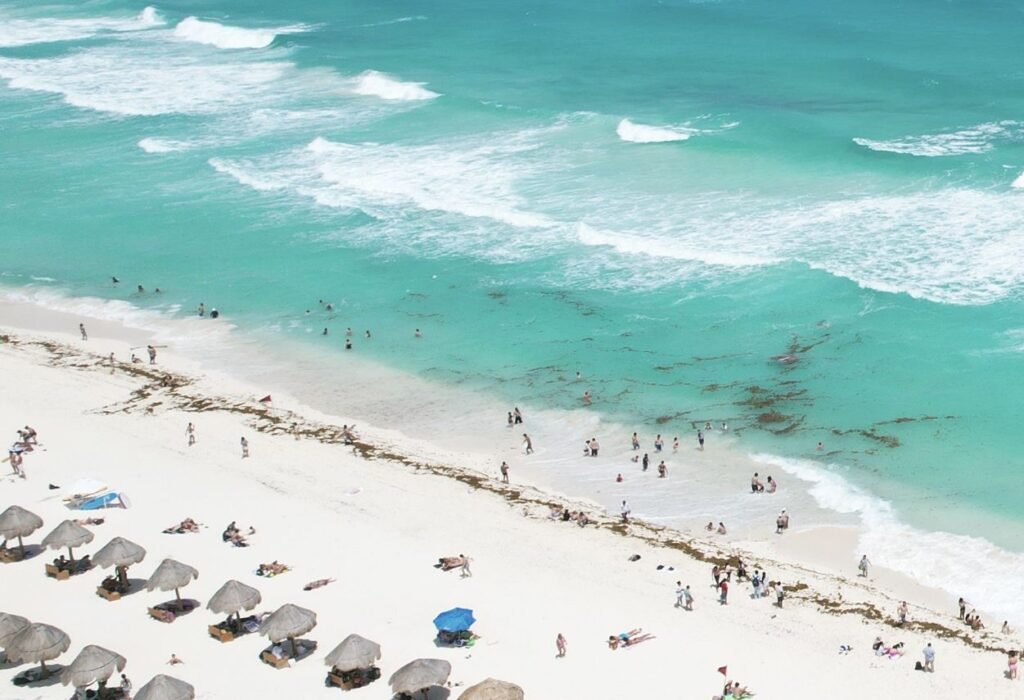
Cancun’s famous Hotel Zone sits in the moderate category. Your experience here depends entirely on where your resort is located. The Hotel Zone is shaped like a massive number “7.” The long, vertical stretch facing east (home to beaches like Playa Delfines and Chac Mool) acts like a net for incoming seaweed, requiring aggressive daily cleanup from local crews.
However, the short, horizontal top of the “7” faces north. Beaches along this upper curve, such as Playa Langosta and Playa Mujeres, are naturally shielded from the prevailing Atlantic currents. They often remain clear even when the southern beaches are overwhelmed.
The Safe Havens: Low-Impact All Year
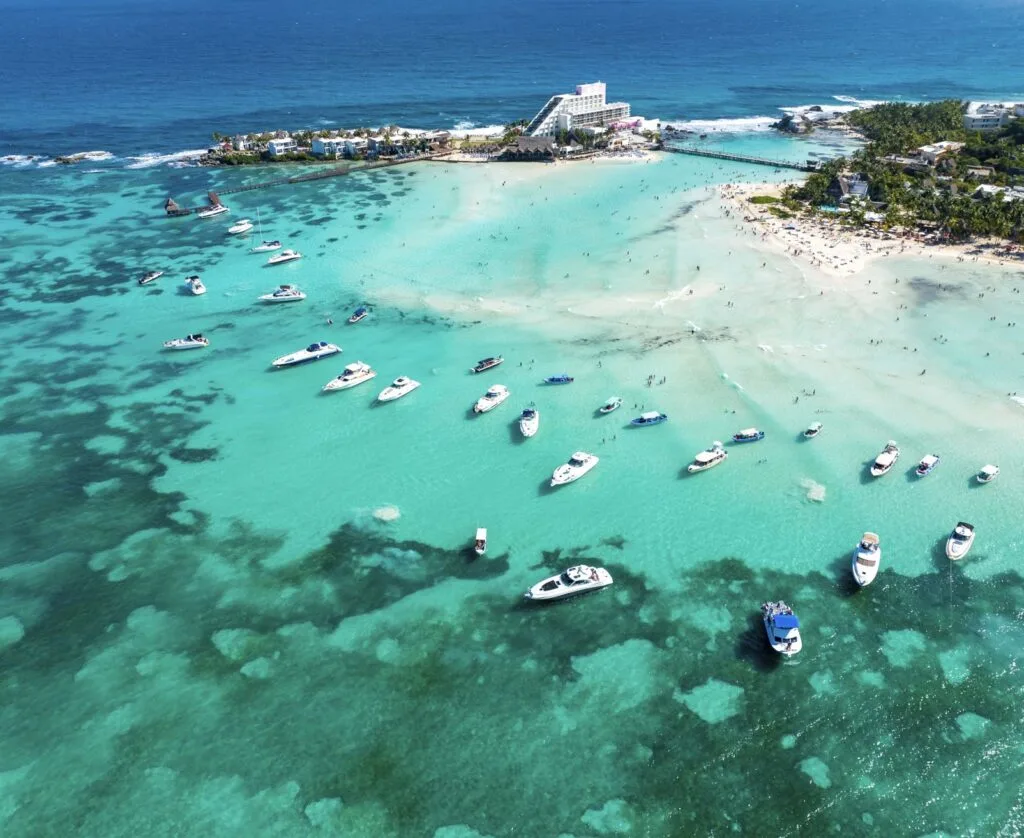
If your number one priority is guaranteeing a seaweed-free vacation, you need to get off the mainland entirely.
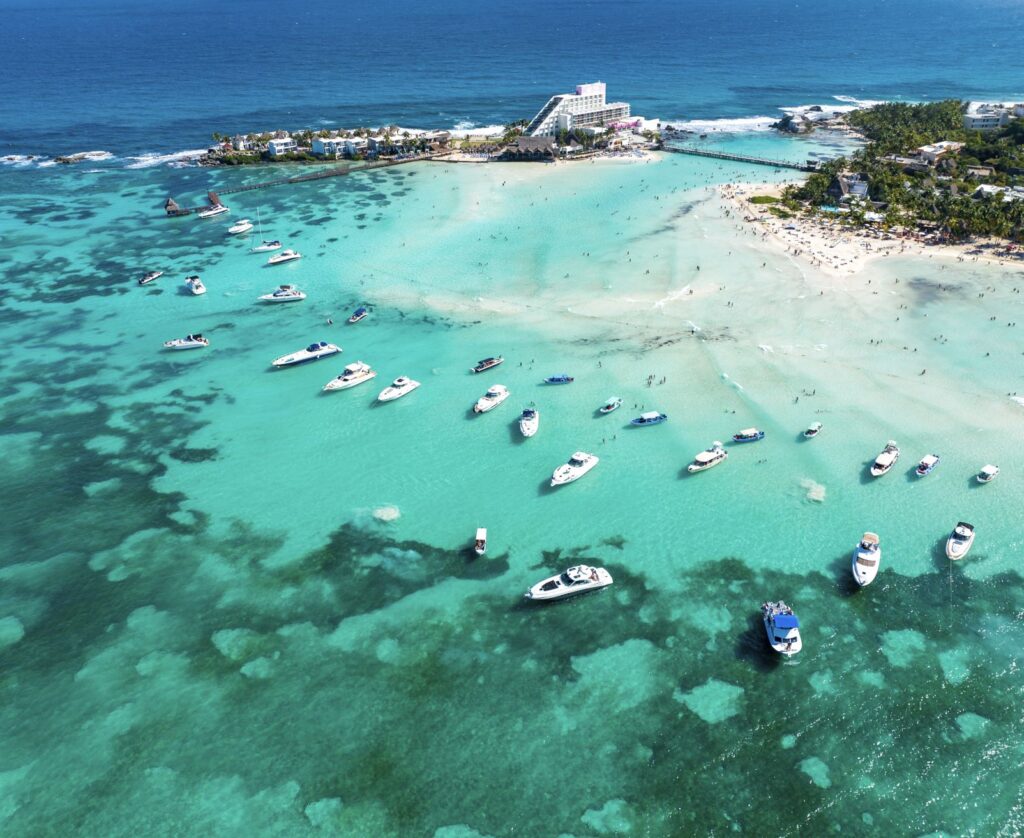
- Isla Mujeres: Located just a short ferry ride from Cancun, the island’s famous Playa Norte is widely considered a permanent safe haven. Because the beach faces completely away from the open ocean, the sargassum drift bypasses it.
- Cozumel: The western coast of Cozumel faces the mainland rather than the open Caribbean. This geographical shield means the popular resort beaches and snorkeling reefs on the west side remain pristine year-round.
How They Are Battling It
The Defense Plan: 24,000+ Feet of Protection The local government and resort associations are not just waiting on the sand with pitchforks and wheelbarrows. They have launched a massive, coordinated, region-wide effort to block the algae at sea before it ever reaches the shoreline. Across the coast, authorities are deploying a massive shield of over 24,000 feet of containment lines.
The Tech: 1,500 Meters of “Desmi” Barriers The frontline of this defense is entirely focused on the hardest-hit hotspots: Puerto Morelos, Playa del Carmen, and Tulum. To protect these highly vulnerable coastlines, marine engineers are deploying 1,500 meters of specialized “Desmi” barriers.
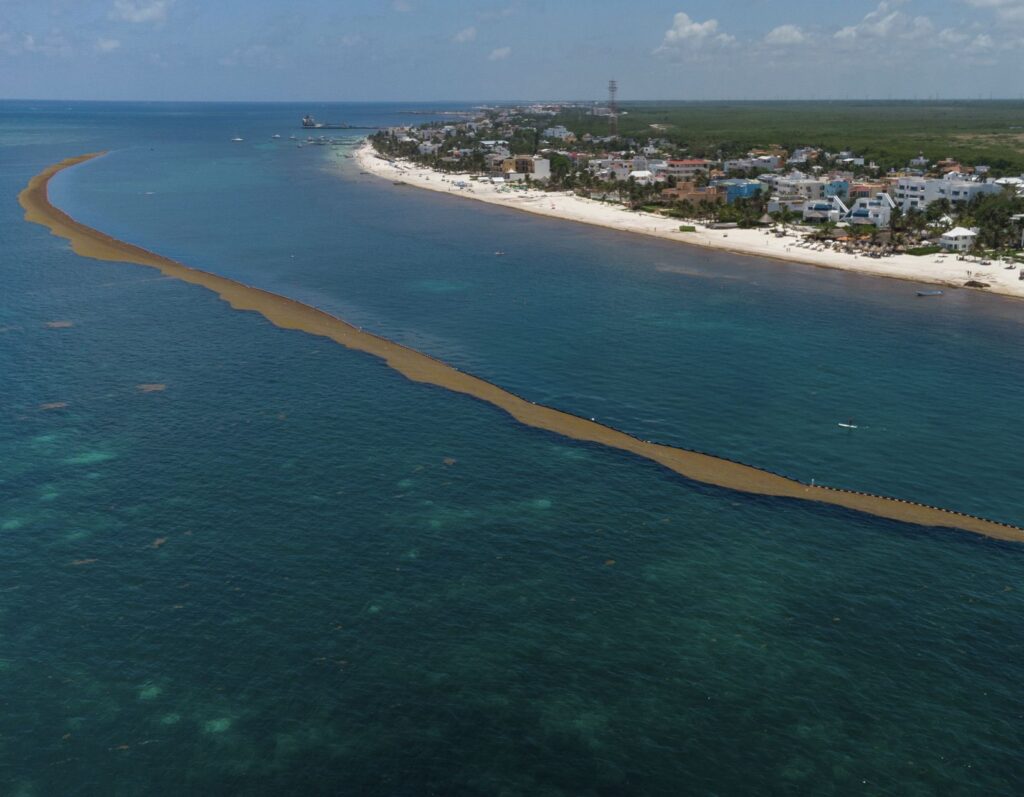
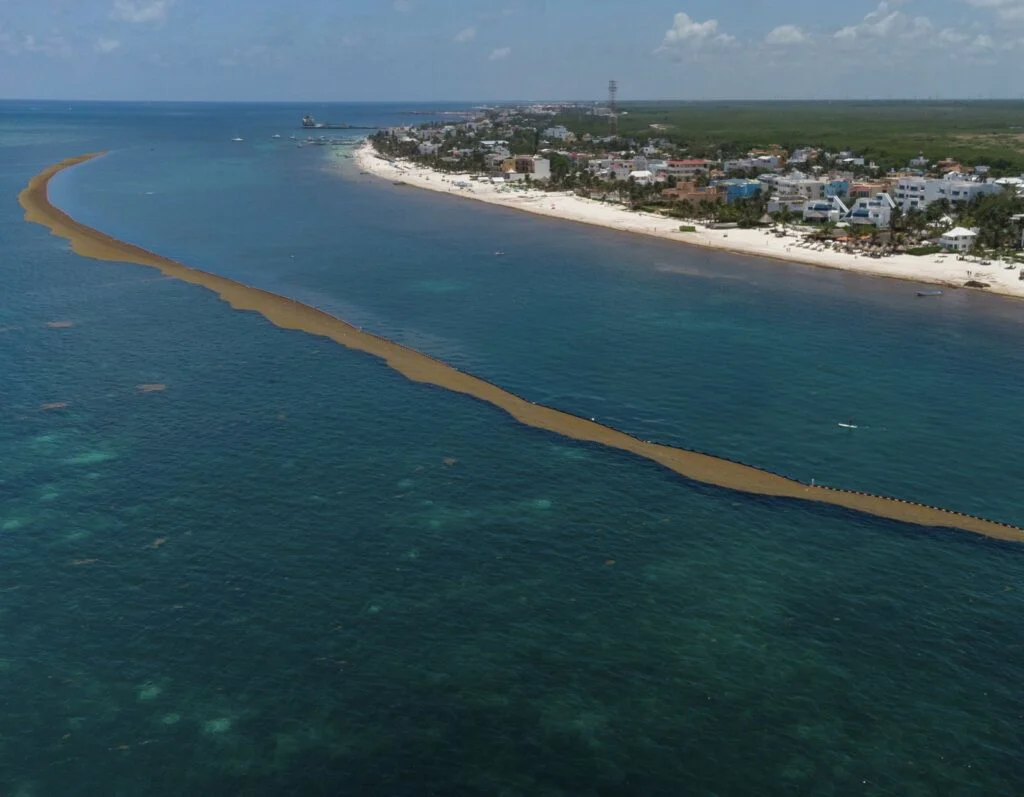
These are not your average fishing nets strung up near the shore. They are heavy-duty, high-tech floating containment systems engineered specifically for this crisis. The nautical grids are designed to let ocean water and wind pass through freely while remaining tough enough to withstand heavy ocean swells. As the massive floating mats of algae drift toward the beach, they hit this physical wall and are trapped in place.
Sargassum Ground Truth
Once sargassum washes up onto the beach, the cleanup process becomes a labor-intensive nightmare. Heavy tractors have to be driven onto the delicate sand, causing coastal erosion, and the rotting seaweed creates an inescapable smell. By utilizing the 24,000-foot regional shield, authorities halt the seaweed offshore. From there, specialized sargassum-harvesting boats navigate alongside the barriers, scooping the algae directly out of the water and hauling it away.
Keeping the seaweed offshore is the absolute only way to protect the ecosystem and keep the waters turquoise.
The Ultimate Cancun Trip Planner
When’s the best time to go? Our powerful month-by-month guide breaks down the weather, crowds, sargassum, and prices for your perfect trip.
Find Your Perfect Cancun & Riviera Maya Resort In Seconds
This simple, powerful tool was built by our on-the-ground experts to match you with the ideal resort for your specific budget and travel style.
Subscribe to our Latest Posts
Enter your email address to subscribe to The Cancun Sun’s latest breaking news affecting travelers, straight to your inbox.
Roger
Sunday 22nd of March 2026
All well said but being a resident in Playa del Carmen,I can say that I have not seen anything done yet. A similar(read same)solution was proposed almost 5 years ago and nothing was done...I was told that the Government was going to do it! Maybe lucky this time, already many of my friends have cancelled for other destinations. I will believe it when I see it!!!