
If you have walked through the Cancun airport arrivals hall recently, you have likely seen the advertisements: “Swim with Dolphins! Book Now!” But if you have been following the news, you might be confused. Didn’t Mexico just ban this?
The answer is a complicated “yes and no.”

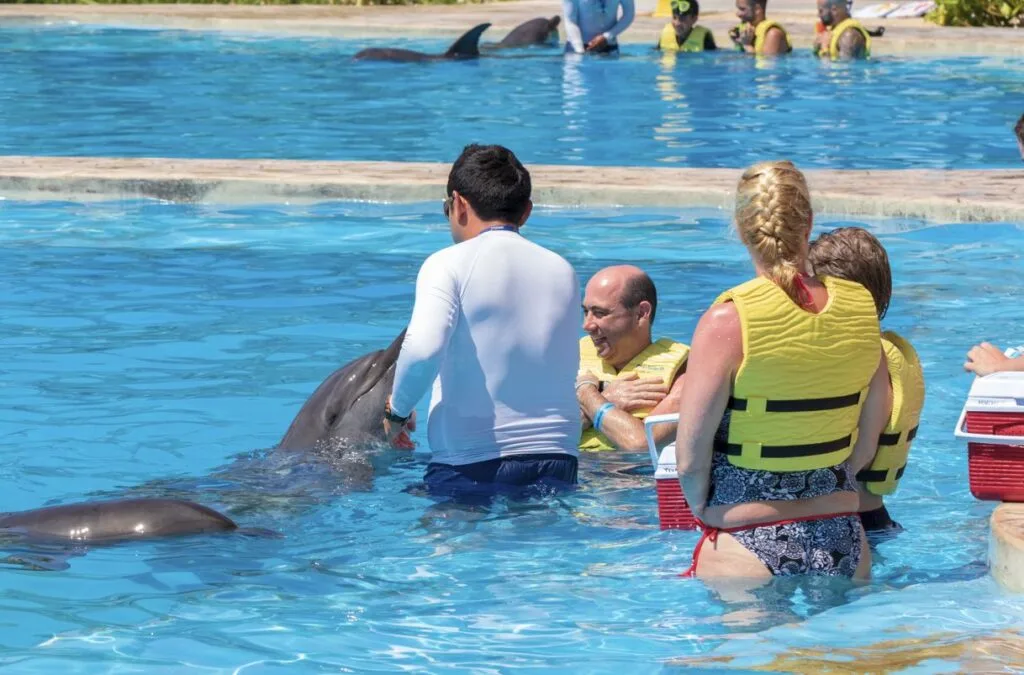
Here at The Cancun Sun, we know that travelers are currently facing a gray area. In June 2025, Mexico passed historic reforms to the General Wildlife Law (often called the “Mincho Law”) that effectively prohibit the use of marine mammals for entertainment.
However, the tours are still running, tickets are still being sold, and the industry is very much alive. If you are planning a trip for late 2025 or 2026, here are the facts regarding what is legal, what is changing, and why this popular activity is entering its final chapter.
The New Law: What Actually Changed?
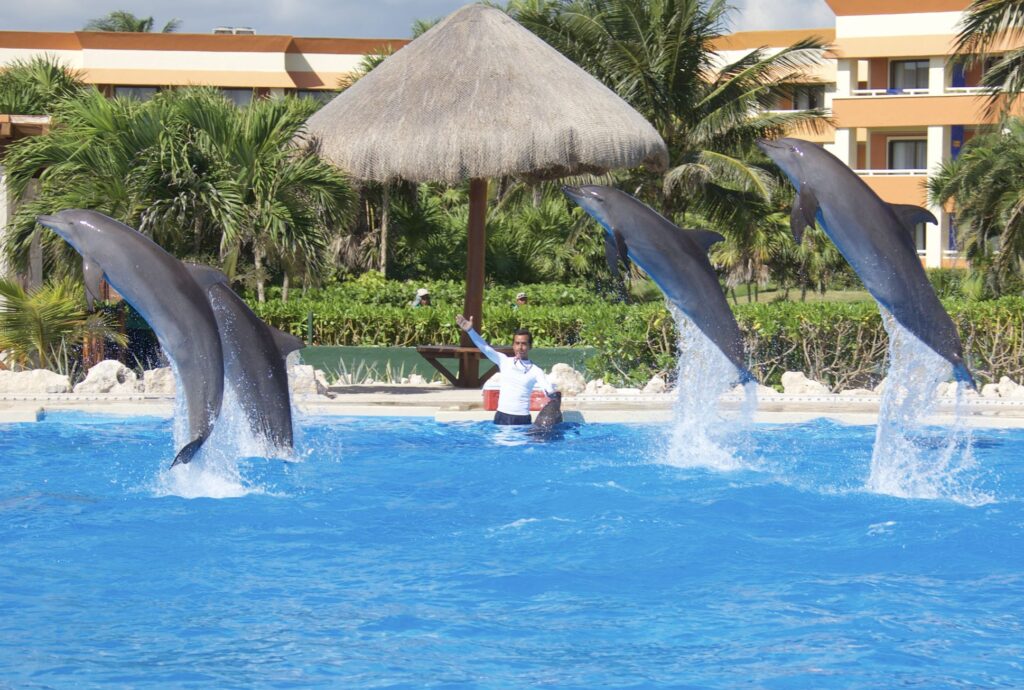
In June 2025, Mexico’s Congress unanimously passed sweeping reforms. The new mandate prohibits the use of marine mammals (dolphins, sea lions, and manatees) for “shows, entertainment, and therapy.” Crucially, the law also bans captive breeding.
This means the current generation of dolphins in captivity will be the last. No new animals can be captured, and no new animals can be born into the industry. As we reported earlier this year when Cancun dolphin encounters faced a major overhaul, the industry is being forced to pivot from “entertainment” to “conservation.”
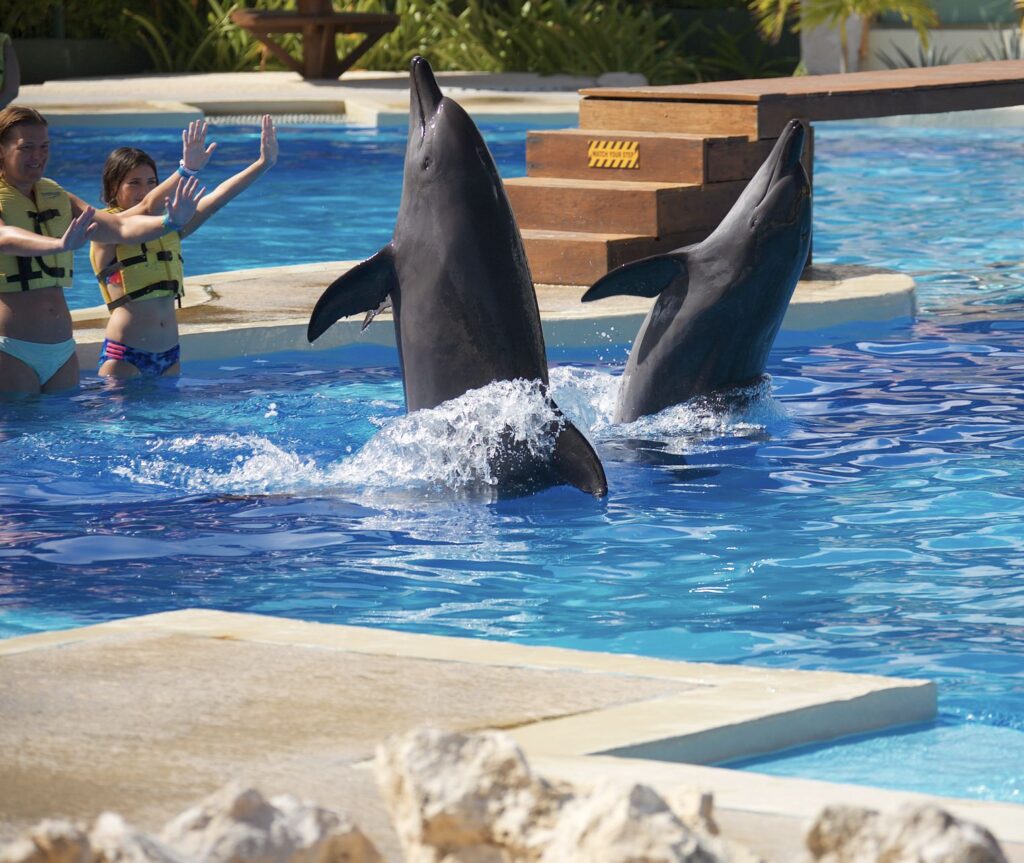
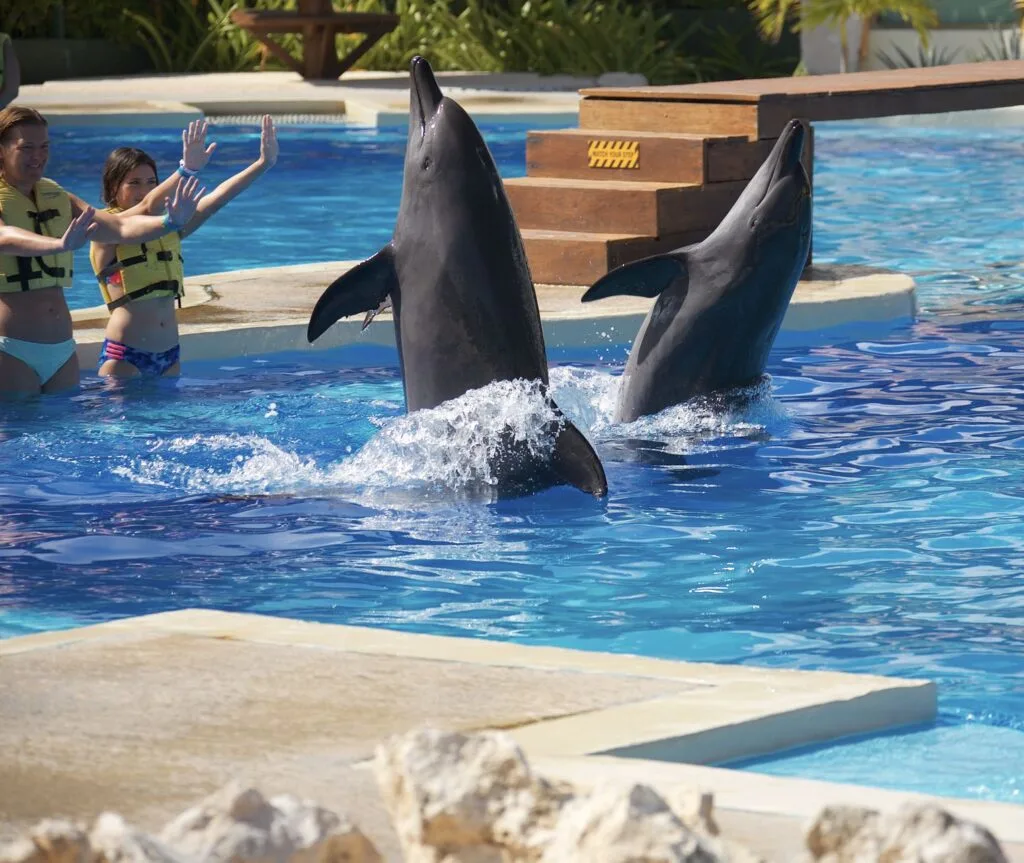
The Insider Reality: While the law has passed, the government was given a 365-day window to draft the specific regulations for enforcement. We are currently living in that transition period. This is why operators are still legally selling tickets under their existing permits.
The “Sea Pen” vs. “Pool” Transition
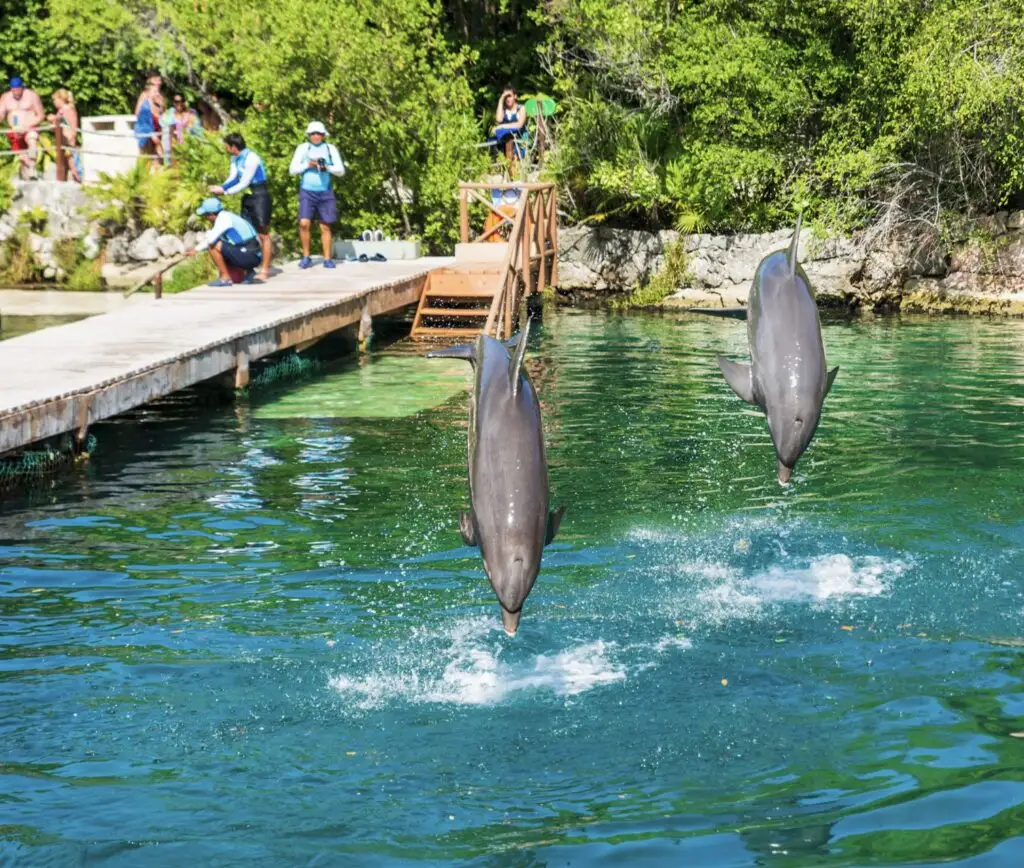
One of the most significant changes mandated by the new law is the environment itself. The legislation pushes for animals to be moved from concrete pools—often found at inland shopping malls or hotels—to “sea pens” wherever possible.
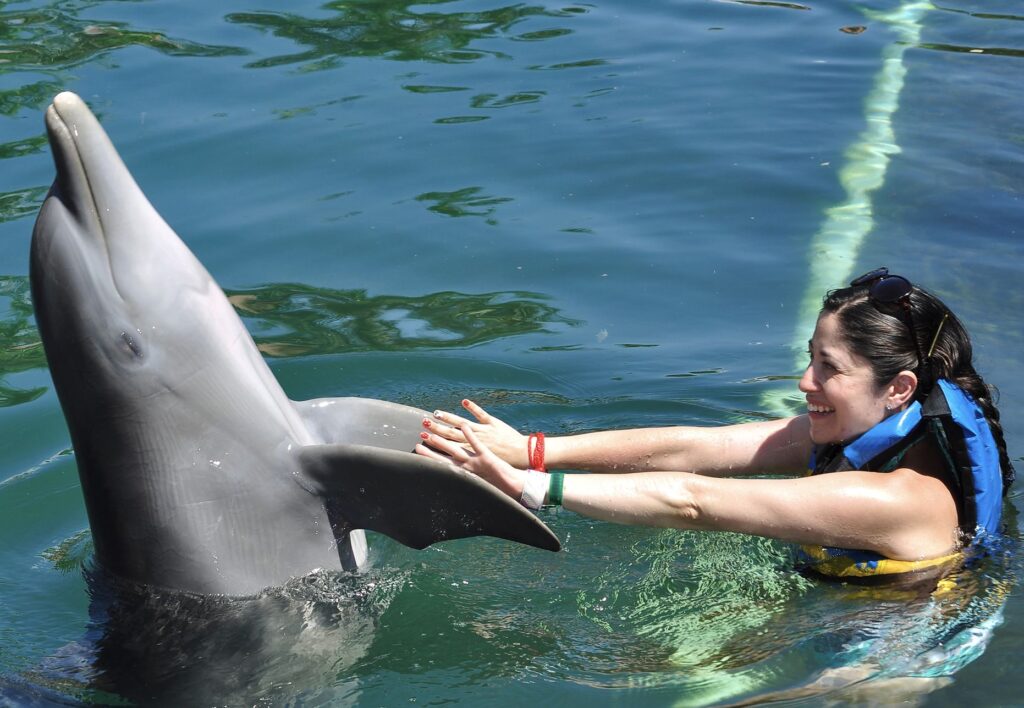
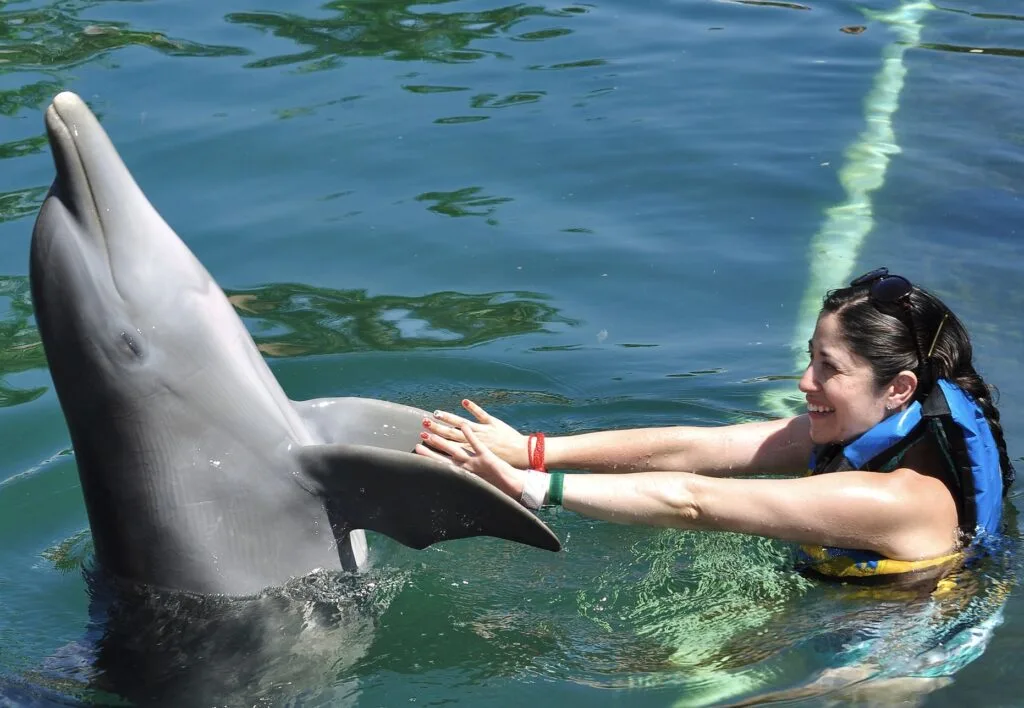
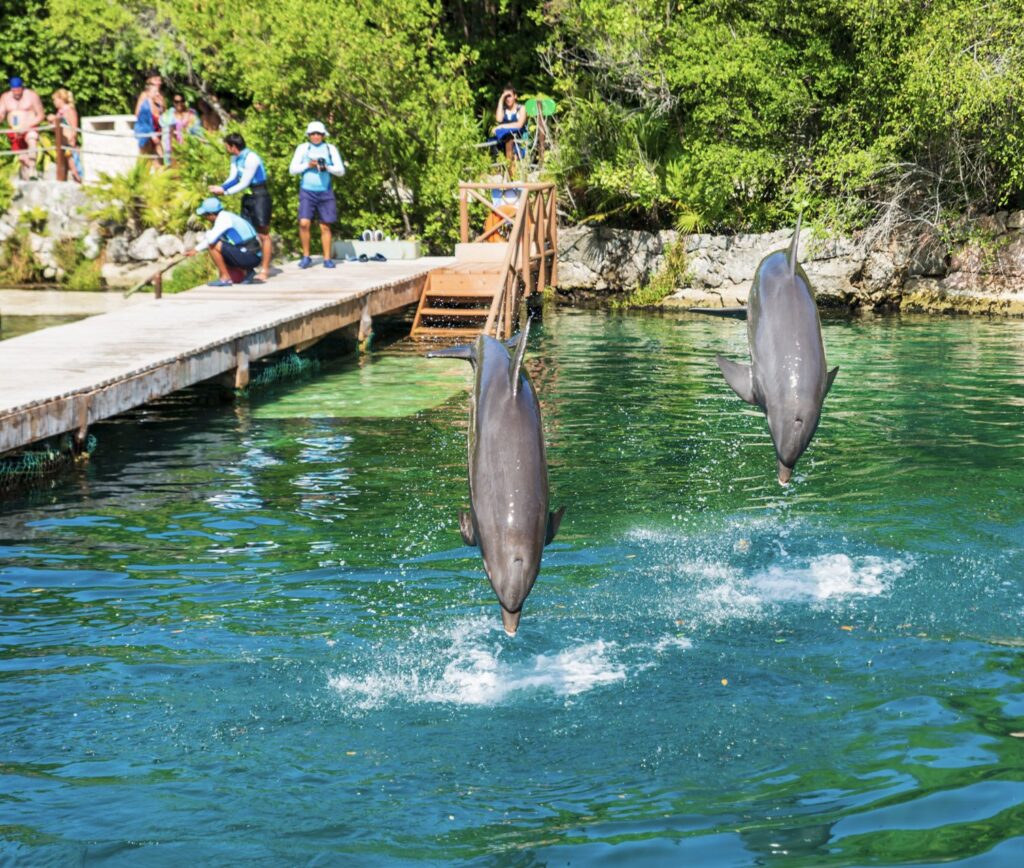
Sea pens are fenced-off sections of the actual ocean, allowing for natural tides, sandy bottoms, and a flow of seawater. This is already the standard in locations like Isla Mujeres. As we highlighted in our guide to Isla Mujeres tours, many facilities there are situated directly in the Caribbean Sea rather than in tanks.
The Savvy Move: If you decide to participate during this sunset phase, check the venue. Facilities in Puerto Aventuras and Isla Mujeres often utilize these sea pens, which will likely be the only permitted model as the regulations tighten over the next 12 months.
The “Physical Contact” Question
The “Mincho Law” specifically targets the “circus” aspects of the industry. The traditional foot-pushes (where dolphins push a tourist through the water) and forced kissing behaviors are the primary targets for elimination.
The future of the industry in Mexico is strictly educational. Future tours will likely involve observing the animals in their sea pens from platforms or swimming near them without forced interaction.
If you book a tour today, you might still be offered the classic interaction. However, operators are already beginning to soften these programs to align with the incoming rules.
🐬 The Dolphin Industry: What’s Changing?
Confused about what is legal? Tap below to see the future of the industry in Mexico.
Banned. Circus-style shows with tricks, applause, and loud music are prohibited under the new law.
Banned. To ensure this is the last generation in captivity, reproduction programs have been stopped.
Phasing Out. The law targets “physical contact.” Expect tours to shift to “educational observation” only in the coming months.
The Reality of the “Release”
It is critical for travelers to understand that these dolphins will not be released into the wild.
Most of the animals currently in Cancun were born in captivity or have lived under human care for decades. They do not know how to hunt, navigate, or defend themselves against predators. Releasing them would effectively be a death sentence.
The law mandates that these animals remain under human care for the rest of their natural lives, which can be decades. The “ban” effectively means a ban on replacing them once they pass away.
The Verdict: The End of an Era
For the moment, the decision to swim with dolphins remains a personal choice, not a legal one. The tours are open, the operators are licensed, and the experience is readily available.
However, this is undeniably the end of an era for Mexican tourism. If you choose to participate, you are witnessing the final chapter of this industry. If you choose to skip it, you are aligning with the new direction of the country’s tourism laws. The window is closing, and the experience will look very different by 2026.
The Ultimate Cancun Trip Planner
When’s the best time to go? Our powerful month-by-month guide breaks down the weather, crowds, sargassum, and prices for your perfect trip.
Find Your Perfect Cancun & Riviera Maya Resort In Seconds
This simple, powerful tool was built by our on-the-ground experts to match you with the ideal resort for your specific budget and travel style.
Subscribe to our Latest Posts
Enter your email address to subscribe to The Cancun Sun’s latest breaking news affecting travelers, straight to your inbox.