
Your bags are packed, your flights are booked, and you are beyond excited for your upcoming trip to Cancun. But then, you open your phone and start scrolling. Suddenly, the headlines surrounding sargassum seaweed are painting a very grim picture. You start to worry that your dream beach holiday is completely ruined before it even begins.
Let’s stop right there and clear up the myths.
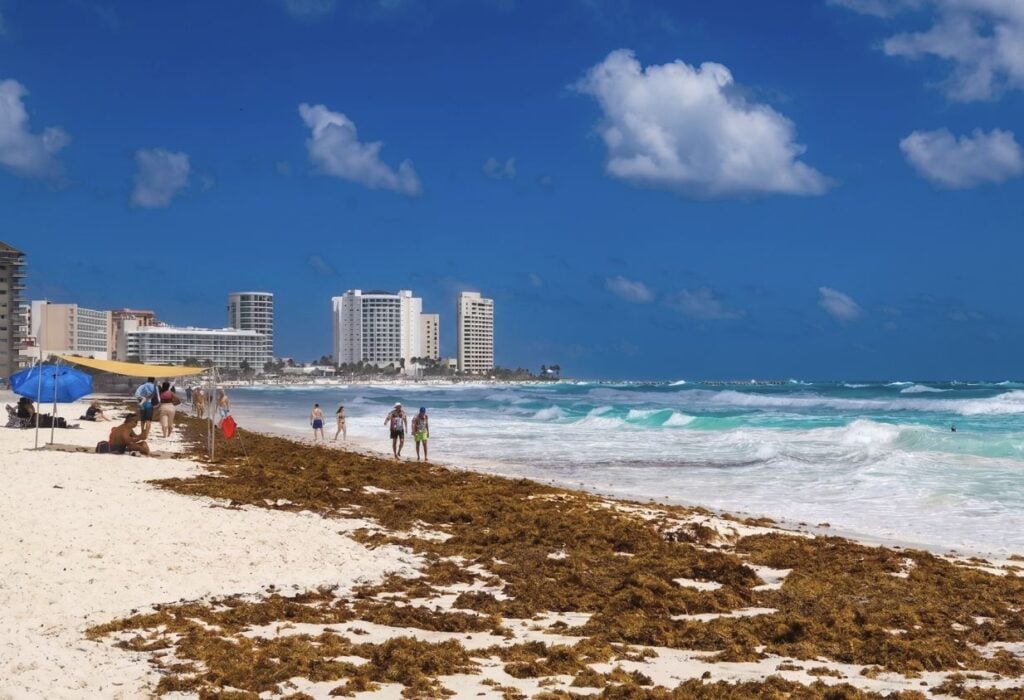
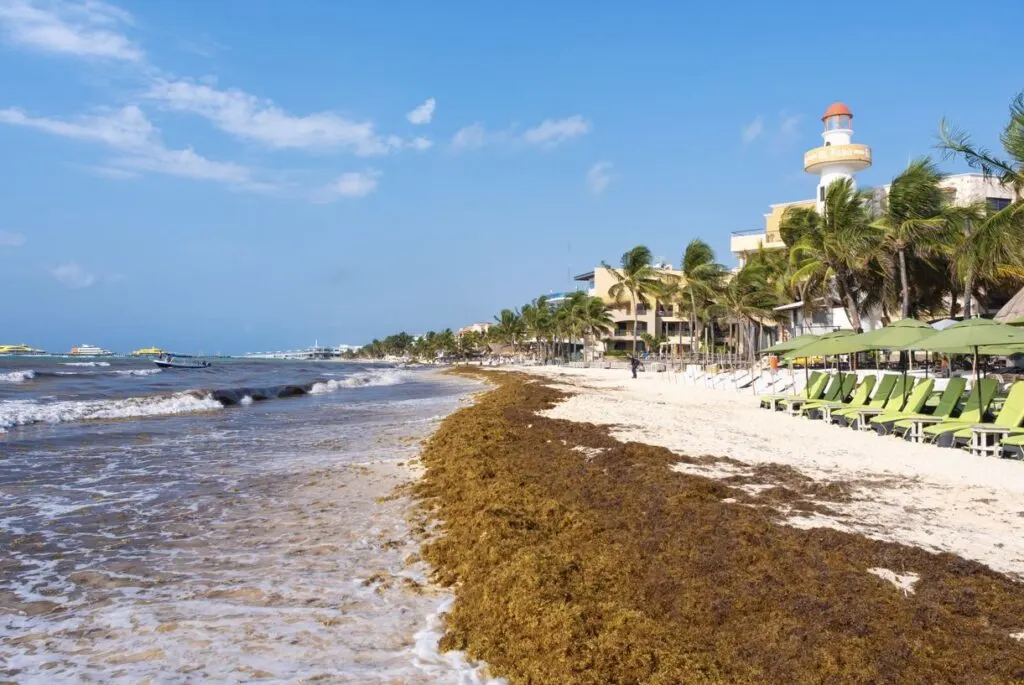
If you take away just one thing before your trip, it should be this: different beaches have completely different levels of sargassum, and the situation is constantly changing from day to day depending on the ocean currents. Yes, it is currently sargassum season, a time of year when the beaches can absolutely be overwhelmed by the seaweed. However, that does not mean they are covered every single day.
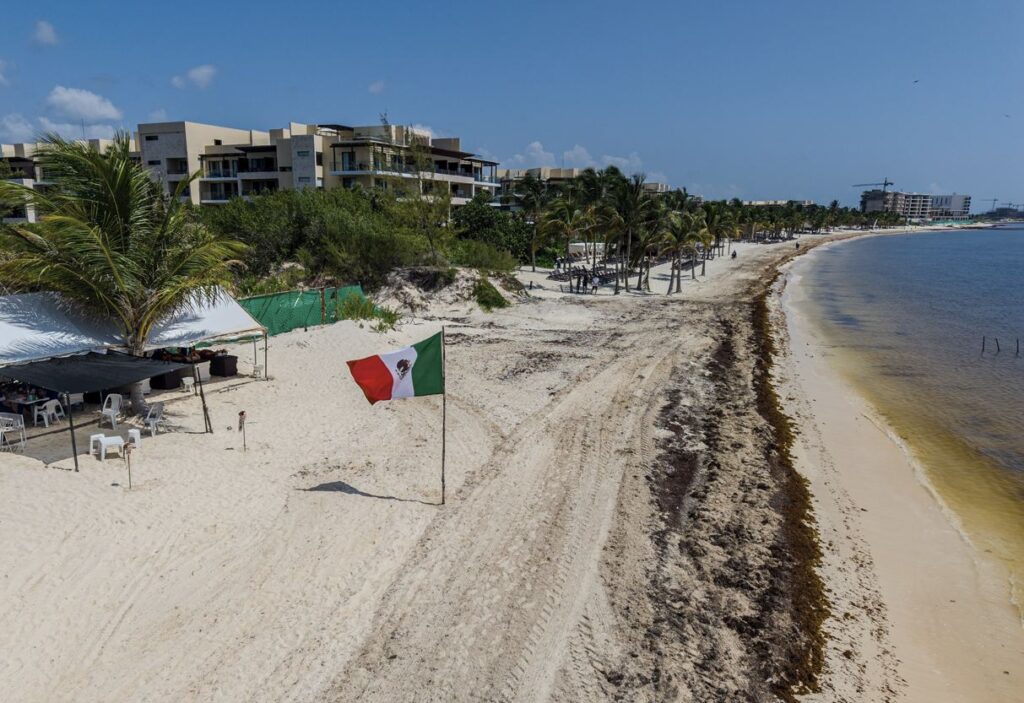
For instance, just last week, nearly half the beaches in the Riviera Maya were put on red alerts. Massive, heavy blankets of sargassum rolled in, covering the sand and triggering alerts across 65 different beaches. But once again, that situation changed literally overnight. Local workers scrambled to clear the beaches, loading up wheelbarrows and working tirelessly to remove the seaweed. Because of their quick response, the sand was back to looking beautiful the very next morning.
Don’t Trust Everything You See Online
When it comes to planning a beach trip, we all want to know exactly what the sand and water look like right now. But relying on the internet for real-time conditions can be a massive trap.
First, you have the social media influencers. An Instagram post might show flawless white sand and crystal-clear turquoise water. But what you don’t see is that they might have filmed that video three months ago, heavily filtered the colors, or purposely cropped out a massive pile of seaweed just out of frame.
On the flip side, you have the news organizations and travel groups. When a massive patch of sargassum hits the coast, it makes national headlines. News stations will run the most dramatic footage they can find because disaster gets views. The problem is, they often keep running that same old footage for weeks, long after the local crews have cleaned the beach.
Even the official tracking maps, which try their best to give you accurate information, are usually working with delayed satellite data. A map might tell you a beach is covered in seaweed, but by the time you actually read the report, the tide has shifted and the sand is completely clean.
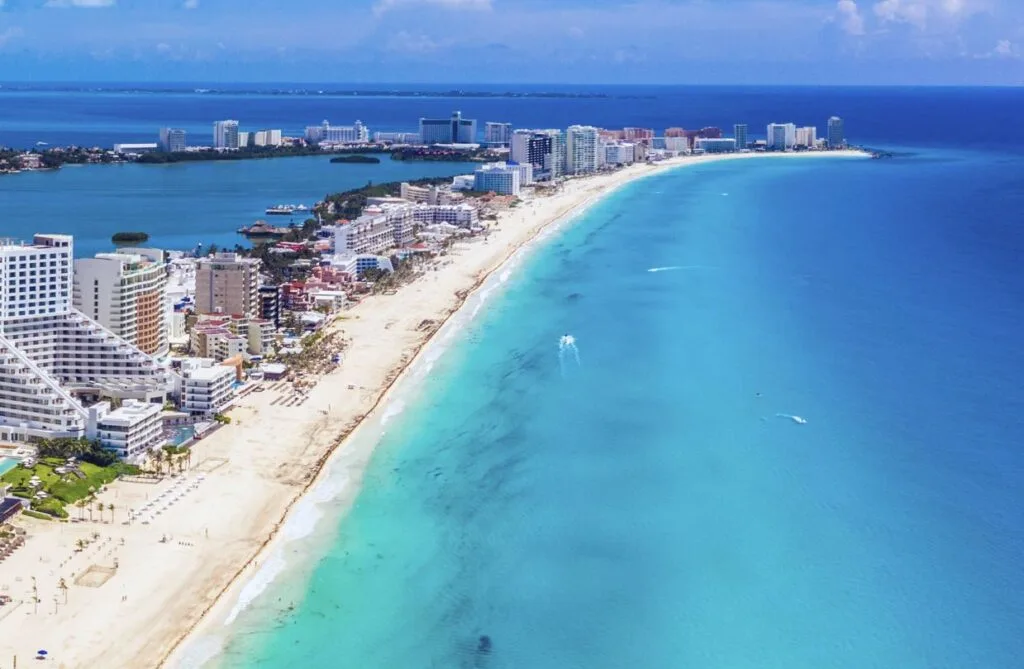
So, if you cannot trust old photos, and you cannot trust the delayed news cycle, how do you actually know what your resort looks like today?
There is only one true way to know the reality on the ground: real-time webcams.
Why Live Webcams Are The Ultimate Travel Hack
A live camera feed simply cannot lie. It cannot exaggerate, it does not care about getting likes, and it cannot filter out the bad days. It just shows you the pure, unfiltered reality of the beach at this exact second.
We realized that travelers needed a better way to check the actual conditions before they fly. That is exactly why we built a dedicated Live Webcam Sargassum Tracker. Instead of hunting around the internet trying to find a camera that might be near your hotel, you can just enter your resort’s name into our tool, and it instantly pulls up the closest live webcam feed.
It is the smartest way to set your expectations. We recommend bookmarking the tool and checking the live feeds right before you head to the airport.

How To Read The Beaches
When you start checking the live feeds, it is incredibly helpful to understand why some beaches look amazing while others might be struggling.
The Protected North-Facing Beaches
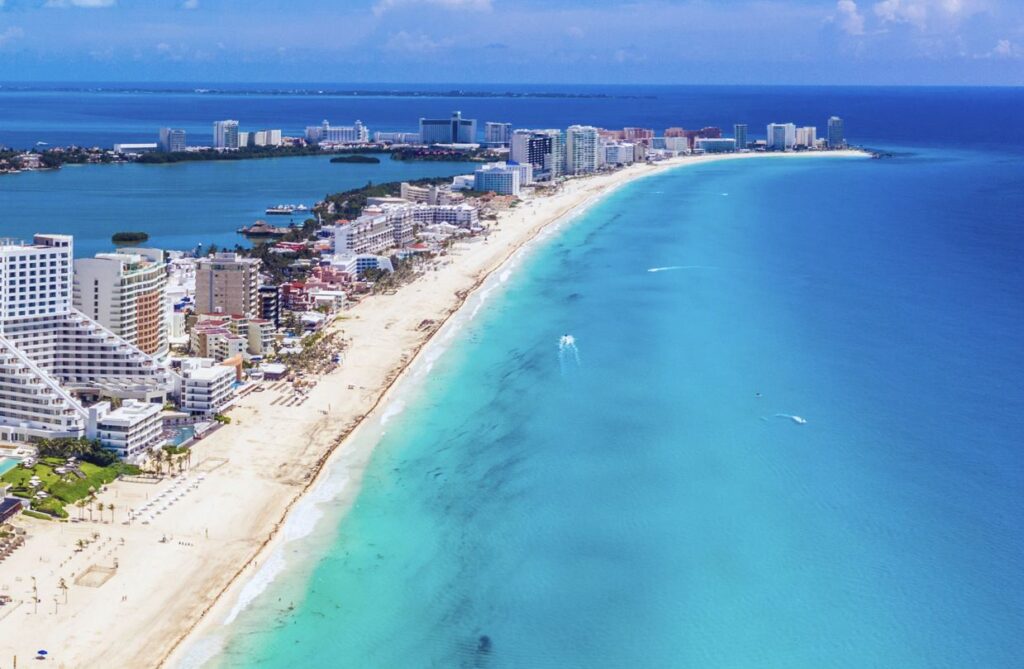
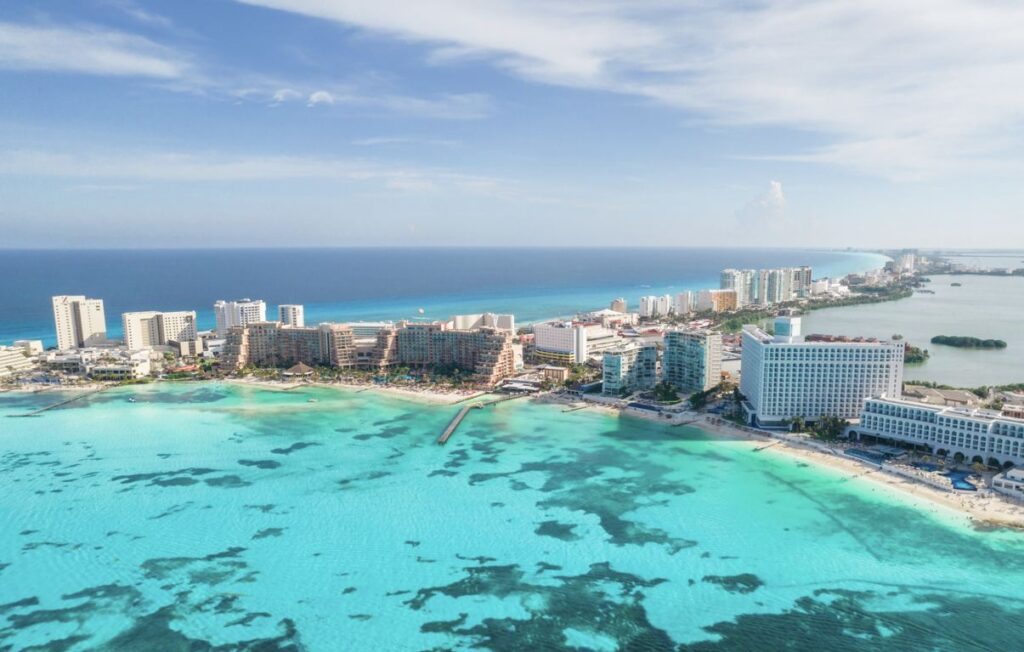
If your hotel is on the northern curve of the Cancun Hotel Zone, near places like Breathless Cancun Soul or Hotel Presidente, you are in luck. Because this coastline faces north, it is naturally shielded by Isla Mujeres, which acts as a geographic barrier against the currents carrying the seaweed. The cameras here usually show calm, pool-like water with minimal sargassum.
The Open East-Facing Beaches
If you are staying right in the middle of the Hotel Zone, near Park Royal or Live Aqua, your beach faces due east. This area takes the direct hit from the open Caribbean Sea. The cameras here are perfect for checking if the sargassum is rolling in heavily, and they are also the absolute best spot to check the wave height to see if it is safe to swim.
Playa del Carmen and Tulum
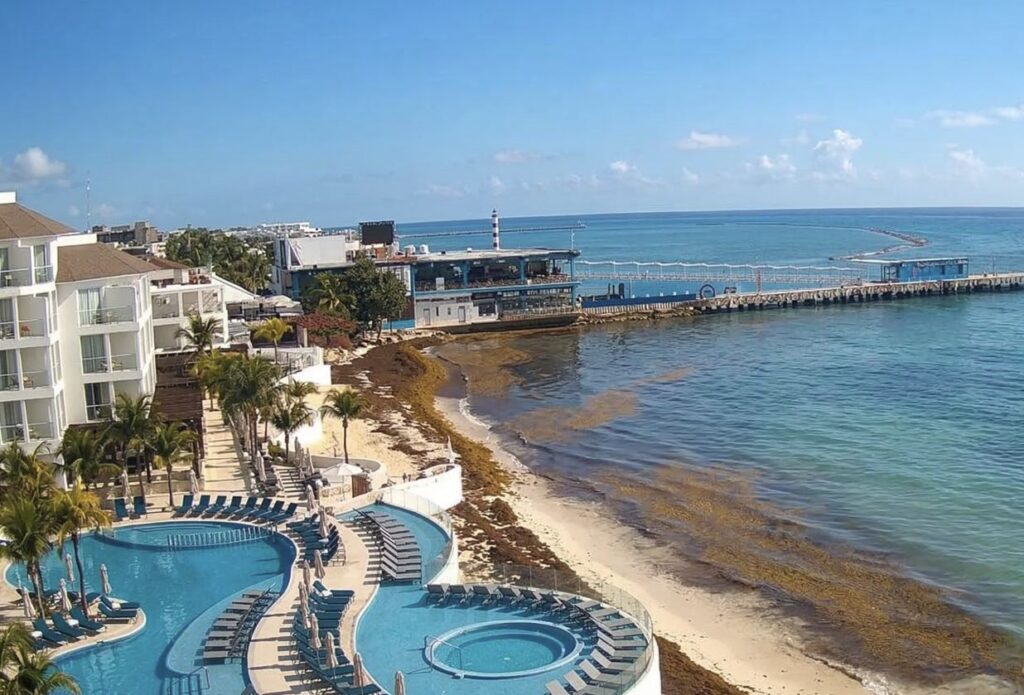
The currents act completely differently once you leave Cancun. Playa del Carmen sits behind the island of Cozumel, which means sargassum hits it on totally different days than the Hotel Zone. A quick look at the cameras near the main ferry pier or the northern resorts will give you the real story. If you are staying down in Tulum, the coastline is completely exposed to the open ocean. A quick look at a single camera near Casa Malca will instantly tell you if the entire boho strip is clear or covered.
Sargassum Update
Stop letting old headlines stress you out. Before you let rumors ruin your vacation, pull up a real-time feed, see the beach with your own eyes, and go enjoy your trip 🌴.
The Ultimate Cancun Trip Planner
When’s the best time to go? Our powerful month-by-month guide breaks down the weather, crowds, sargassum, and prices for your perfect trip.
Find Your Perfect Cancun & Riviera Maya Resort In Seconds
This simple, powerful tool was built by our on-the-ground experts to match you with the ideal resort for your specific budget and travel style.
Subscribe to our Latest Posts
Enter your email address to subscribe to The Cancun Sun’s latest breaking news affecting travelers, straight to your inbox.