
If you are planning a trip to the Mexican Caribbean in 2026, there is one word you need to know before you pack your bags: Sargassum.
This sprawling, brown macroalgae has been washing up on the shores of Quintana Roo for over a decade, but the 2026 season has arrived months ahead of schedule and with record-breaking volume. Driven by unseasonably warm ocean temperatures and shifting currents, millions of tons of this seaweed are currently tracking through the Atlantic.
When sargassum piles up on the beach, it turns the iconic turquoise water murky and emits a strong “rotten egg” odor as it decomposes in the sun. It can easily ruin a beach day if you aren’t prepared.

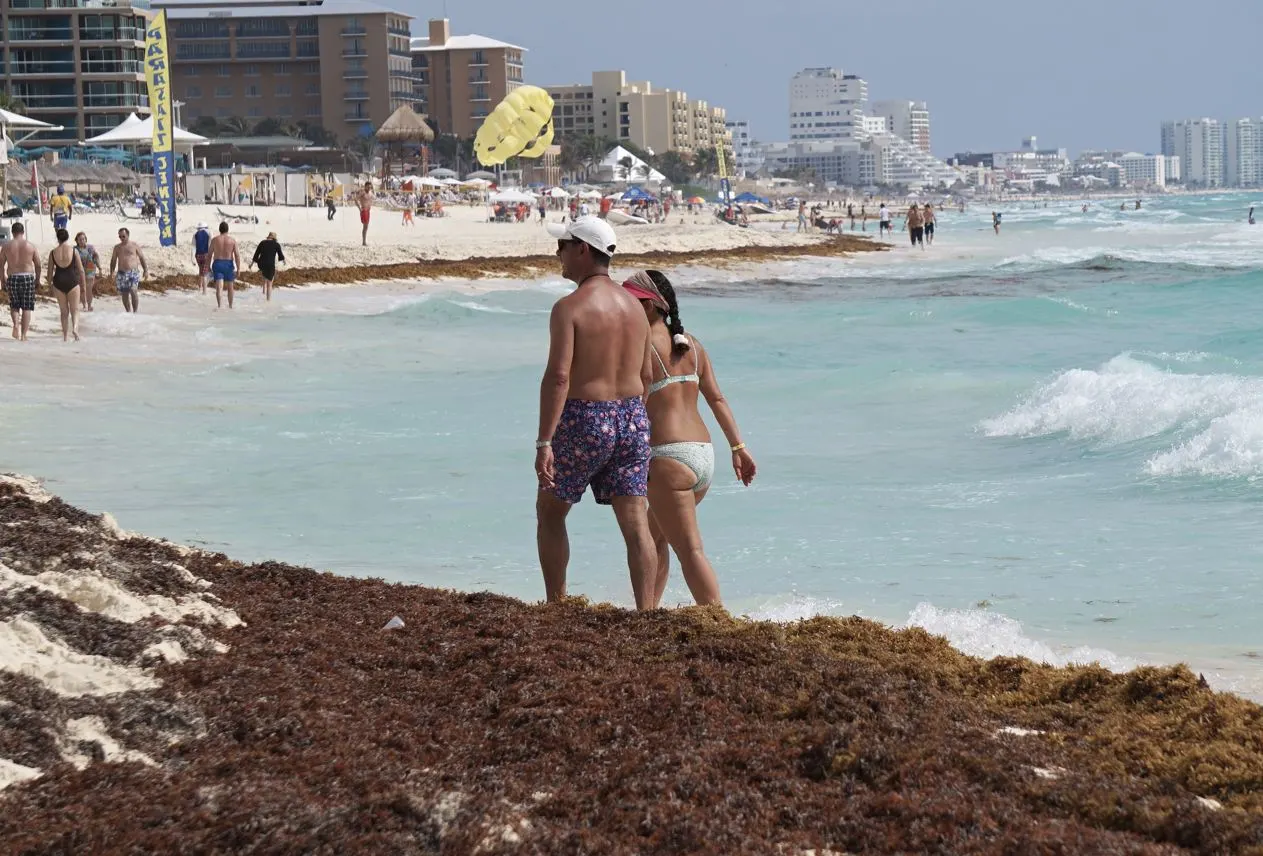
However, a sargassum bloom does not mean your vacation is ruined. The Mexican Caribbean is a massive, geographically diverse region, and local authorities are fighting back with military-grade technology.
Here is your ultimate survival guide to understanding the 2026 sargassum crisis, knowing exactly which beaches to avoid, and how to guarantee a crystal-clear vacation.
The Geography of Seaweed: Where To Stay
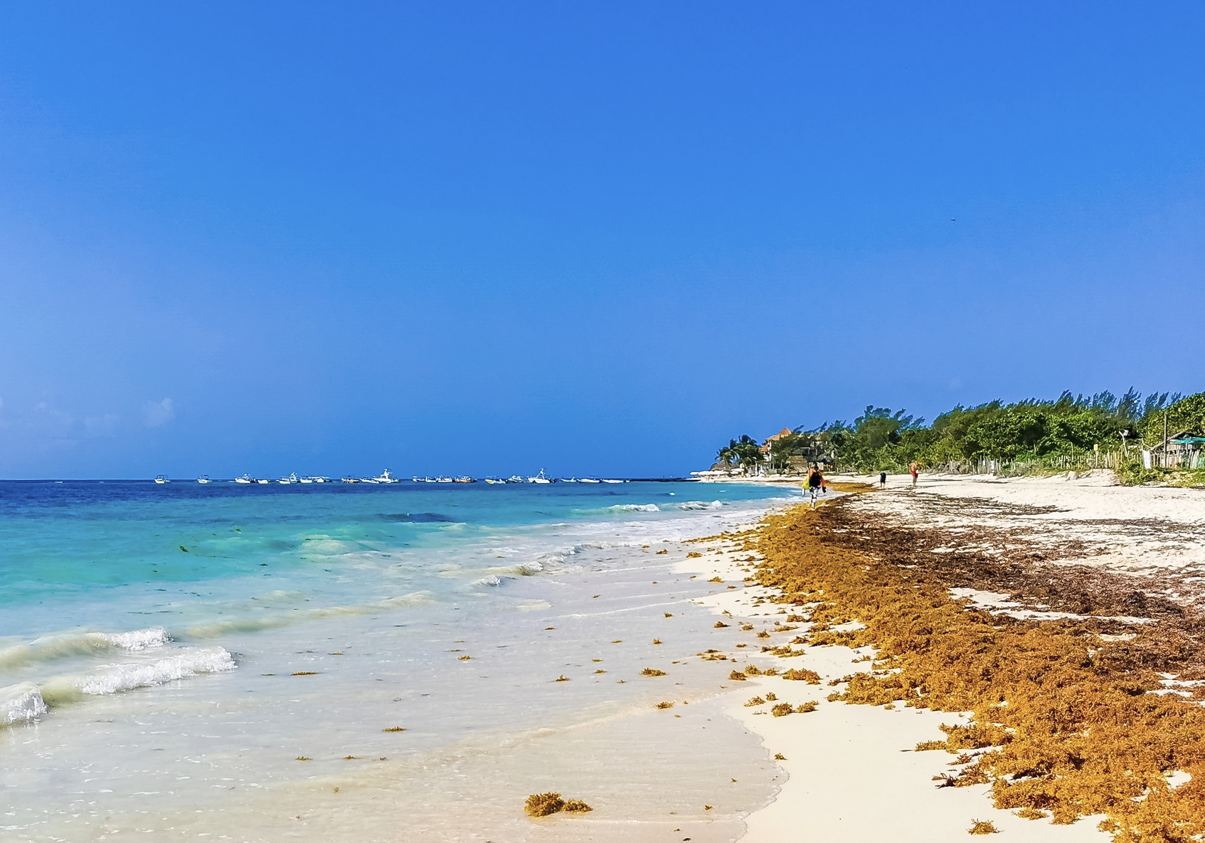
The most common mistake tourists make is assuming the entire coastline is covered in seaweed at the exact same time. Sargassum is entirely driven by ocean currents, meaning your experience depends 100% on which direction your hotel faces.
- The “Danger Zone” (East-Facing): The southern half of the Cancun Hotel Zone (like Playa Delfines), as well as the long, open coastlines of Playa del Carmen and Tulum, face directly east into the prevailing ocean currents. These areas act like a catcher’s mitt for sargassum and consistently see the heaviest, most severe inundations.
- The “North Shield” (Low Risk): The northern top of the Cancun Hotel Zone (shaped like a “7”) curves inward, facing north toward the protected bay. Beaches here, like Playa Gaviota Azul and Playa Langosta, are naturally shielded from the incoming eastern currents and remain incredibly clear even during heavy blooms.
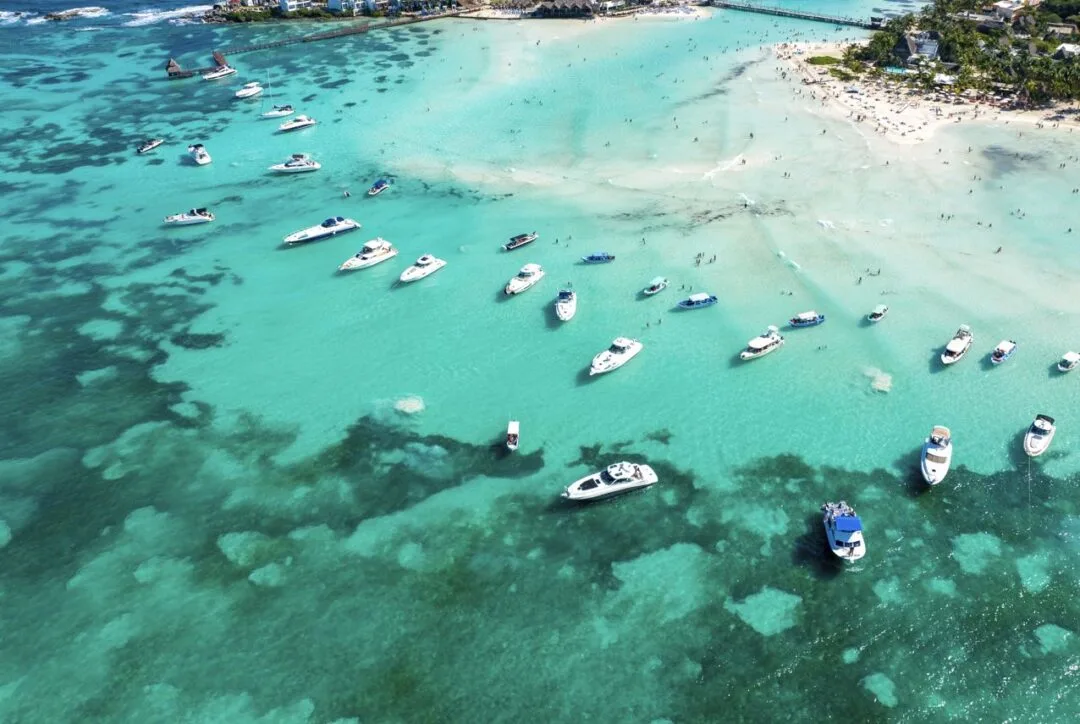
- The Island Sanctuaries (Zero Risk): If you want a 100% guarantee of pristine, seaweed-free water, you need to get off the mainland. The western, leeward coast of Cozumel and the stunning Playa Norte on Isla Mujeres are physically blocked from the incoming currents by their own island landmasses. They are the ultimate safe havens during sargassum season.
How Mexico is Fighting Back
The local government and private resorts are not just letting the seaweed pile up; they are executing a massive, multi-million dollar defense operation.
- The Naval Armada: The Mexican Navy (Semar) has taken over offshore operations. They have deployed a fleet of specialized coastal trawlers and amphibious vehicles that scoop up thousands of tons of sargassum from the water before it ever reaches the sand.
- Floating Barriers: Over 6 miles of heavy-duty, high-tensile floating barriers have been anchored just offshore in vulnerable areas like Playa del Carmen to physically block the seaweed from entering the swimming zones.
- The Dawn Patrol: On the beaches themselves, municipal crews (Zofemat) mobilize every morning at 5:00 AM with heavy tractors and conveyor belts, working frantically to clear the sand before tourists wake up.
Sargassum Survival Guide
The “Sargassum Pivot”: What To Do On A Bad Beach Day
Even with the Navy and miles of barriers, Mother Nature sometimes wins. If you wake up and your hotel beach is buried in seaweed, do not panic. Simply pivot your itinerary to the region’s world-class, sargassum-proof alternatives:
- Swim in the Cenotes: The Yucatan jungle is filled with thousands of cenotes—natural limestone sinkholes filled with crystal-clear, refreshing groundwater. Because they are completely disconnected from the ocean, they are 100% immune to sargassum.
- Explore the Lagoons: Skip the ocean and head to the sprawling Nichupté Lagoon in Cancun or the breathtaking Bacalar Lagoon further south. These massive bodies of calm water are perfect for paddleboarding and kayaking without a single piece of seaweed in sight.
- Book a Deep-Sea Charter: Sargassum only becomes a nuisance when it hits the shallow shoreline. If you book a private catamaran or a deep-sea sport fishing charter, you will be out in the deep, pristine pelagic waters far away from the coastal accumulation zones.
By understanding the geography of the coastline, utilizing live webcams before you head down to the sand, and having a solid backup plan for inland excursions, you can easily outsmart the 2026 sargassum season and have an unforgettable Caribbean vacation.
The Ultimate Cancun Trip Planner
When’s the best time to go? Our powerful month-by-month guide breaks down the weather, crowds, sargassum, and prices for your perfect trip.
Find Your Perfect Cancun & Riviera Maya Resort In Seconds
This simple, powerful tool was built by our on-the-ground experts to match you with the ideal resort for your specific budget and travel style.
Subscribe to our Latest Posts
Enter your email address to subscribe to The Cancun Sun’s latest breaking news affecting travelers, straight to your inbox.