
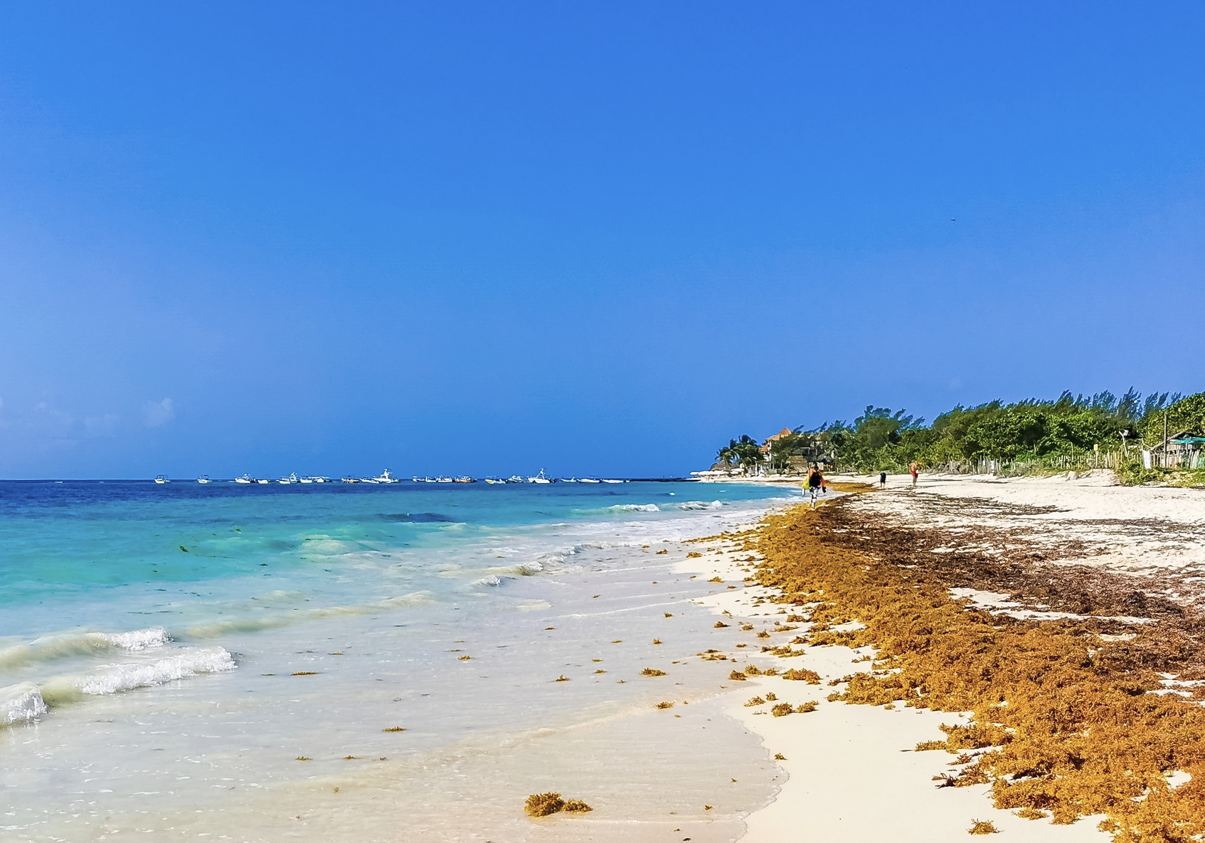
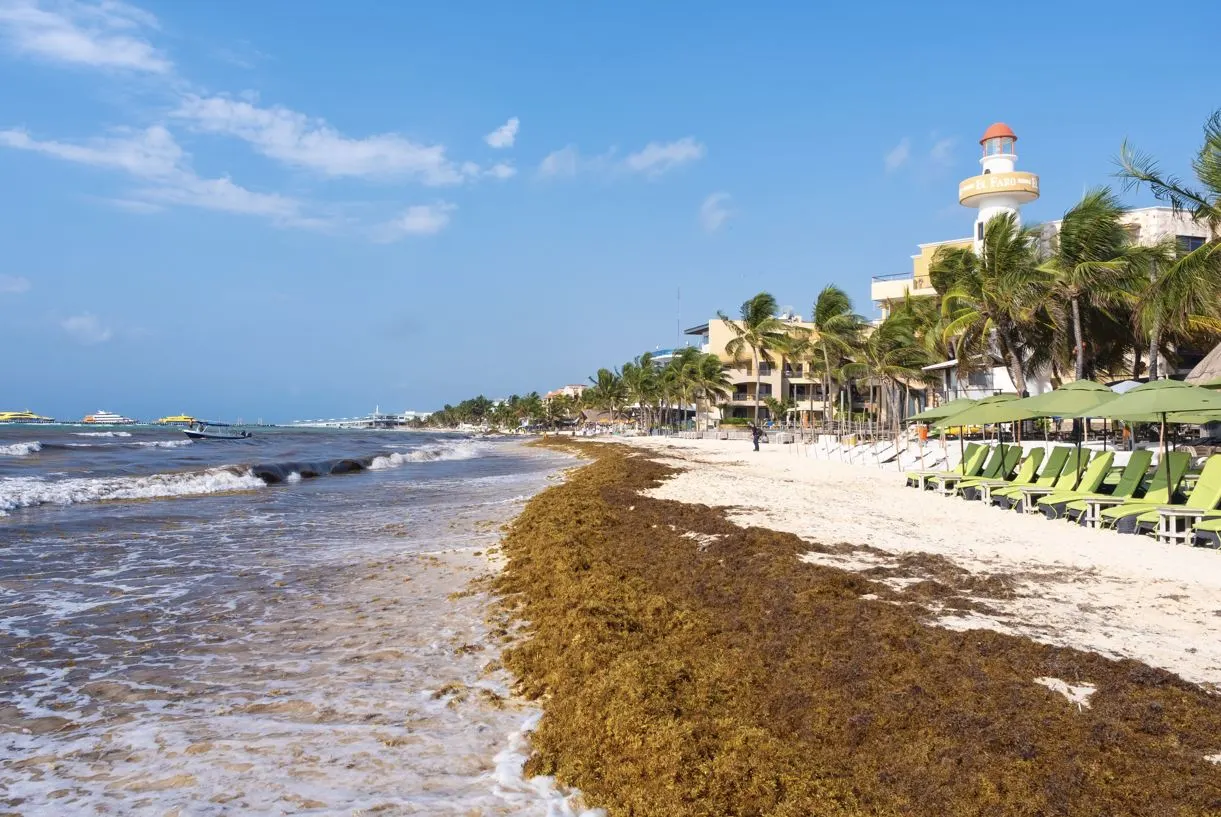
If you have visited the Mexican Caribbean during the summer months over the last few years, you are likely already familiar with sargassum. It is the sprawling brown macroalgae that occasionally washes up on the white-sand beaches, turning the pristine turquoise water murky.
For a long time, the hospitality industry treated this seaweed primarily as an aesthetic problem—an annoying eyesore that ruined vacation photos and required fleets of tractors to clear away before breakfast.
But as the volume of sargassum hitting the coast continues to break records in 2026, the conversation has fundamentally shifted.
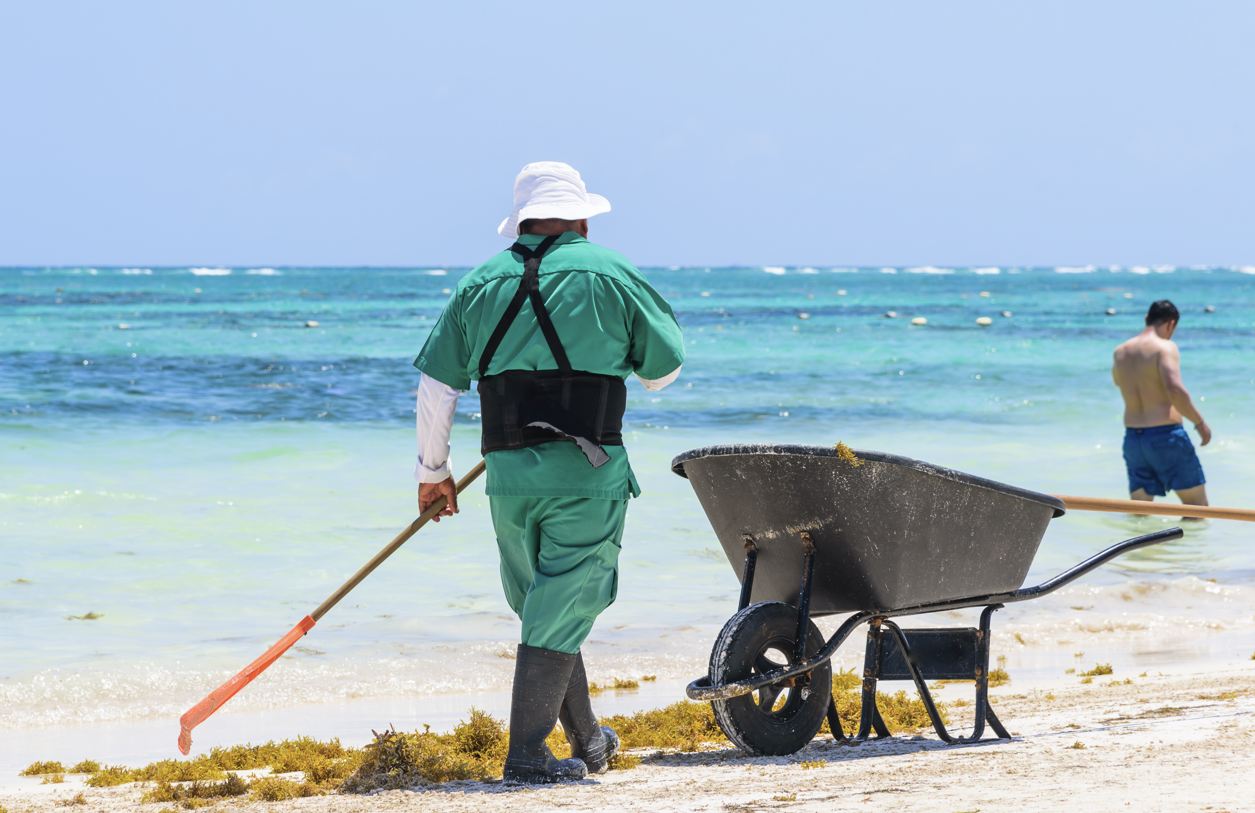
Mexican authorities are no longer just treating sargassum as a visual nuisance; they are officially tackling it as a serious public health and environmental hazard.
In a major step forward for regional safety, the government has announced plans to install high-tech sargassum-monitoring stations across key tourist zones.
Here is an on-the-ground look at exactly what these new monitoring centers do, the invisible health threats they are designed to track, and how this new technology will empower you to make safer choices during your upcoming vacation.
The Invisible Threat: Toxic Gases On The Beach
To understand why these monitoring stations are being built, you have to understand what happens when sargassum sits under the intense Mexican sun.
When the seaweed washes ashore and begins to decompose on the sand, it triggers a highly noxious chemical reaction.
The rotting organic matter releases high concentrations of two specific gases into the immediate coastal air: hydrogen sulfide and ammonia. Hydrogen sulfide is the culprit behind that distinct, highly pungent “rotten egg” smell that frequently blankets affected beaches.
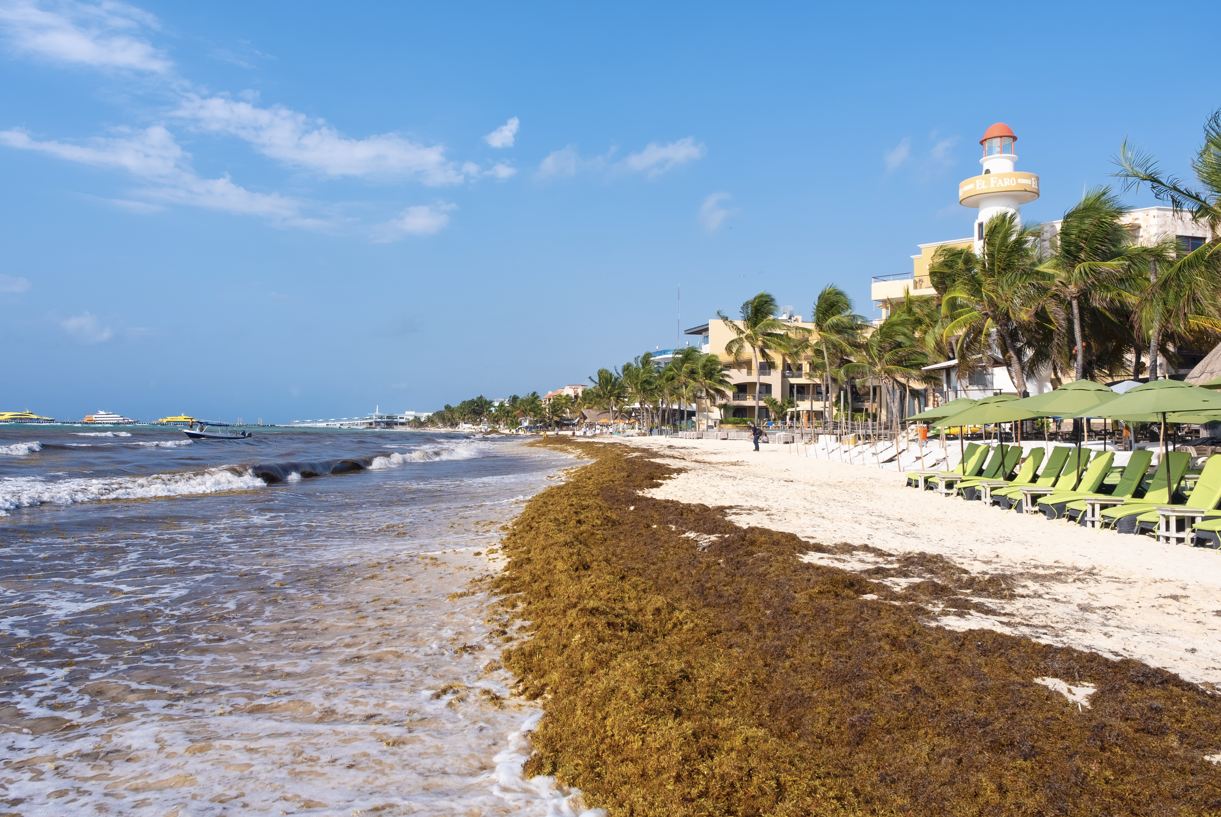
However, that smell is not just unpleasant; it is biologically hazardous.
Extensive medical studies conducted by the National Autonomous University of Mexico (UNAM) have proven that prolonged exposure to these specific decomposition gases can cause severe physical reactions in humans.
Tourists lounging near heavy accumulations, as well as the dedicated cleanup workers actively shoveling the algae, frequently report a cluster of negative symptoms, including:
- Severe irritation of the eyes and respiratory tract
- Recurring, localized headaches
- Nausea and sudden bouts of lethargy or extreme tiredness
- Skin irritation and contact dermatitis


How The New Monitoring Technology Works
To combat this invisible threat, the Secretariat of Science, Humanities, Technology and Innovation, operating through the Sargassum Echoes Network, has mobilized federal funds to deploy advanced monitoring technology directly into the hardest-hit areas.
Priced at an investment of 450,000 pesos per unit, these initial stations are being strategically constructed in three major hubs along the Quintana Roo coastline:
- Cancun: The undisputed epicenter of international tourism in the state.
- Akumal: A central Riviera Maya hotspot famous for its protected sea turtle populations.
- Mahahual: A major cruise ship port and rapidly growing tourist destination located much further south along the Costa Maya.
Each of these monitoring centers is equipped with highly sensitive, state-of-the-art electrochemical sensors. These devices run continuously, actively measuring the exact concentration of hydrogen sulfide and ammonia in the coastal air in parts per million (ppm).
The Game-Changer For Tourists: A Real-Time Alert App
While the raw data collected by these stations is vital for scientists at the National Institute of Public Health, the most exciting development for international visitors is how this data will be distributed.
The monitoring project officially includes the rollout of a dedicated mobile application.
Instead of guessing whether a beach is safe based on the smell, tourists and local residents will soon be able to check their smartphones for real-time air quality alerts.


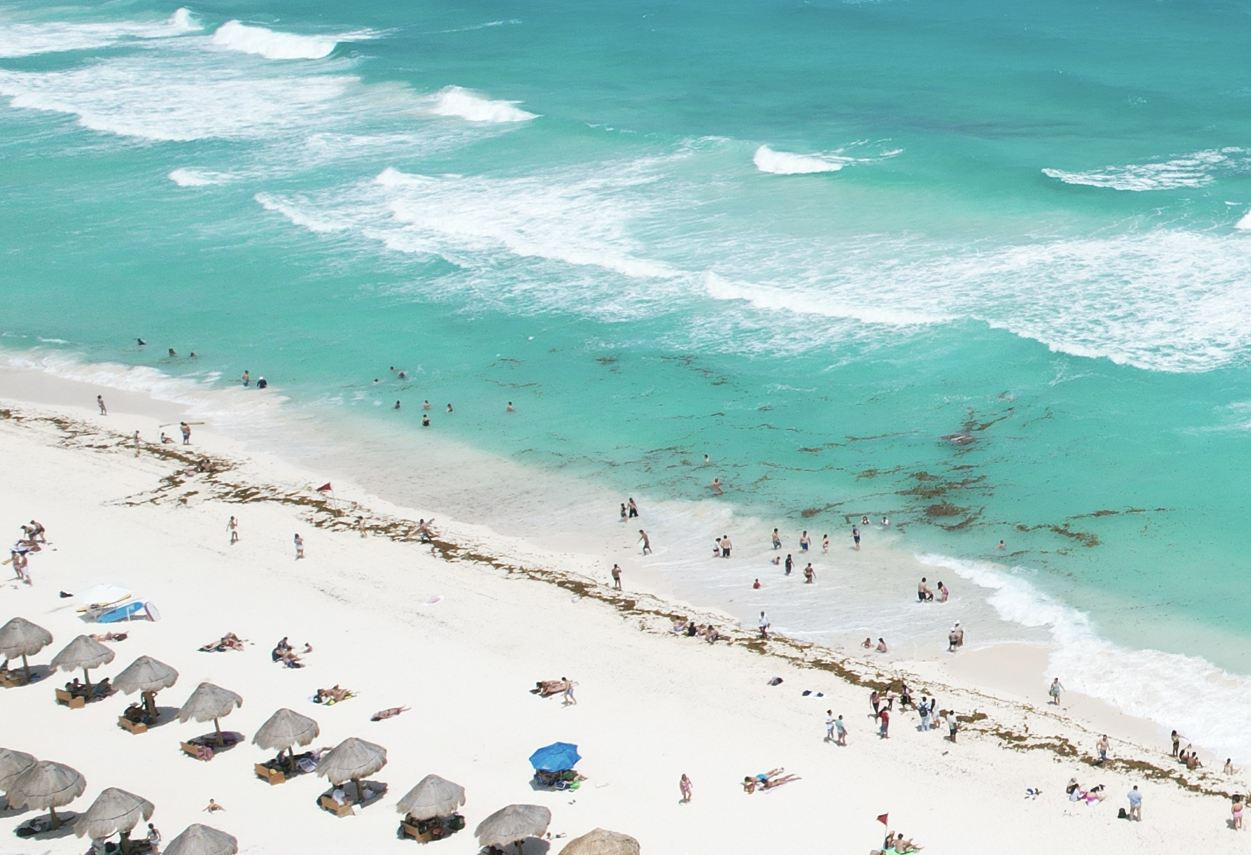
If a specific stretch of beach in Akumal or Cancun registers dangerous ppm levels of toxic gas due to an overnight sargassum landing, the app will instantly push a warning notification.
This puts the power back into the hands of the traveler. If you see an alert pop up for your resort’s beachfront, you can immediately pivot your daily itinerary—skipping the beach and heading inland to swim in the crystal-clear, sargassum-free jungle cenotes or booking a day trip to explore the Mayan ruins until the air quality improves.

Protecting The Economy and The Ecosystem
Beyond human health, these monitoring stations are tasked with assessing the catastrophic damage sargassum inflicts on the region’s delicate marine ecosystems. The project will actively monitor how the toxic runoff from the decaying seaweed impacts the fragile coral reefs, the vital seagrass meadows where turtles feed, and the sprawling mangrove forests that protect the coastline.
Furthermore, the data collected will support innovative research into alternative disposal methods, including the concept of “controlled sinking.” Scientists are actively investigating whether it is viable to intercept the sargassum at sea and safely sink it to the deep ocean floor before it ever reaches the shore, potentially neutralizing the threat entirely without harming the abyssal environment.
Sargassum Alert Tech
The stakes for this project are astronomically high. Authorities estimate that the lack of proper sargassum control and air-quality monitoring currently results in economic losses of up to $25,000 per day for every single affected tourist zone.
By heavily investing in this science-driven, real-time tracking network, the Mexican Caribbean is proving that it is fully committed to managing the sargassum crisis transparently.
For travelers heading down in 2026, these stations represent a massive upgrade in regional safety, ensuring that your time on the sand remains healthy, comfortable, and stress-free.
The Ultimate Cancun Trip Planner
When’s the best time to go? Our powerful month-by-month guide breaks down the weather, crowds, sargassum, and prices for your perfect trip.
Find Your Perfect Cancun & Riviera Maya Resort In Seconds
This simple, powerful tool was built by our on-the-ground experts to match you with the ideal resort for your specific budget and travel style.
Subscribe to our Latest Posts
Enter your email address to subscribe to The Cancun Sun’s latest breaking news affecting travelers, straight to your inbox.