
Booking an all-inclusive vacation in the Mexican Caribbean feels deeply satisfying. You spend weeks researching resorts, find a stunning beachfront property in the Cancun Hotel Zone or Riviera Maya, enter your credit card details, and assume your financial obligations are fully settled.
The phrase “all-inclusive” carries an implicit promise: once you step foot on the property, your wallet stays tucked away in the in-room safe until checkout day.
For thousands of first-time visitors landing at Cancun International Airport every single week, that peaceful illusion shatters within five minutes of standing at the front desk.
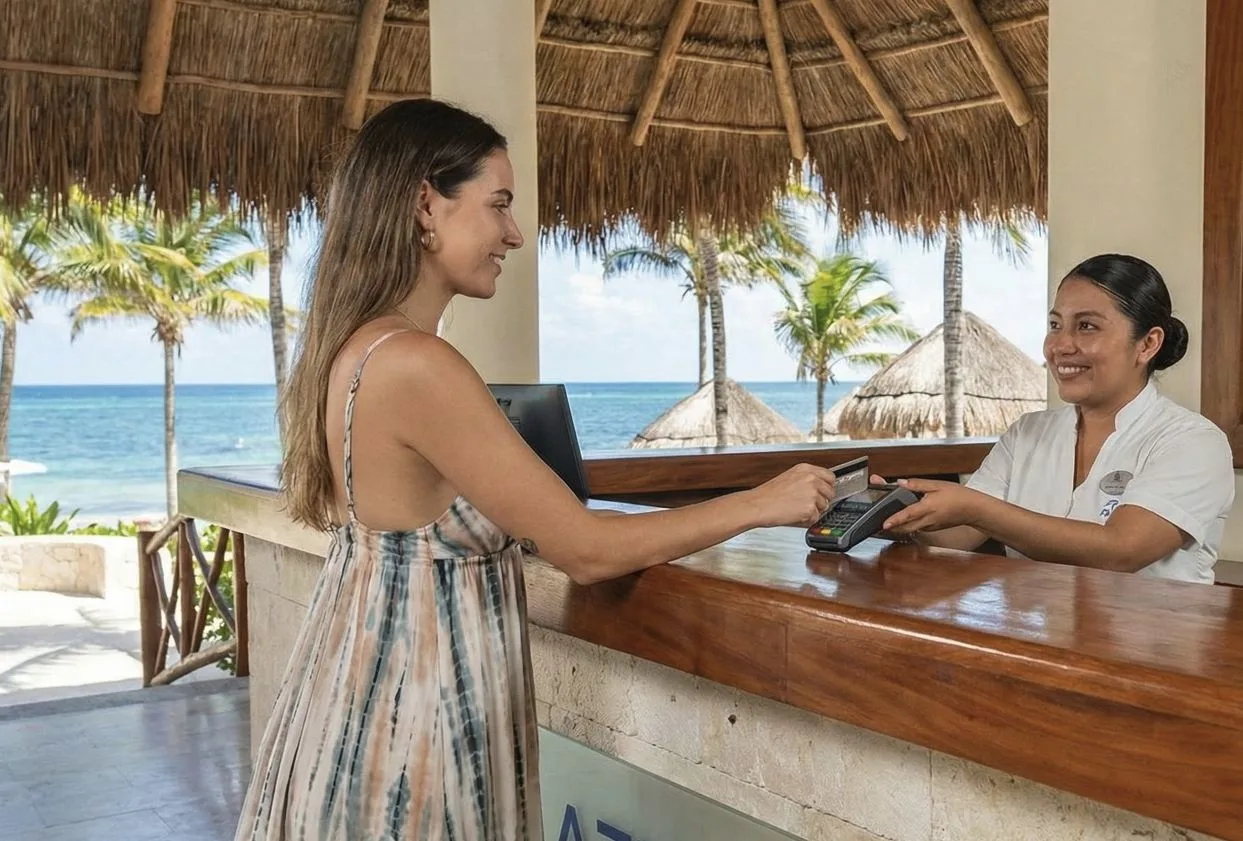
Before the concierge hands over your key card or clips on your resort wristband, they slide a payment terminal across the marble counter. While these charges rarely break a vacation budget, the sudden surprise of mandatory taxes, hefty credit card holds, and unexpected service fees can leave a sour taste before your trip even begins.
Understanding the fine print before you fly down is the single easiest way to protect your budget and avoid check-in sticker shock.

The Mandatory Environmental Sanitation Tax
The most common fee catching travelers off guard is the municipal Environmental Sanitation Tax (Derecho de Saneamiento Ambiental). Because this is a government-mandated fee rather than a resort surcharge, international travel booking engines almost never bundle it into your prepaid room total.
Established by the state government of Quintana Roo and collected by local municipalities (such as Benito Juárez in Cancun, Solidaridad in Playa del Carmen, and Tulum), this tax is explicitly designated to fund local beach conservation, coastal cleanup, and municipal infrastructure.
The fee is charged per room, per night—not per person—and generally ranges between 70 to 85 Mexican Pesos (roughly $4 to $5 USD) depending on the specific municipality.

While a five-night stay adds only around $20 to $25 USD to your total bill, the fee must be settled directly at the front desk upon arrival or departure. If you booked through a third-party vacation package that advertised “all taxes and fees included,” look closely at the fine print on your confirmation voucher; you will almost certainly spot an asterisk noting that local municipal environmental taxes must be paid locally upon arrival.
The Massive Incidental Security Hold
While the environmental tax is an actual out-of-pocket expense, incidental holds are the fee that causes the biggest logistical headaches for travelers using debit cards.
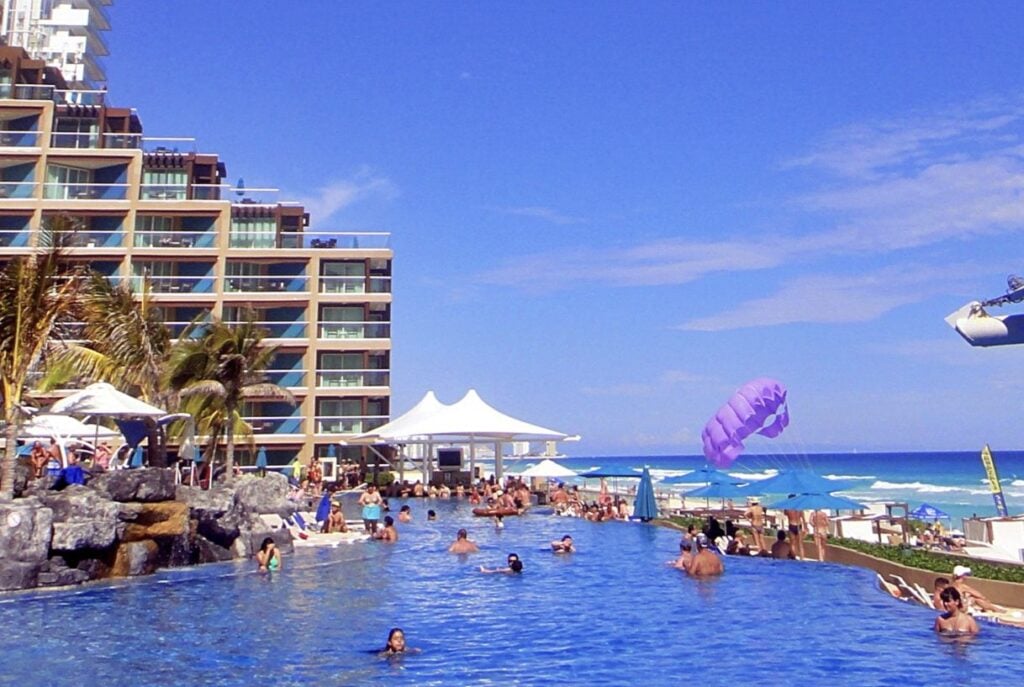
Nearly every high-end all-inclusive resort in Cancun requires an active credit card upon check-in to place a temporary security deposit. Even though your food, alcohol, and baseline lodging are prepaid, resorts place this hold to cover potential room damages, top-shelf liquor upgrades, spa services, or motorized water sports charged to your room folio.
Depending on the property, these incidental authorizations routinely range from $200 to $500 USD per stay, with ultra-luxury five-diamond resorts holding upwards of $1,000 USD. If you present a standard credit card, the authorization simply ties up a portion of your available credit limit without generating an actual charge. However, if you hand the receptionist a debit card, that money is immediately frozen and pulled directly from your liquid checking account. It can take anywhere from five to ten business days after checkout for your home bank to release the funds back into your account, leaving cash-strapped travelers in a serious pinch while traveling.

Early Arrival and Wristband Fees
Flight schedules from the United States and Canada frequently land in Cancun early in the morning, meaning eager travelers often arrive at their resort by 10:30 AM or 11:00 AM. Standard hotel check-in across Mexico, however, rarely starts before 3:00 PM.
Historically, resorts would happily take your luggage, store it with the bellhop, and strap on your all-inclusive wristband immediately so you could grab lunch and start enjoying the pool bars while housekeeping readied your suite. While many properties still maintain this generous hospitality policy, an increasing number of large corporate resort chains have monetized early arrival.

If your room is not ready, front desk staff may inform you that early access to restaurants and bars requires an “early check-in access fee,” which can run between $30 and $75 USD per adult. A similar fee structure often applies on departure day: if your flight home departs late in the evening and you want to keep your wristband active past the standard 11:00 AM or 12:00 PM checkout time, the resort may demand a hefty half-day resort pass fee.
Dynamic Currency Conversion Markups
When you settle your local taxes, spa appointments, or upgrade fees at the front desk, the payment terminal will typically detect that you are using a foreign credit card issued in US Dollars or Canadian Dollars. The screen will prompt you with a seemingly helpful choice: “Charge in USD” or “Charge in MXN.”

This is known as Dynamic Currency Conversion (DCC), and accepting it is one of the costliest financial traps in international travel. If you choose to be billed in your home currency, the local terminal’s merchant bank handles the conversion rather than your own credit card company. In exchange for showing you the final total in US Dollars, the processing system applies an inflated, predatory exchange rate that can tack on a hidden 5 to 10 percent markup to your transaction.
Always select to be charged in the local currency (Mexican Pesos). If your credit card offers zero foreign transaction fees, your home bank will execute the conversion at the true interbank exchange rate, saving you money on every single swipe.
Towel Cards and Wristband Penalties
When you complete the check-in process, the receptionist will hand you your room key along with plastic “towel cards” and your waterproof wristband. Pay very close attention to the verbal instructions given during this handoff.
Many all-inclusive properties enforce surprisingly steep financial penalties for lost amenity items. If you lose a plastic towel token at the beach or fail to turn it back in during checkout, resorts routinely bill your folio $20 to $40 USD per towel.
Even more extreme are wristband replacement penalties. Because your wristband acts as your all-inclusive credential, resorts treat lost or cut bands with high security. Losing a wristband can trigger a non-negotiable penalty fee ranging from $50 to upwards of $150 USD at luxury properties to prevent guests from passing credentials to non-registered visitors.


How to Beat the Check-In Surprises
Navigating resort check-in without unnecessary friction simply requires a smart, proactive routine before you step up to the desk:
- Always Use a Credit Card, Never Debit: Keep your liquid checking account completely separate from the hotel billing system. Using a dedicated travel credit card ensures that incidental holds do not lock up your daily spending cash.
- Always Choose MXN on the Terminal: Whenever any credit card machine offers to convert the total into US Dollars, press the button for Mexican Pesos to completely bypass Dynamic Currency Conversion fees.
- Clarify Early Arrival Policies in Advance: If your flight lands early in the morning, send a quick email to the resort concierge a week prior to ask specifically whether amenity access prior to 3:00 PM is complimentary. Knowing the policy ahead of time prevents awkward debates in the lobby.
Join Our Cancun Sun Community of 16,000+ Members
Get real-time answers to your travel questions from our team of local experts and thousands of fellow travelers directly inside our interactive group.
Find Your Perfect Cancun & Riviera Maya Resort In Seconds
This simple, powerful tool was built by our on-the-ground experts to match you with the ideal resort for your specific budget and travel style.
The Ultimate Cancun Trip Planner
When’s the best time to go? Our powerful month-by-month guide breaks down the weather, crowds, sargassum, and prices for your perfect trip.
Enter your email address to subscribe to The Cancun Sun’s latest breaking news affecting travelers, straight to your inbox.