
When you finally pack your bags and trade your daily commute for a tropical escape, the absolute last thing you want to see is a coastline covered in brown, foul-smelling algae.
If you are keeping an eye on the Mexican Caribbean this year, you already know that 2026 is throwing us a curveball. We are currently experiencing one of the most intense sargassum seasons on record, and it is definitely changing how we approach our beach days.
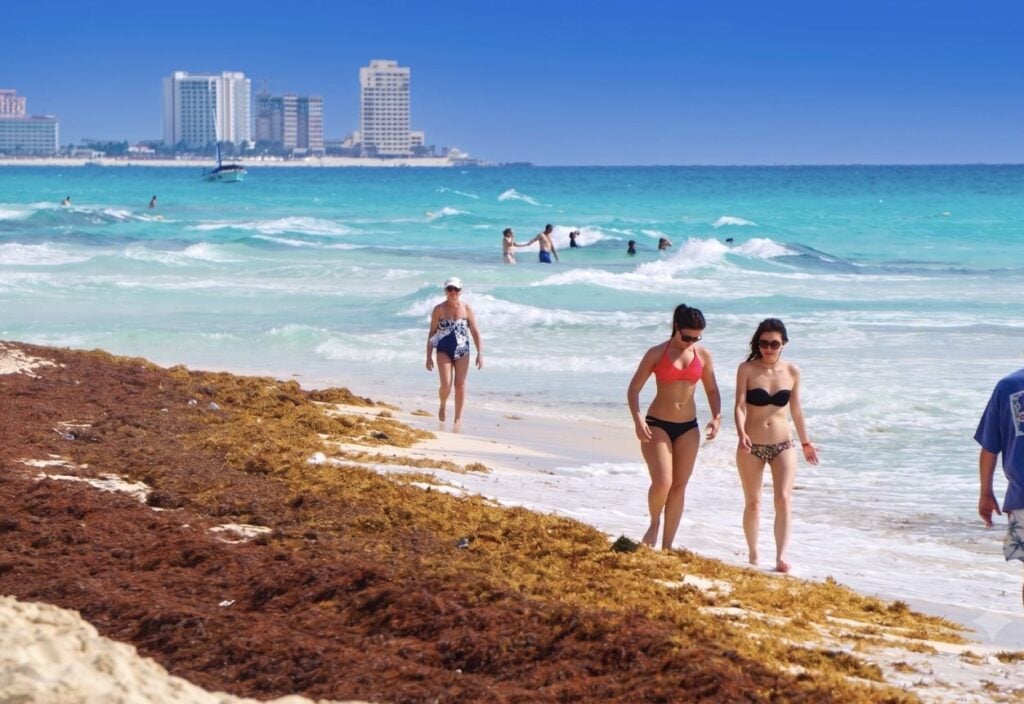
So far this year, local crews in Quintana Roo—the state home to heavy hitters like Cancun, Playa del Carmen, and Tulum—have hauled away over 105,000 metric tons of sargassum from public beaches. That massive number has already smashed last year’s record, putting the region on track to blow completely past initial projections.
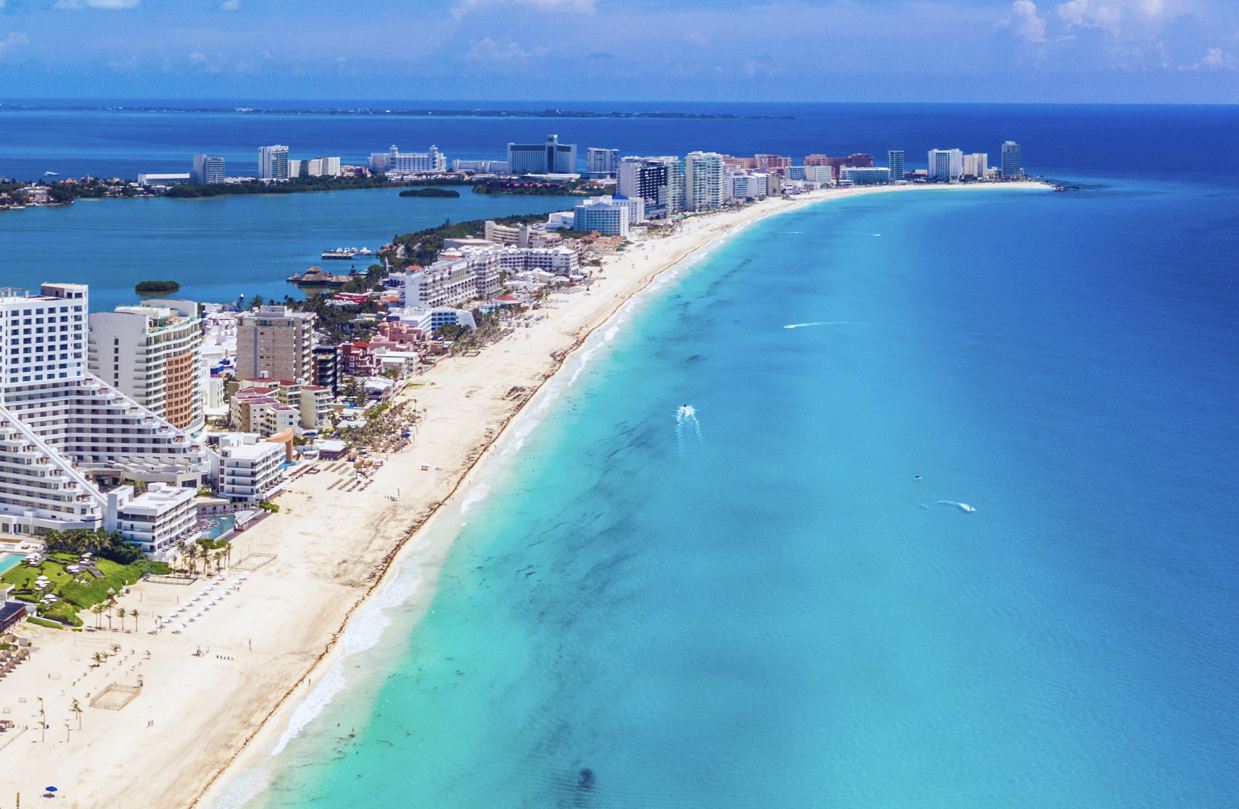
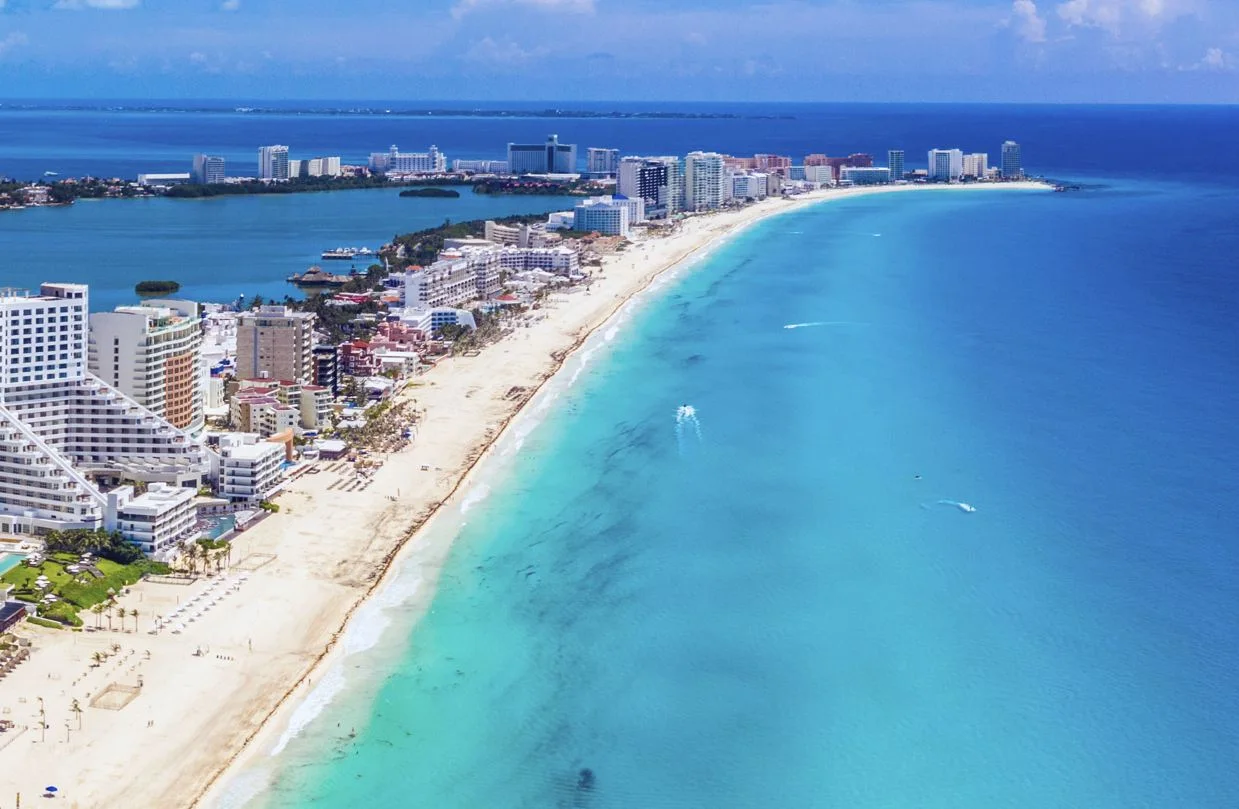
If you have a trip on the calendar for the late summer or early fall, you are probably asking yourself one very important question: When is this seaweed finally going away?
Here is the deal on the timeline, why this year is breaking all the rules, and exactly how long you can expect the sargassum to stick around.
The Timeline: When Will the Waves Stop?
According to environmental officials on the ground, the current forecast suggests this heavy sargassum season could stretch into early or mid-October.
While Mother Nature is always in charge—meaning weather patterns, hurricanes, and shifting ocean currents can change the forecast at a moment’s notice—late autumn is traditionally when we finally see a break in the bloom cycle.
Here is what the rest of the calendar looks like for your beach plans:
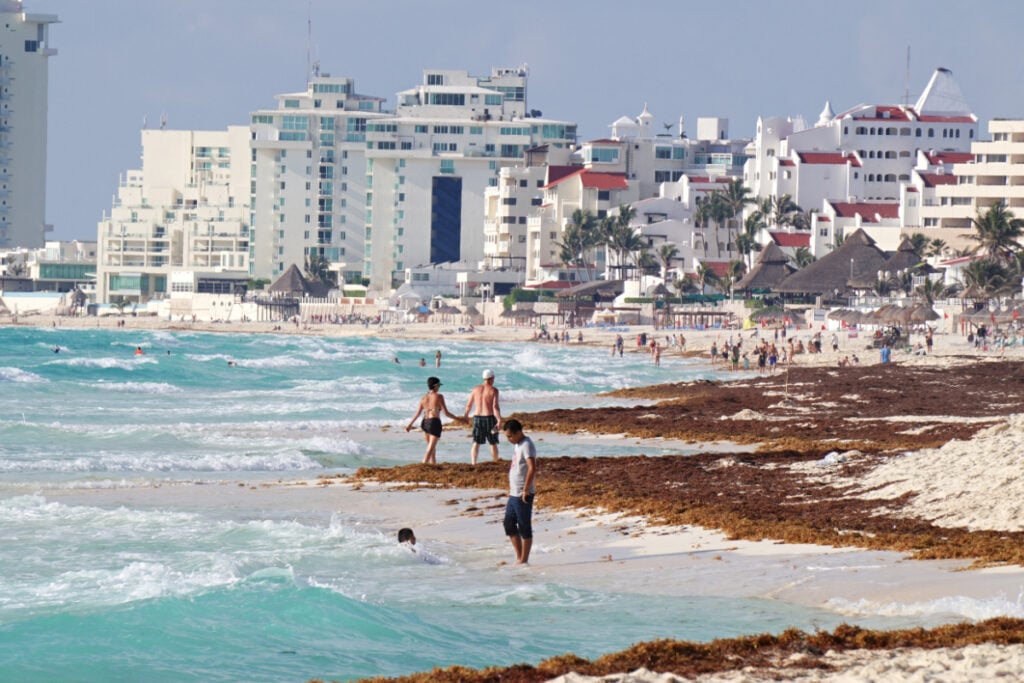
- Late August through September: Expect active, rolling waves of seaweed to keep landing on the open ocean beaches. You will see municipal crews, naval teams, and dedicated resort staff working around the clock in a massive cleanup effort.
- October (The Transition Window): As ocean temperatures begin to cool down and the trade winds shift direction, the influx historically tapers off. This is when we start getting those beautiful, clear beach days back.
- November through February: This is the golden window. The sargassum belt recedes dramatically during the winter months, offering up those flawless, crystal-clear turquoise waters that make the Caribbean so famous.
Why Is 2026 Hitting Such Extreme Highs?
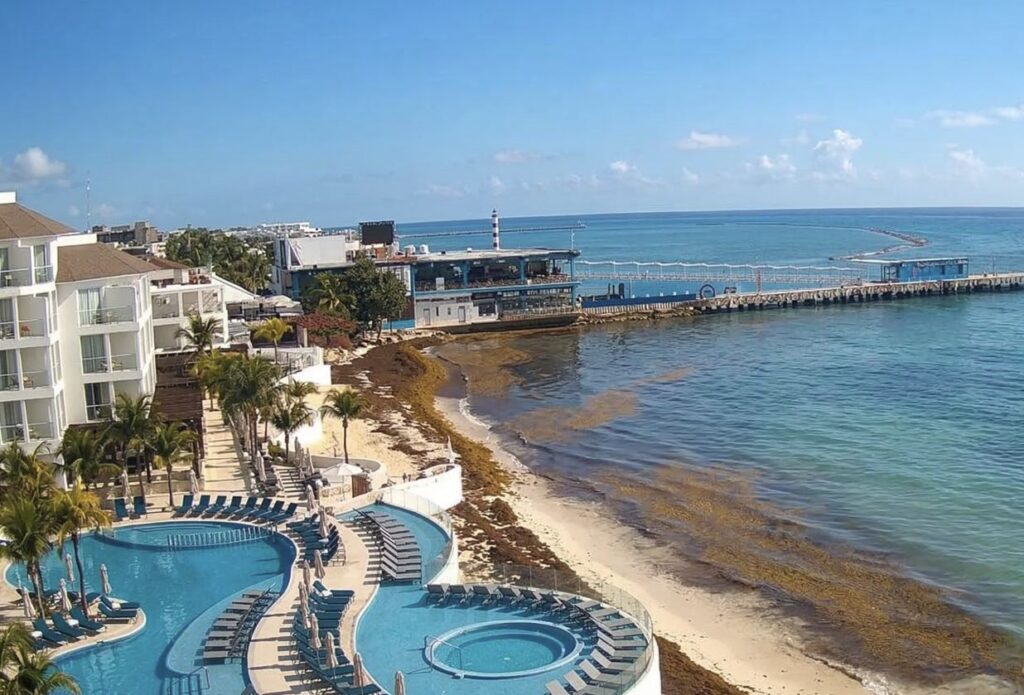
If you travel to the Riviera Maya frequently, you have probably noticed that this season feels a bit more intense than usual. Marine experts point to a “perfect storm” of conditions driving these massive, unprecedented blooms across the Atlantic.
Nutrient-heavy water currents carrying agricultural runoff are essentially feeding the floating macroalgae as it drifts across warm tropical waters. When you combine that rich diet with rising sea temperatures, the seaweed reproduces at exponential rates before the currents push it directly onto our favorite beaches.
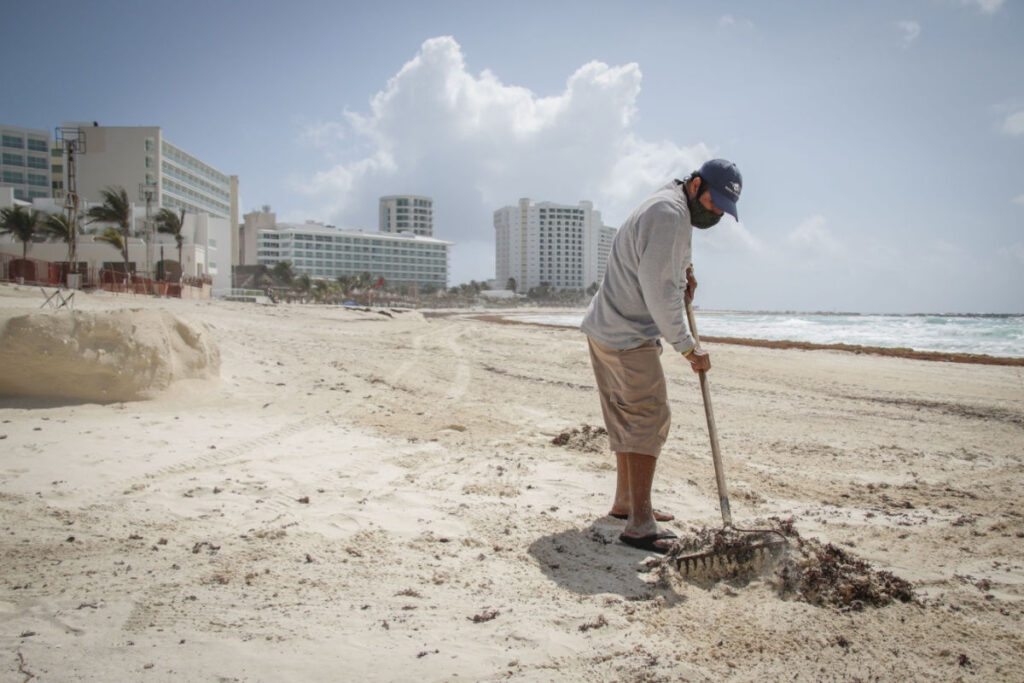
Once it hits the sand and bakes in the tropical sun, it begins to decompose. That process releases hydrogen sulfide gas, which creates that distinct sulfur-like odor. It is a frustrating environmental reality that has forced local communities and resorts to turn their daily beach maintenance into a massive, 24/7 operation to protect your vacation experience.
Turning a Nuisance Into a Green Opportunity
Because fighting this seaweed has turned into a multi-million-dollar annual battle, local innovators are actively hunting for long-term solutions. Rather than simply dumping thousands of tons of collected algae into landfills, green-tech enterprises are stepping up to turn this environmental headache into something incredibly useful.
Right now, specialized facilities are processing harvested sargassum into high-value liquid bio-stimulants and organic fertilizers for agriculture. Researchers have even found ways to transform the seaweed into bio-plastics, sustainable building materials, and biofuels. By creating a profitable, eco-friendly market around the algae, it helps offset the staggering costs of keeping the sand pristine for travelers like you.

How to Navigate Your Vacation Right Now
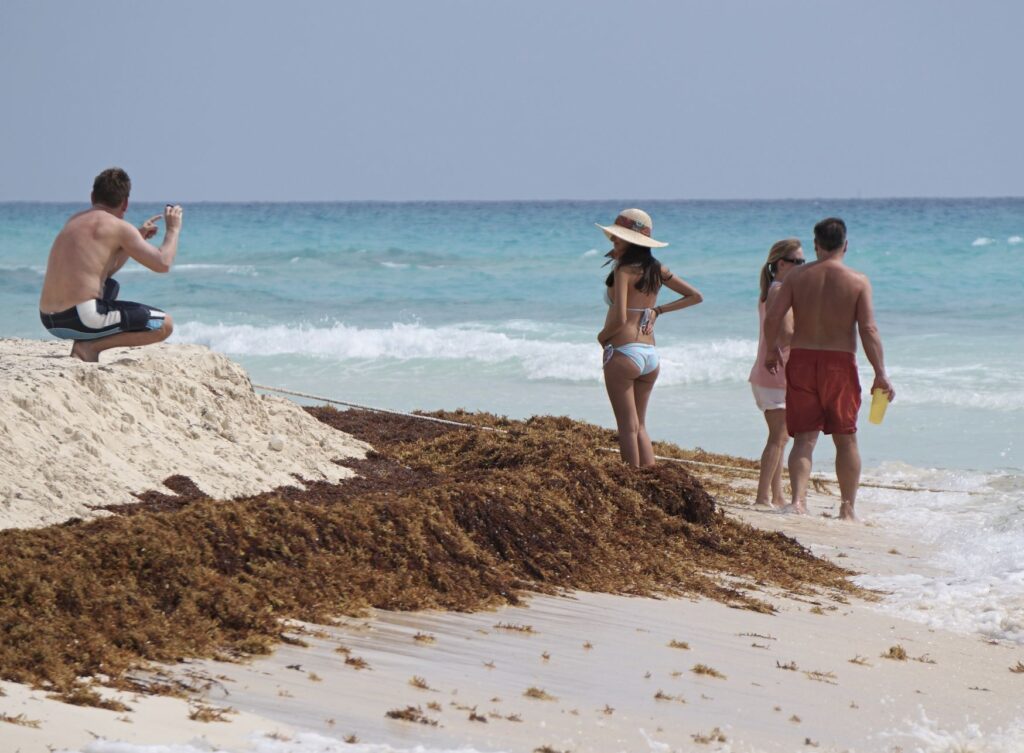
If your bags are packed for Cancun or the Riviera Maya between now and mid-October, please do not stress. A heavy seaweed forecast absolutely does not mean your trip is ruined.
Geography is your best friend right now. While open, east-facing beaches like Tulum or the southern stretches of Playa del Carmen take the brunt of the waves, you have incredible alternatives just a short drive or ferry ride away. Sheltered spots like Playa Norte on Isla Mujeres, the west coast of Cozumel, and the northern tip of the Cancun Hotel Zone frequently remain stunningly clear, even during the peak arrival days.
Keep an eye on the morning beach webcams, build a flexible itinerary, and remember that the Yucatan Peninsula is packed with crystal-clear, seaweed-free freshwater cenotes waiting to be explored. With a little bit of planning, you can easily outsmart the tail end of this year’s sargassum season and have an unforgettable trip.
Join Our Cancun Sun Community of 16,000+ Members
Get real-time answers to your travel questions from our team of local experts and thousands of fellow travelers directly inside our interactive group.
Find Your Perfect Cancun & Riviera Maya Resort In Seconds
This simple, powerful tool was built by our on-the-ground experts to match you with the ideal resort for your specific budget and travel style.
The Ultimate Cancun Trip Planner
When’s the best time to go? Our powerful month-by-month guide breaks down the weather, crowds, sargassum, and prices for your perfect trip.
Enter your email address to subscribe to The Cancun Sun’s latest breaking news affecting travelers, straight to your inbox.