
If you enjoyed the crystal-clear, seaweed-free beaches brought on by the recent cold fronts, take a lot of photos—because the break is almost over.
The Mexican Navy (Semar) has officially issued a warning that the “Sargassum Season” is about to ramp up significantly. According to their latest tracking data, a colossal mass of over 280,000 tons of brown algae is currently moving westward across the Central Atlantic, headed straight for the Mexican Caribbean.
With Holy Week (Easter) just around the corner and the massive 2026 summer World Cup crowds looming, authorities at all levels of government are moving fast.
Here is exactly what to expect on the beaches of Cancun, Playa del Carmen, and Tulum starting next month, and how the military is stepping in to save your vacation.

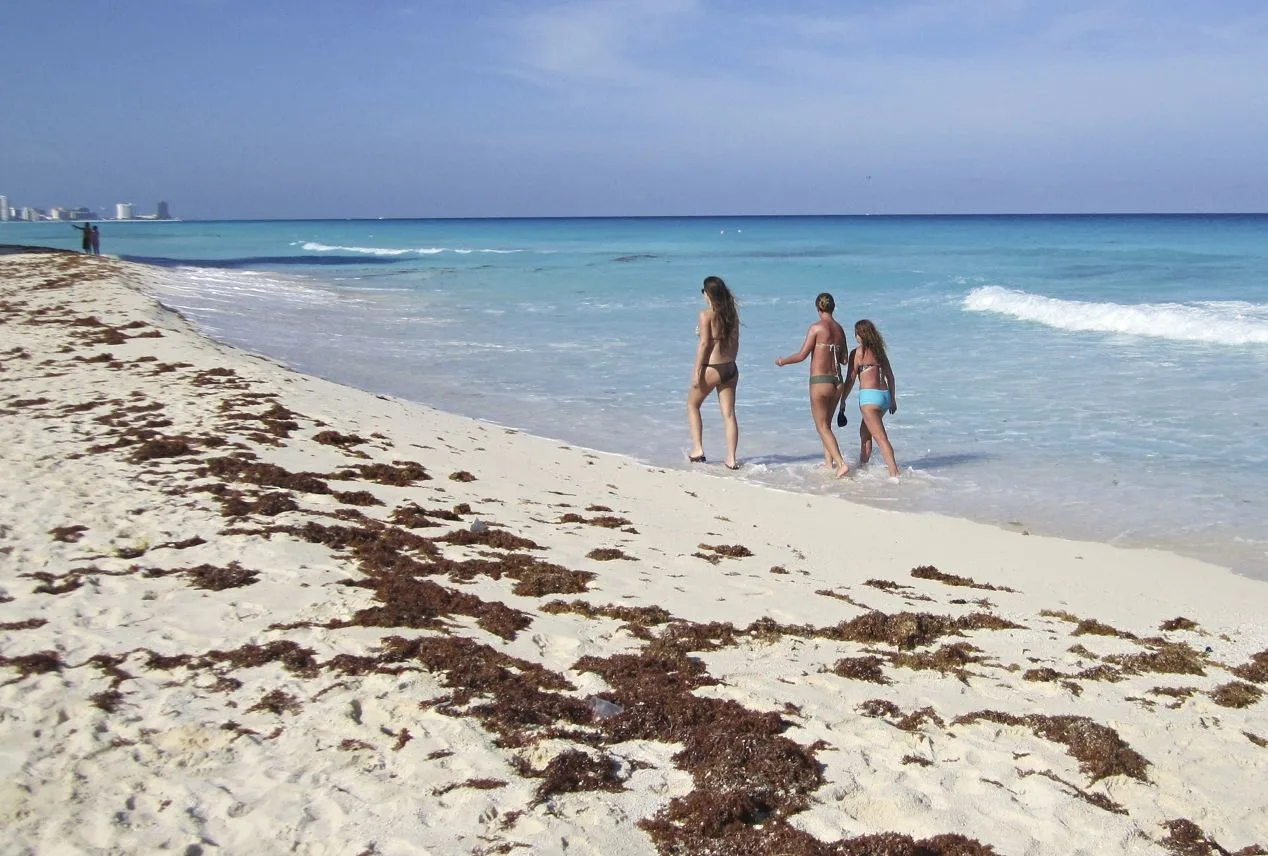
The Warning: A 75% Spike for March & April
Historically, the worst of the sargassum doesn’t hit until the peak heat of the summer. But 2026 is officially an early-arrival year.
The Navy predicts that throughout March and April, the arrival levels will exceed historical averages by a staggering 75%.
The shift in winds as the winter cold fronts fade will allow the massive offshore belt to finally make landfall across Quintana Roo.
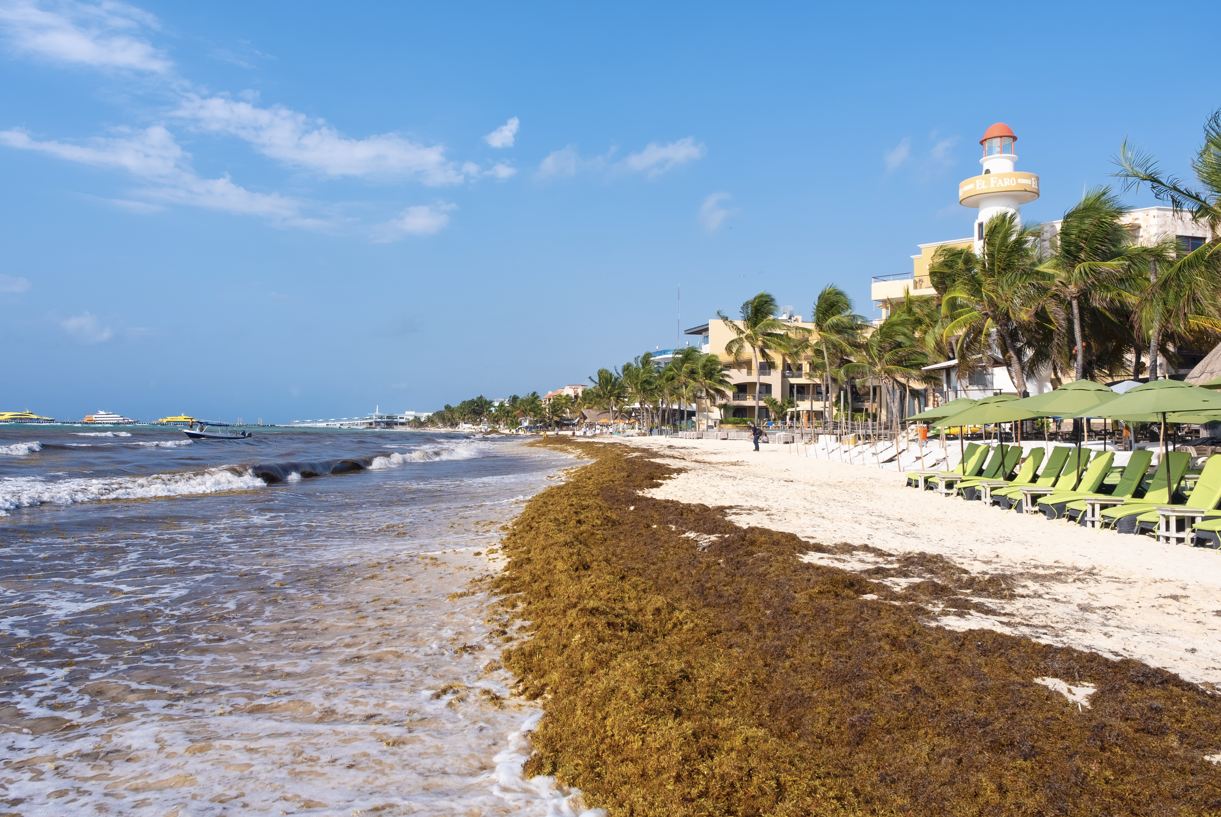
The Defense: A Literal Military Operation
The good news is that the government is not waiting for the seaweed to hit the sand to start cleaning it up. The Navy treats this like a full-scale coastal defense operation.
Here is the armada currently deployed to intercept the seaweed before you ever see it:
- The Fleet: 16 surface vessels, 1 massive ocean-going ship, 11 coastal vessels, and 4 specialized amphibious collection boats are actively patrolling the waters.
- The Shield: There are currently 9,500 meters of containment barriers installed in the water to catch the floating mats miles offshore.
- The Reinforcements: In coordination with the state government, the Navy is rushing to deploy an additional 6,000 meters of barriers to protect the most vulnerable tourist corridors.

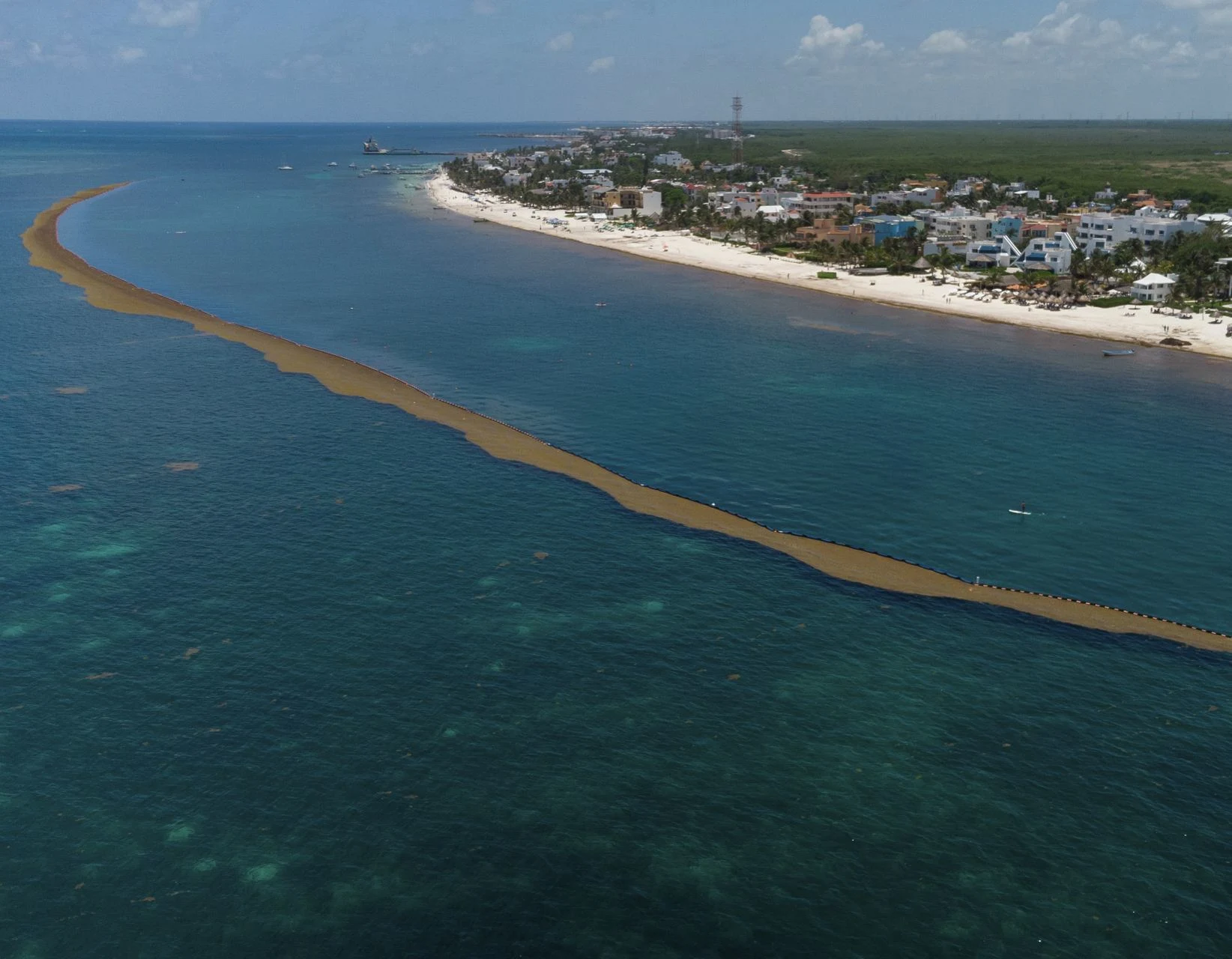
The “World Cup” Factor
Why the massive, immediate push for extra barriers? The upcoming 2026 World Cup.
Cancun is a primary gateway and leisure hub for international fans attending the tournament this summer. The government knows that the eyes of the world will be on Mexico, and they are heavily investing in this naval infrastructure to ensure the destination looks postcard-perfect when the global crowds arrive.
The 2026 Sargassum Surge
The clear water break is ending. Tap a card to see how Mexico is mobilizing the Navy to protect your vacation from the massive seaweed belt.
75% SPIKE
March & April Peak
TAP TO REVEALNAVAL ARMADA
Full Military Operation
TAP TO REVEALMILES OF NETS
15,500m of Barriers
TAP TO REVEALWORLD CUP ’26
Global Spotlight
TAP TO REVEALTHE PIVOT
What Tourists Should Do
TAP TO REVEALOur Take for Travelers
Hearing that a 280,000-ton mass of seaweed is heading your way sounds terrifying, but context is everything. That mass is spread across the entire ocean, and the Mexican Navy is literally deploying warships and miles of nets to keep it off your beach chair.
If you are traveling in March or April, pack some flexibility. If the beach at your specific resort gets hit by a stray current overnight, pivot. Take a ferry to the naturally shielded west coast of Cozumel, spend the day exploring the freshwater cenotes, or simply enjoy your resort’s luxury pools while the cleanup tractors do their work.
The Ultimate Cancun Trip Planner
When’s the best time to go? Our powerful month-by-month guide breaks down the weather, crowds, sargassum, and prices for your perfect trip.
Find Your Perfect Cancun & Riviera Maya Resort In Seconds
This simple, powerful tool was built by our on-the-ground experts to match you with the ideal resort for your specific budget and travel style.
Subscribe to our Latest Posts
Enter your email address to subscribe to The Cancun Sun’s latest breaking news affecting travelers, straight to your inbox.
Jonathan Carley
Thursday 26th of February 2026
What is the impact of these seaweed barriers on marine life?
RF
Monday 16th of February 2026
Don't be surprised to see trained falconers at your resort flying a Harris's Hawk on property to haze gulls and grackles. The rafts of sargassum create perfect foraging and loafing areas for seabirds, and the gulls often move onshore looking for freshwater pools and tourist lunches. It's a new and challenging ecological dynamic the resorts are battling.
K Warren
Sunday 15th of February 2026
There is a ton of sargassum already on the beaches in Puerto Morelos!!!