
Late summer in the Mexican Caribbean is a double-edged sword. On one hand, you will find some of the absolute lowest prices of the year on flights and luxury all-inclusive resorts. On the other hand, August and September represent the absolute peak of the sargassum seaweed crisis.
With 2026 already breaking historical records—and an estimated 40 million tons of biomass circulating in the Atlantic—booking a trip during these two months requires a tactical approach.
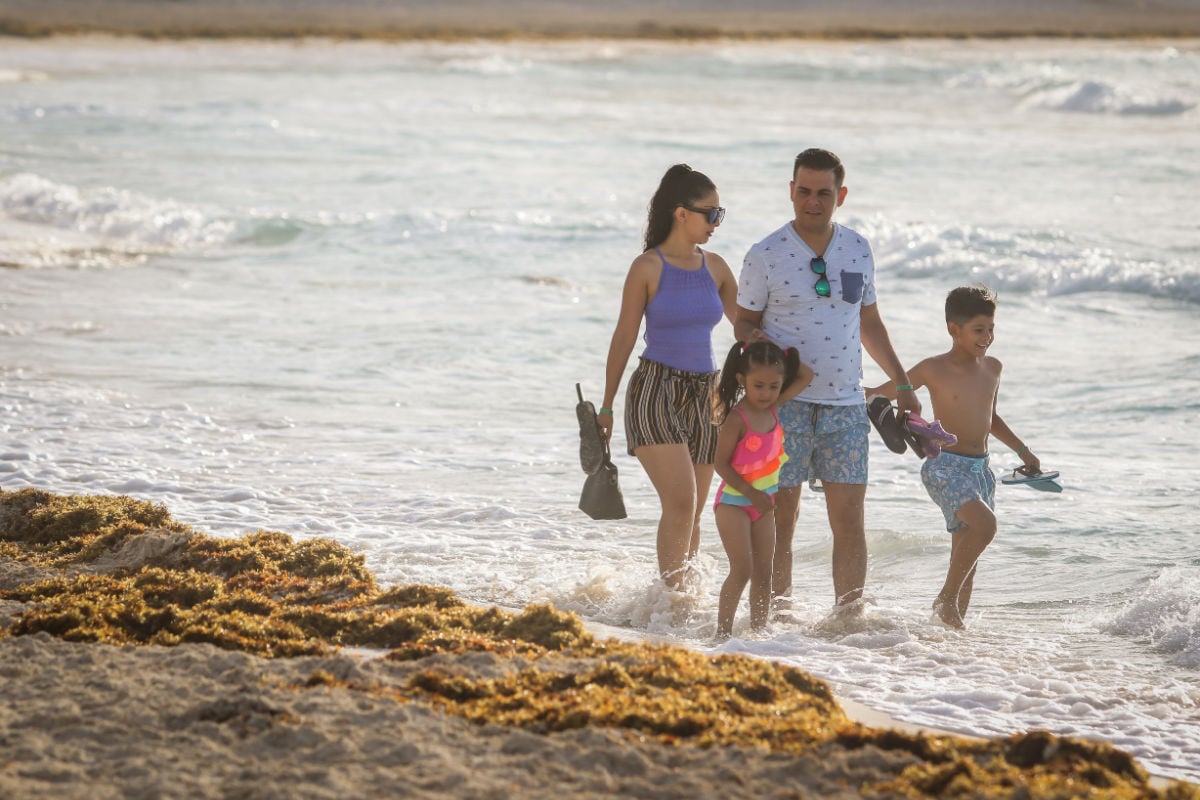
If you blindly book a standard, east-facing beachfront resort during August or September, there is a very high probability that the ocean will be unswimmable, visually murky, and accompanied by a potent sulfuric odor.
But does that mean you should cancel your late-summer vacation? Absolutely not.
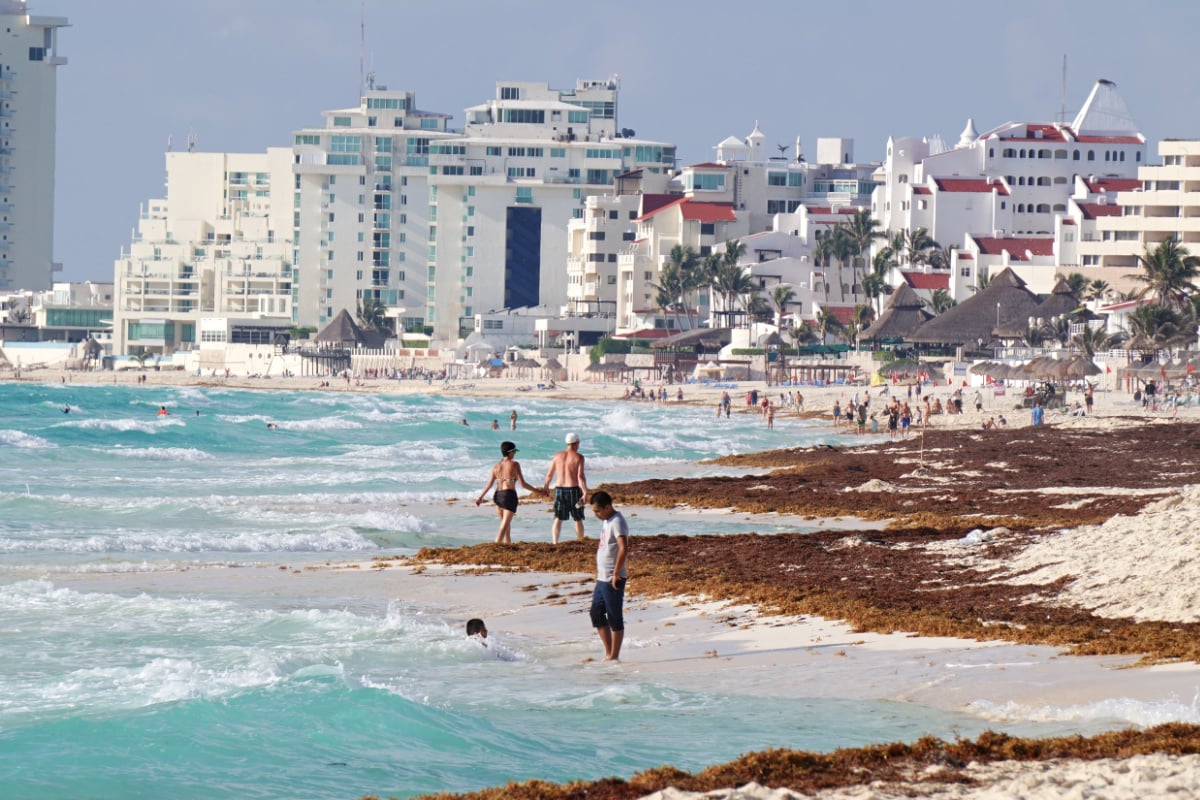
Cancun and the Riviera Maya offer incredibly diverse geography.
If you know how to navigate the region like an insider, you can absolutely salvage your trip and have a spectacular, seaweed-free vacation.
Here is why August and September are the danger zone, and exactly how to outsmart the sargassum.
Why August and September Are The “Perfect Storm”
To understand how to avoid the seaweed, you need to understand why it peaks during these specific late-summer months. It comes down to a combination of marine biology and extreme weather patterns.
By the time August rolls around, the Great Atlantic Sargassum Belt has been baking in the warm ocean sun for months. The Atlantic waters hit their peak annual temperatures during late summer, acting as an incubator that allows the seaweed to reproduce at terrifying speeds, doubling its mass every few weeks.
Furthermore, August and September are the height of the Atlantic hurricane season. Even if a tropical storm or hurricane does not directly hit Cancun, the massive shifting wind fronts and deep ocean churning caused by these distant storms physically push the heaviest, most mature mats of sargassum directly onto the windward shores of Quintana Roo. The volume arriving during these months frequently completely overwhelms municipal cleanup crews and resort tractor fleets.
Strategy 1: The Geography Cheat Code
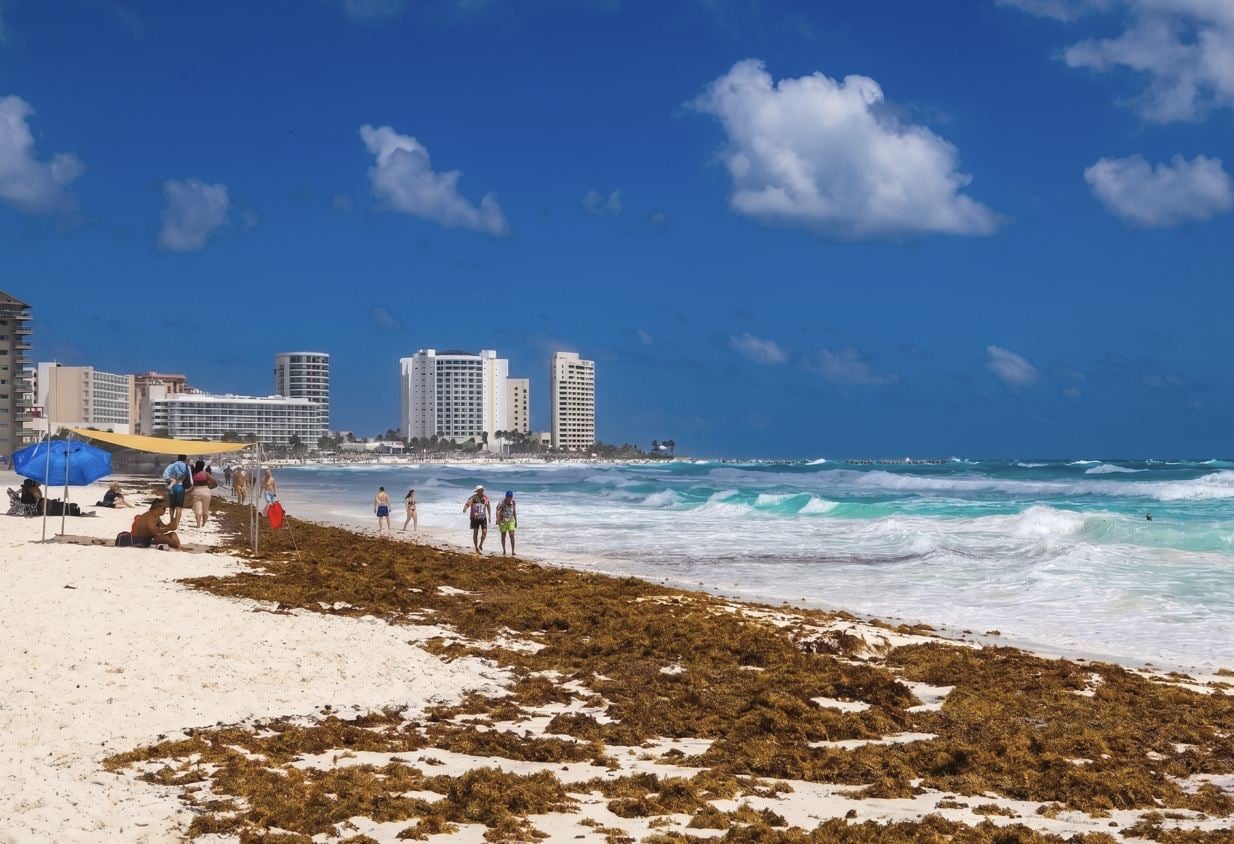
You do not have to give up on the beach; you just need to book the right beach. The biggest rookie mistake is assuming all of Cancun gets hit equally. It doesn’t.
- The Upper “7” (Kilometers 4 through 9): The Cancun Hotel Zone is shaped like a giant number “7”. The long vertical stem faces directly east into the open ocean—this is where the sargassum hits hardest. However, the top horizontal bar (roughly KM 4 to KM 9, including beaches like Playa Caracol and Playa Langosta) faces north into the Bahia de Mujeres. Because of this geographic angle, these beaches are naturally protected from the eastward-pushing currents and remain drastically cleaner.
- Costa Mujeres: Located about 30 minutes north of the main Cancun strip, this rapidly expanding luxury resort area is geographically blocked by the island of Isla Mujeres, which sits just offshore. The island acts like a massive physical shield, catching the seaweed before it can hit the mainland resorts.
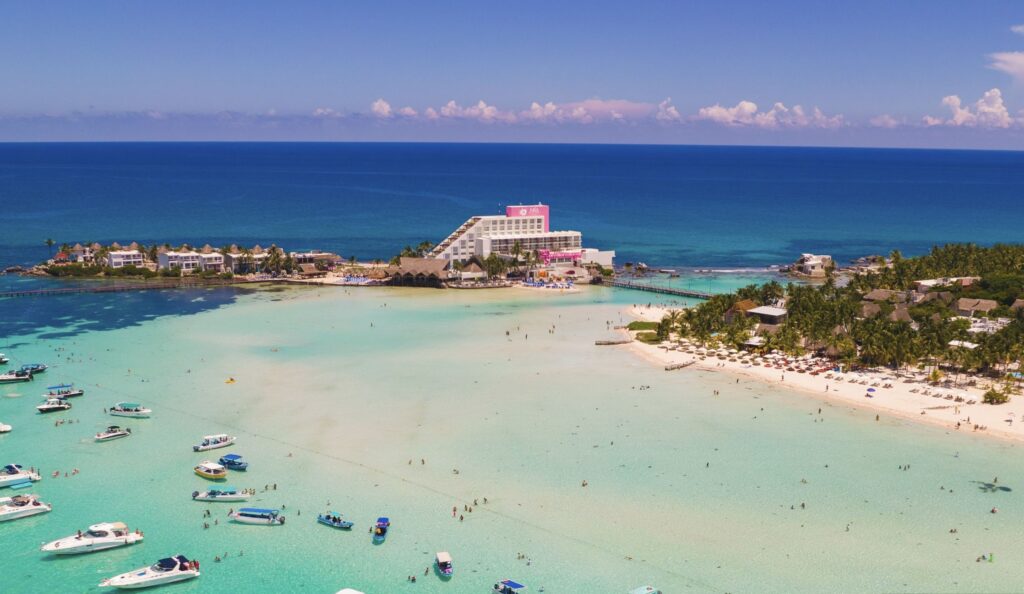
- Isla Mujeres (Playa Norte): If perfect water is your absolute non-negotiable priority, ditch the mainland entirely. Take the 20-minute ferry to Isla Mujeres and stay near Playa Norte. The water here is consistently rated among the best in the world, and its northwest-facing orientation makes it virtually immune to Atlantic sargassum.
Strategy 2: Seek Out “Caletas” (Natural Inlets)
If you are staying further south in the Riviera Maya (near Playa del Carmen or Tulum) where the geography is less forgiving, your best bet is to seek out a caleta.
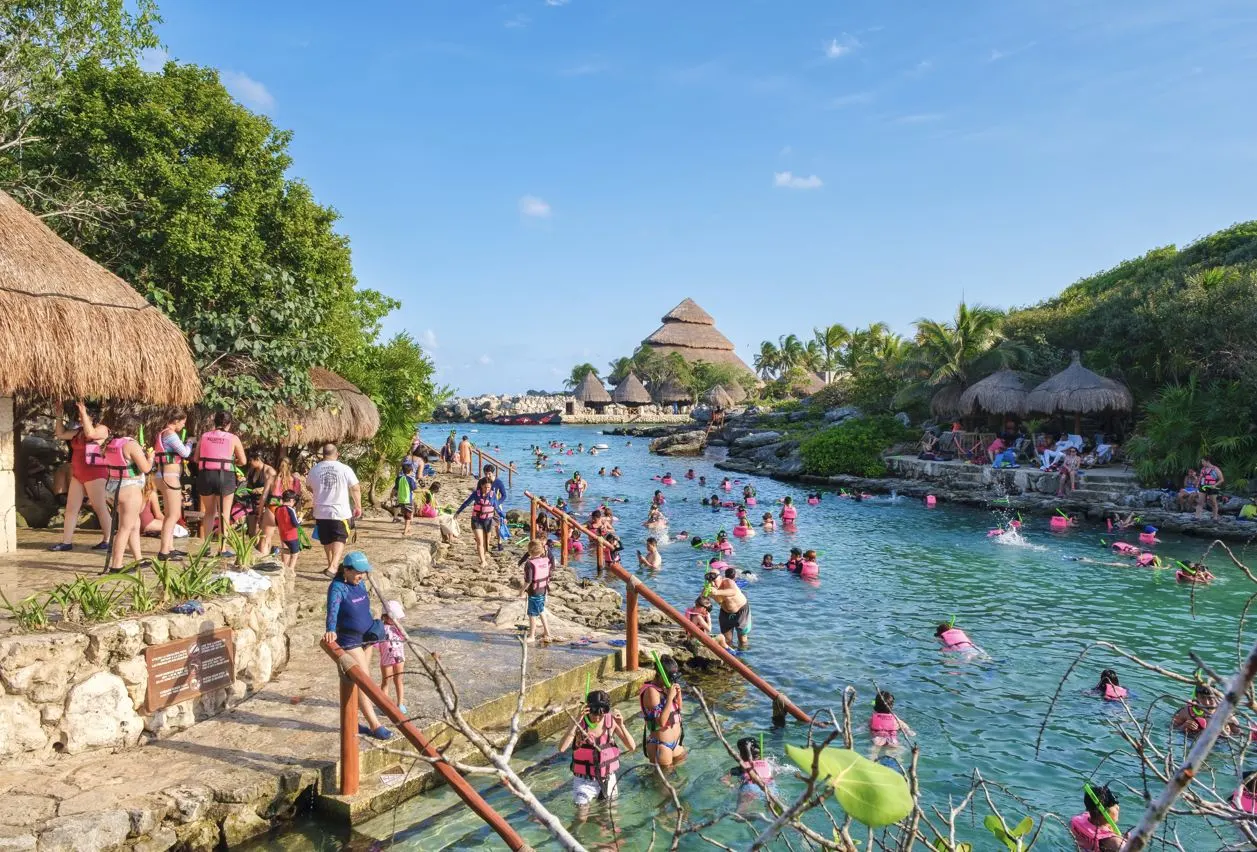
A caleta is a natural coastal inlet where the ocean water carves into the rocky limestone shoreline, creating a sheltered, lagoon-like environment. Because the mouth of the inlet is often narrow and protected by rocks, the massive floating mats of seaweed simply sweep right past them, leaving the water inside perfectly clear.
- Yal-Ku Lagoon (Akumal): This is a stunning, natural snorkeling inlet where underground freshwater rivers meet the sea. The water is pristine, incredibly calm, and absolutely packed with tropical fish and sea turtles—with zero seaweed.
- The Eco-Parks: Massive eco-adventure parks like Xel-Há and Xcaret are built around these massive natural caletas. You can spend an entire day snorkeling, floating down lazy rivers, and cliff-jumping into crystal-clear turquoise ocean water, completely isolated from the sargassum washing up on the exposed beaches just a mile away.

Strategy 3: The Advanced Cenote Pivot
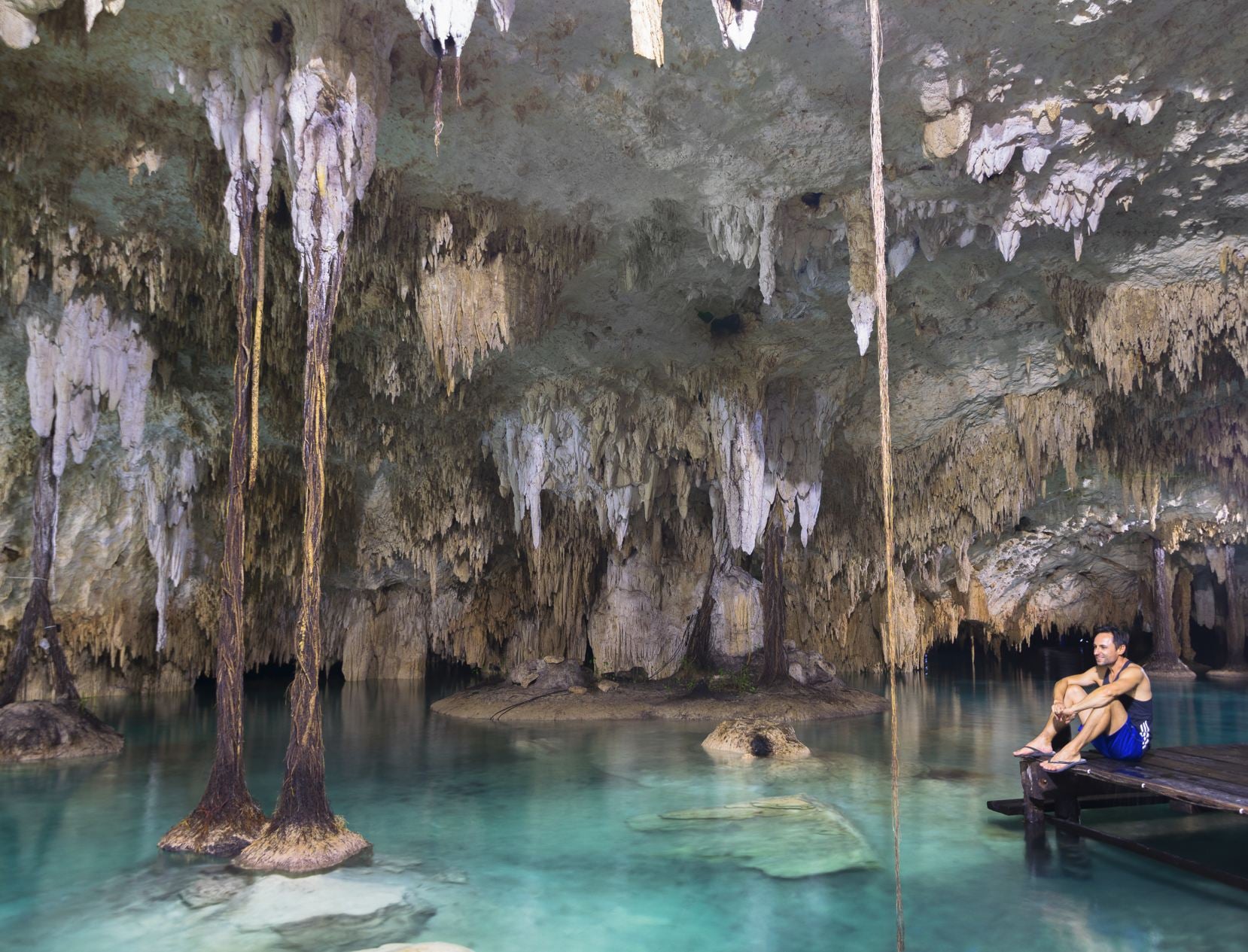
When the ocean is compromised, the Yucatan’s underground is your playground. While most tourists know about cenotes (natural freshwater sinkholes), August and September are the perfect months to explore the deeper, more advanced systems.
During these months, the surface temperature and humidity in Mexico can be blisteringly high. The water inside the cenotes, filtered through underground limestone, stays at a perfectly crisp and refreshing 75°F (24°C) year-round.
Instead of just visiting a crowded open-air sinkhole, book a private guided tour of the Sac Actun system or Rio Secreto. You will spend hours swimming and wading through massive, spectacular underground caves filled with stalactites. It is an otherworldly experience that makes you completely forget about the beach. (Just remember the strict “Skin-Only” rule: absolutely no sunscreens, lotions, or bug sprays are allowed in the water to protect the fragile aquifer).
Strategy 4: Shift the Vacation Paradigm
If you travel to Cancun in August or September, the best way to enjoy your trip is to mentally shift your expectations from a “lazy beach vacation” to a “luxury exploration vacation.”
When you accept that the beach might be a write-off, it frees up your itinerary to experience the incredible culture and luxury the region offers.
- Rent a Car and Go Inland: Drive two hours west to Valladolid, a stunning colonial “Pueblo Mágico.” The inland region is completely untouched by the coastal seaweed issues. Spend the day exploring the massive Mayan ruins of Ek Balam or Chichen Itza, then cool off in a massive open-air cenote right in the middle of town.
- Embrace Resort Mega-Pools: Many of the newer mega-resorts in the region have adapted to the sargassum crisis by building architectural masterpiece pool complexes. Resorts like the AVA Resort Cancun or Grand Velas feature massive, multi-tiered infinity pools, swim-up bars, and man-made saltwater lagoons that rival any beach.
- Culinary Tours: Cancun’s gastronomy scene has exploded. Skip the all-inclusive buffet for a night and book a high-end Taco Tour in downtown Cancun, or reserve a table at one of the region’s immersive underground cave restaurants, like Alux in Playa del Carmen.
Ultimately, a late-summer trip to Cancun only ends in disappointment if you expect the ocean to look like a postcard.
By leveraging local geography, exploring the inland jungles, and booking the right accommodations, August and September can easily be transformed into the most unique and adventurous Mexican vacation you have ever had.
Join Our Cancun Sun Community of 16,000+ Members
Get real-time answers to your travel questions from our team of local experts and thousands of fellow travelers directly inside our interactive group.
Find Your Perfect Cancun & Riviera Maya Resort In Seconds
This simple, powerful tool was built by our on-the-ground experts to match you with the ideal resort for your specific budget and travel style.
The Ultimate Cancun Trip Planner
When’s the best time to go? Our powerful month-by-month guide breaks down the weather, crowds, sargassum, and prices for your perfect trip.
Enter your email address to subscribe to The Cancun Sun’s latest breaking news affecting travelers, straight to your inbox.