
For years, booking a vacation rental in Cancun felt like tapping into a secret travel hack. You bypassed the massive mega-resorts, scored a cheap condo in the center of town, and enjoyed a budget-friendly “sharing economy” experience.
But as we march toward the busy Easter holiday season and the looming 2026 FIFA World Cup, that era is rapidly coming to an end. A fierce, years-long battle between Mexico’s formal hotel sector and short-term rental platforms has finally reached a boiling point—and the resulting government crackdown is going to directly impact how much you pay for your next vacation.

The Hotel Industry Draws A Line
The National Association of Hotel Chains (ANCH) and the Mexican Association of Hotels and Motels (AMHM) recently published a massive market analysis, and the numbers are staggering.
Vacation rentals are no longer a side hustle for locals renting out a spare bedroom. They are a massive, commercialized enterprise that now accounts for a massive 43.5% of the country’s formal hotel supply. According to the study, rental platforms have built in just 15 years what it took the traditional hotel industry a century to achieve.
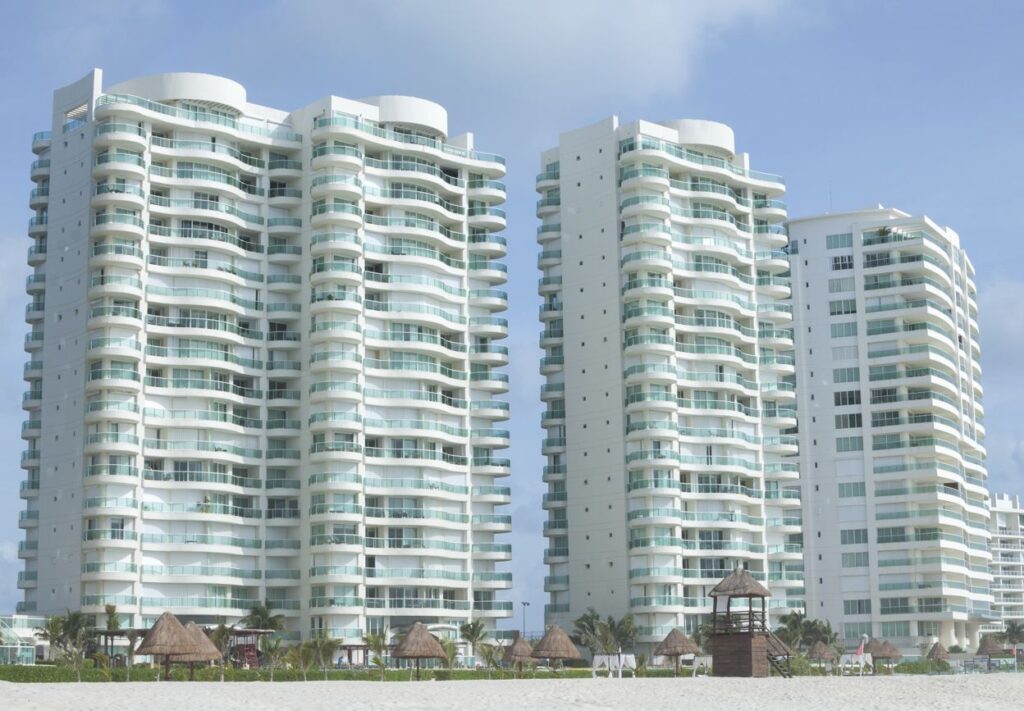

The hotel associations point to four major factors driving this takeover: massive supply, pure volume of business, concentration of properties, and unchecked income.
“The hotel industry is accustomed to innovation, but we cannot compete when the rules of the game are uneven,” stated Jorge Paoli, president of ANCH. Hotels are required to pay heavy commercial taxes, undergo rigorous civil protection inspections, and adhere to strict land-use zoning. For years, Airbnbs operated in the “Wild West,” entirely bypassing these expensive regulatory hurdles.
The Government Response: The Crackdown Is Here
For years, hotels have begged the government to step in. Now, local authorities are finally acting.
If you think the hotel associations are just complaining into the void, look at what is actively happening in Quintana Roo right now. Following sweeping updates to the state tourism law, local authorities have launched a massive regulatory crackdown on digital platforms to bring them into compliance.
As of 2026, it is officially illegal to operate an unregulated Airbnb in Cancun, Playa del Carmen, or Tulum. Every single host is now legally required to register with the State Tourism Registry (RETUR-Q) and obtain a formal State Operating License from the tax administration. If they are caught operating under the radar, they face devastating fines of up to 100,000 pesos (over $5,500 USD), and the digital platforms themselves are legally required to delete their listings.


Furthermore, the tax loopholes have been slammed shut. Hosts are now aggressively monitored by the state to ensure they are collecting and paying a 6% local lodging tax, a 16% federal VAT, and standard income tax.
What This Means For Your Wallet
So, how does this boardroom battle affect you, the traveler? It hits your wallet.
When an Airbnb host is suddenly forced to pay for commercial operating licenses, hire local accountants to handle complex federal tax compliance, and upgrade their properties to meet hotel-standard civil protection laws, their operating costs skyrocket.


In the hospitality business, increased operating costs are always passed directly to the consumer. Travelers booking a Cancun vacation rental in 2026 will notice that nightly rates are creeping up, and the checkout page will feature higher, stricter tax withholdings than in previous years. The ultra-cheap, unregulated beach condo is officially an endangered species.
A Win For Tourist Safety
While higher prices are never fun, the hotel industry’s push for regulation does bring one massive benefit to the traveler: safety.
Historically, unregulated platforms posed serious risks, ranging from carbon monoxide poisoning due to uninspected appliances, to properties secretly being utilized by criminal groups. By forcing Airbnbs to register with the government, verify guest identities against anti-trafficking standards, and meet basic safety and health codes, the playing field isn’t just leveled for the hotels—it is made infinitely safer for you.
The Airbnb Crackdown
The Wild West of vacation rentals in the Mexican Caribbean is over. While your 2026 Airbnb might look and cost a little more like a traditional hotel, it will finally be regulated like one, too.
The Ultimate Cancun Trip Planner
When’s the best time to go? Our powerful month-by-month guide breaks down the weather, crowds, sargassum, and prices for your perfect trip.
Find Your Perfect Cancun & Riviera Maya Resort In Seconds
This simple, powerful tool was built by our on-the-ground experts to match you with the ideal resort for your specific budget and travel style.
Subscribe to our Latest Posts
Enter your email address to subscribe to The Cancun Sun’s latest breaking news affecting travelers, straight to your inbox.