
It’s a question that creates a ripple of last-minute panic for thousands of travelers every week: “I have my passport… am I missing anything?”
You’ve read conflicting stories on forums, seen confusing TikToks about a “Visitax,” and now you’re wondering if you’ll be turned away at the immigration counter for not having the right paperwork.


Here at The Cancun Sun, we’re here to give you the clear, authoritative, and simple answer: For tourist travelers arriving by air from the United States, Canada, or the United Kingdom, no, you do not need anything other than your valid passport to be granted entry into Mexico.
However, being a savvy traveler isn’t just about knowing the rules; it’s about being prepared for the rare exceptions. While your passport is the only document 99.9% of travelers will ever be asked to show, Mexican immigration law does technically give officers the right to ask for a few other things.
Here is the insider’s guide to what you must have, and what you should have handy on your phone, just in case.
The “Must-Have”: Your Valid Passport 🛂
This is the only non-negotiable. Your passport must be valid for the entire duration of your stay.
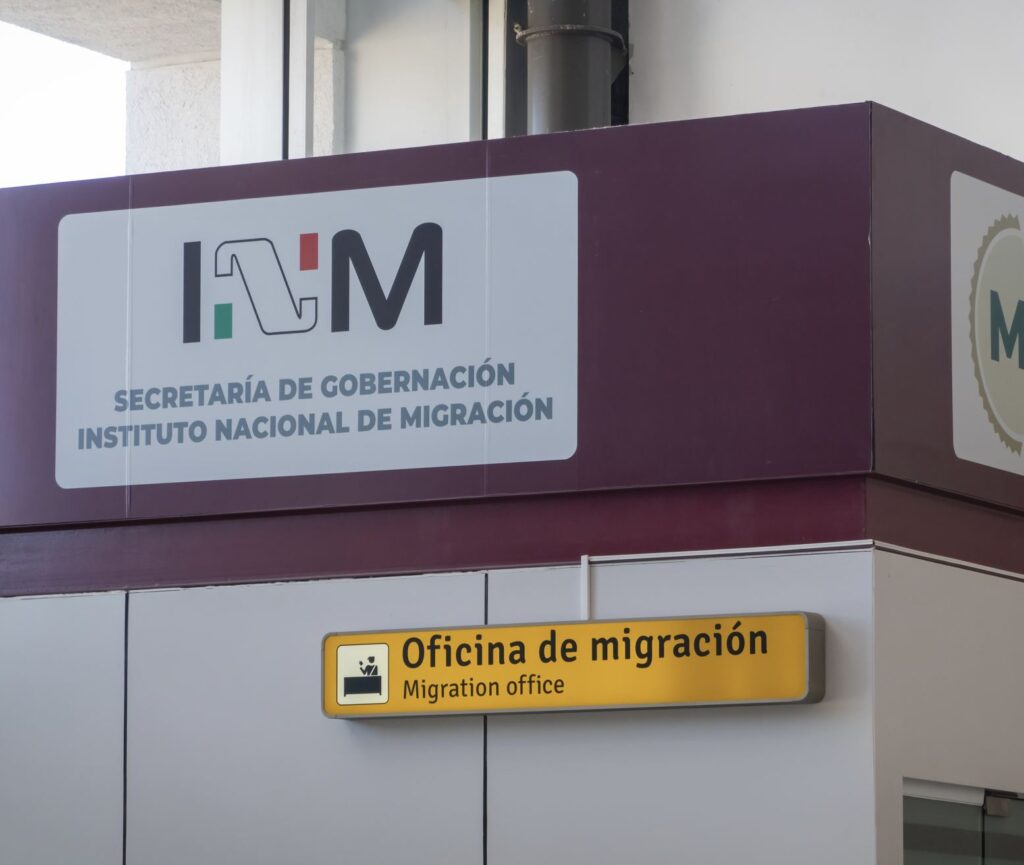
There are now two ways that you could go through immigration. The first are the new E-Gates where you wont even speak with an official and everything is done electronically. The second are the immigration desks.
When you arrive at the immigration desk in Cancun (CUN), the agent will stamp your passport. This stamp replaces the old paper FMM (Forma Múltiple Migratoria) for all air arrivals. The agent will write the number of days you are approved to stay in the country (up to a maximum of 180 days).
For 99.9% of travelers, this is the entire process. You’ll get your stamp, a “bienvenido,” and you’ll be on your way to baggage claim.

The “Just-in-Case” Documents (Have These on Your Phone)
On very rare occasions, especially during peak season or if a traveler raises a red flag, an immigration officer may ask for additional proof to verify that you are a legitimate tourist with no intention of overstaying your visa.
Again, these are almost never asked for, but having them saved as a screenshot on your phone can turn a potentially stressful 30-second interaction into a non-issue.


- 1. Proof of Lodging: An officer may ask where you are staying. Having your hotel or Airbnb reservation confirmation handy on your phone is the perfect, simple answer.
- 2. Proof of Onward Travel: They can also ask to see your return flight confirmation. This is simply to verify that you have a ticket to leave Mexico and don’t plan to stay illegally.
- 3. Proof of Sufficient Funds: This is the rarest request of all, but it is in the rulebook. An officer can ask if you have the funds to support yourself during your stay. A screenshot of a bank statement on your phone or simply showing your physical credit card is more than sufficient.


The Big Point of Confusion: What About the Visitax?
Let’s clear this up: The Visitax is NOT an entry requirement.
You will not be asked for proof of Visitax payment by an immigration officer when you arrive in Cancun.
The Visitax is a tourist departure tax that is technically required for all visitors to pay before they leave the state of Quintana Roo. However, as of late 2025, enforcement remains sporadic and inconsistent. When it is checked, it’s done by officials at the airport before you go through security for your flight home.
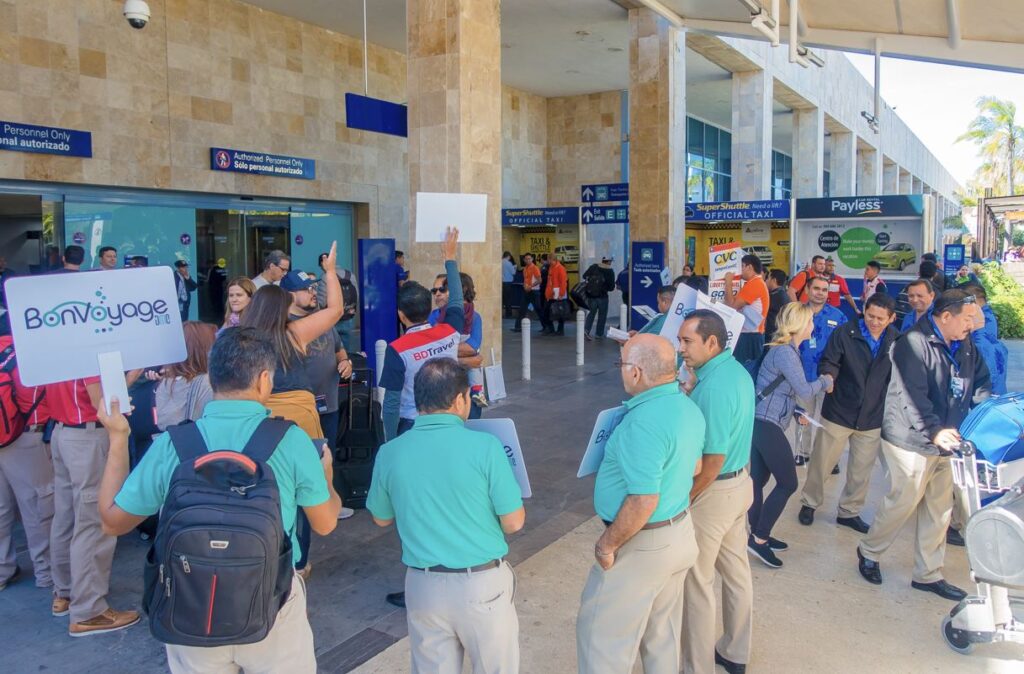
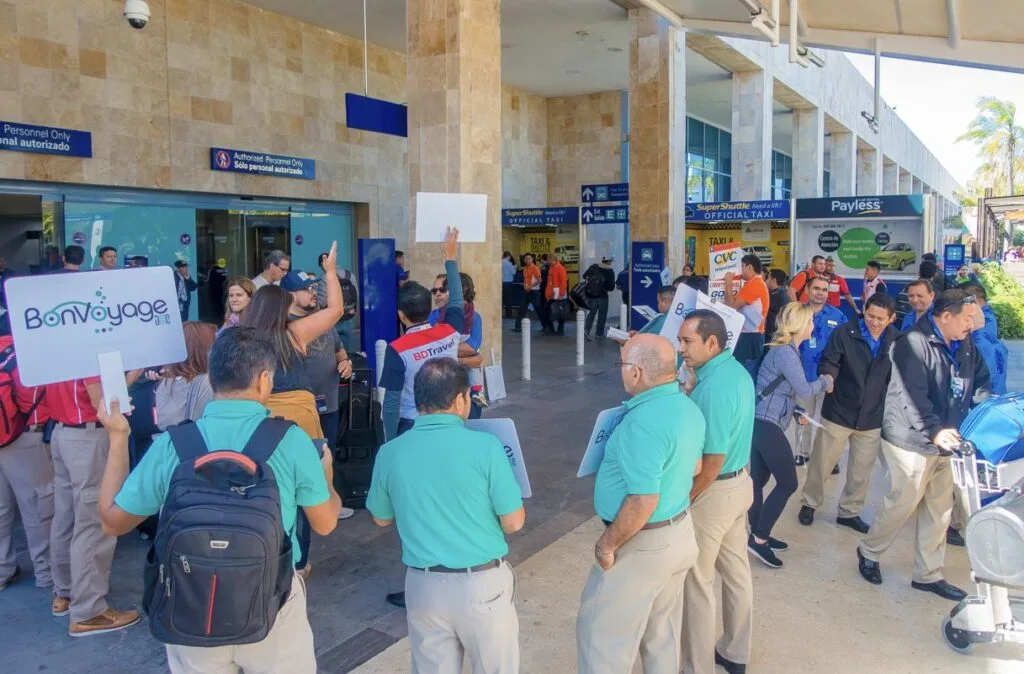
The Savvy Move: Paying Visitax is legally required by Quintana Roo government. Pay the tax online before you leave for the airport and have the QR code proof screenshotted on your phone. You may never be asked for it, but having it ready will prevent any last-minute stress on your departure day.
So, as you pack for your trip, you can relax. All you truly need is your passport. But by having your hotel and return flight confirmations saved on your phone, you are fully prepared for any scenario—the true mark of a savvy traveler.
Happy travels!
The Ultimate Cancun Trip Planner
When’s the best time to go? Our powerful month-by-month guide breaks down the weather, crowds, sargassum, and prices for your perfect trip.
Find Your Perfect Cancun & Riviera Maya Resort In Seconds
This simple, powerful tool was built by our on-the-ground experts to match you with the ideal resort for your specific budget and travel style.
Subscribe to our Latest Posts
Enter your email address to subscribe to The Cancun Sun’s latest breaking news affecting travelers, straight to your inbox.