
If you want to understand the sheer scale of Cancun’s dominance, you have to look at how it started.
Fifty-six years ago, there was no Hotel Zone. There were no mega-resorts, no international airport, and no tourists. On April 20, 1970, the physical landmass that is now the undisputed king of the Caribbean was a wild, mosquito-infested sandspit inhabited by exactly three people: caretakers for a local coconut plantation.
As Cancun prepares to celebrate its 56th anniversary this April, it stands as arguably the greatest, most lucrative tourism victory in modern history. Stay tuned for a quiz at the end to test your Cancun knowledge!
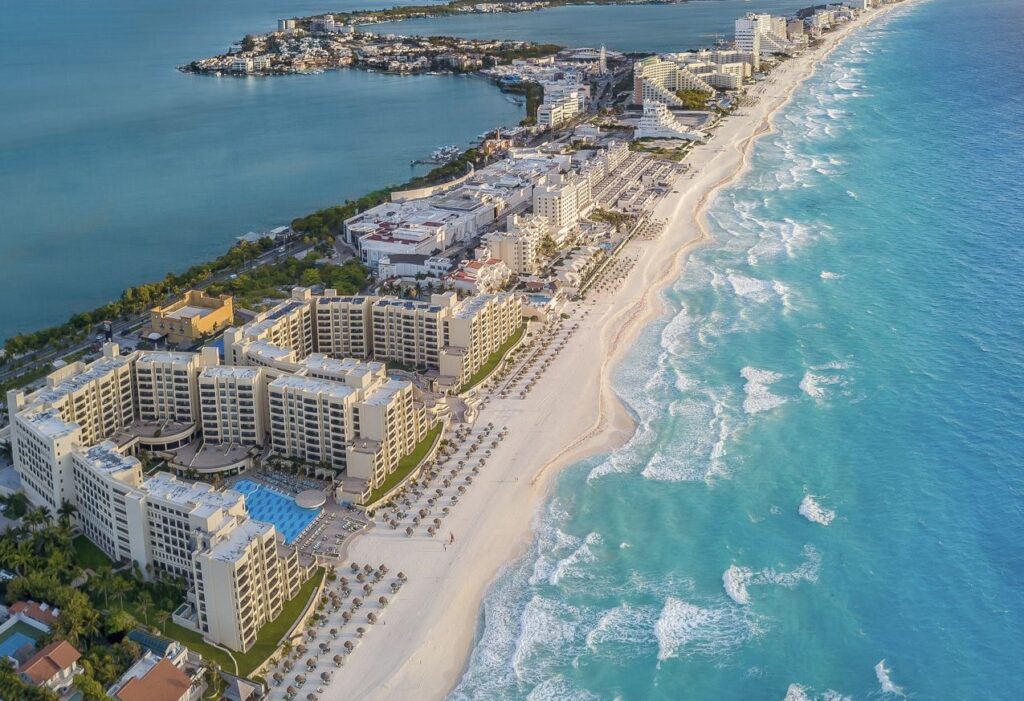
It wasn’t a happy accident or an organic fishing village that slowly grew popular over centuries. Cancun was a calculated, multi-billion-dollar empire literally engineered from scratch. And as it heads into its sixth decade, its ability to constantly reinvent itself is a masterclass in global tourism.
The Algorithm That Built An Empire
In the late 1960s, the Mexican government and the Banco de México realized they needed a massive economic engine to drive international revenue. They didn’t just throw a dart at a map. They fed vast amounts of climate data, hurricane frequencies, flight distances from major U.S. hubs, and water quality metrics into early computer systems.
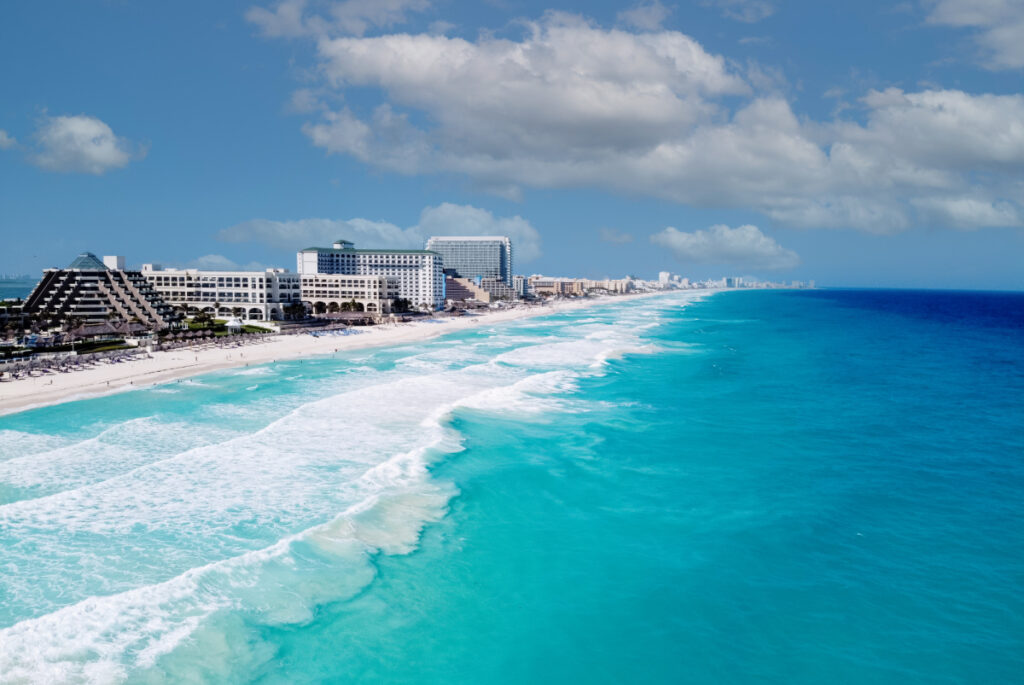
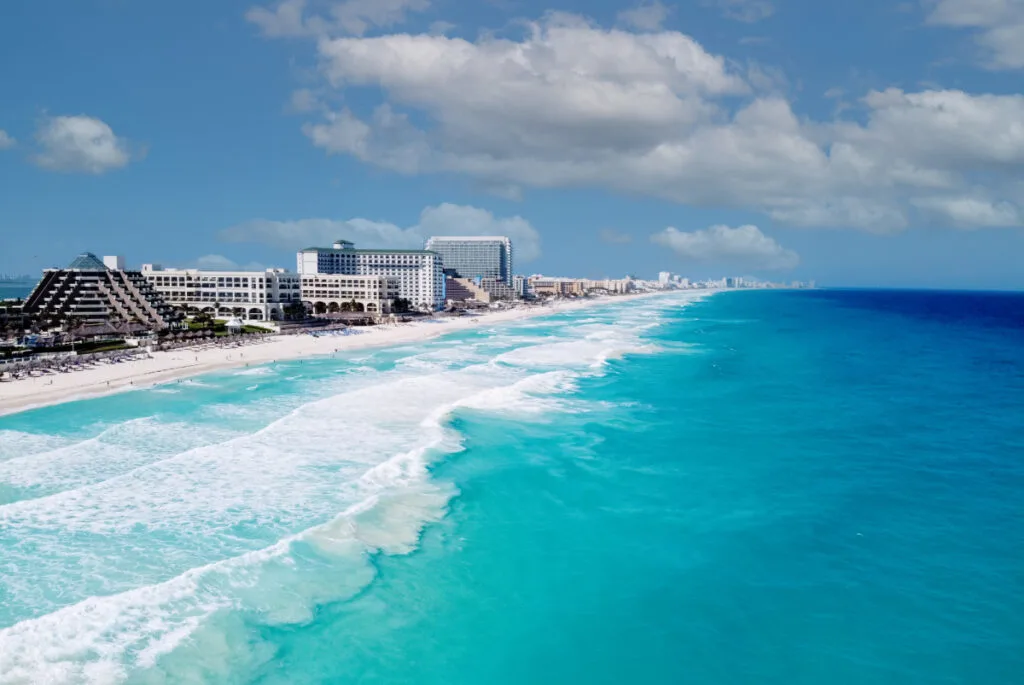
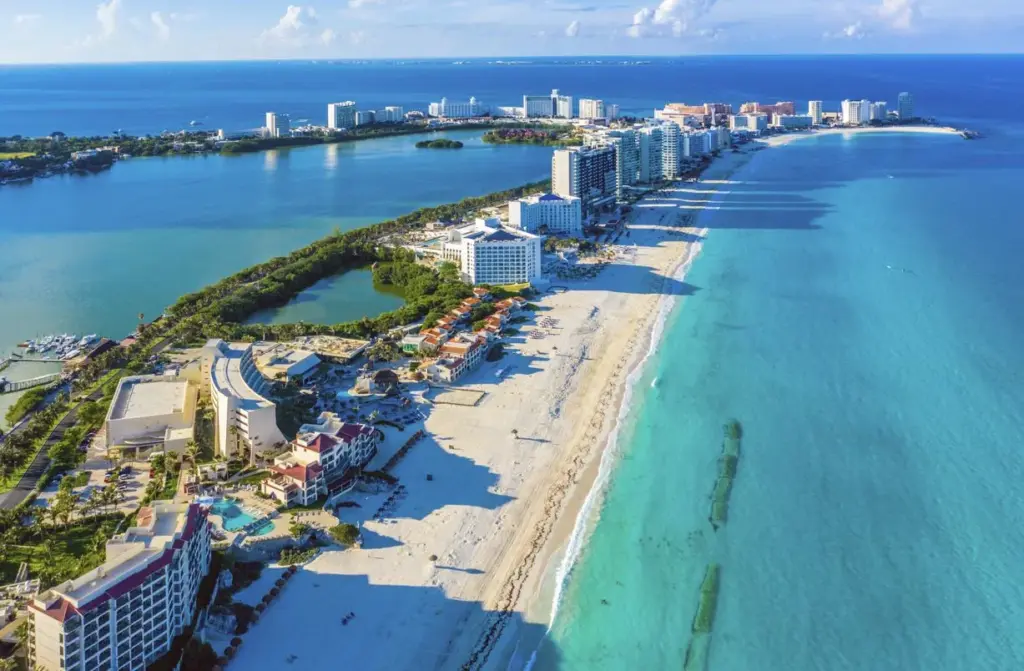
The algorithm spit out a 14-mile, “7-shaped” barrier island off the coast of the Yucatán Peninsula.
Financed initially by the government because private investors were terrified to gamble on a jungle with no roads, the first hotels broke ground. By 1974, the first commercial flights landed. The master plan—a strictly zoned “broken plate” design separating the luxury hotels from the mainland residential grid—worked flawlessly.
Within a decade, Cancun had completely eclipsed Acapulco. Today, it operates more than 30,000 hotel rooms, generates roughly a third of Mexico’s entire tourism revenue, and its airport routinely pushes past 19 million international passengers a year.
The Art of the Pivot: Why Cancun Hasn’t Faded
The graveyard of global tourism is littered with destinations that had a “golden era” and then faded into obscurity. Cancun has dominated for 56 years because it refuses to be nostalgic. It survives by ruthlessly adapting to what the modern traveler wants.
The Spring Break Era to the Luxury Era In the 90s and early 2000s, Cancun was the undisputed capital of MTV Spring Break. It was cheap, loud, and chaotic. But as that demographic aged, Cancun pivoted. Today, while it still caters to the party crowd, the market is hyper-segmented. The destination transitioned into the era of the luxury “mini-city” resort, offering high-end culinary experiences, massive wellness retreats, and quiet, adults-only sanctuaries that charge premium luxury rates.


Surviving The Unthinkable It survived the absolute devastation of Hurricane Gilbert in 1988 and Hurricane Wilma in 2005. Instead of folding, the destination used the disasters to completely modernize its building codes, rebuild its infrastructure, and execute one of the most ambitious beach-restoration projects on the planet.
The 2026 Reality: A Global Gateway
As Cancun blows out 56 candles this year, it isn’t slowing down. In fact, 2026 is shaping up to be one of its most critical years on record.
With North America hosting the 2026 FIFA World Cup, Cancun is positioning itself as the ultimate international gateway. Tourism officials are actively marketing the “Stopover in Cancun” strategy, aiming to capture the millions of global football fans flying into Mexico. They aren’t just selling beaches anymore; they are selling a world-class logistical hub with seamless private transfers, direct flights to almost every major global city, and unmatched resort infrastructure.
The Future of the Sandbar
Cancun is a fascinating paradox. While it lacks the centuries-old colonial plazas and cobblestone streets of Mexico’s interior, it isn’t entirely without a past. The ancient Mayans actually recognized the value of this coastline long before the computers did, leaving behind stone temples like El Rey and San Miguelito right in the middle of what is now the Hotel Zone.
But the sprawling modern empire built around those ancient stones is a pure 20th-century invention. It was designed by a machine and built by visionaries who knew exactly what the global market was willing to pay for: perfect weather, turquoise water, and effortless, hyper-curated luxury.
Fifty-six years later, the algorithm is still right.
The Ultimate Cancun Trip Planner
When’s the best time to go? Our powerful month-by-month guide breaks down the weather, crowds, sargassum, and prices for your perfect trip.
Find Your Perfect Cancun & Riviera Maya Resort In Seconds
This simple, powerful tool was built by our on-the-ground experts to match you with the ideal resort for your specific budget and travel style.
Subscribe to our Latest Posts
Enter your email address to subscribe to The Cancun Sun’s latest breaking news affecting travelers, straight to your inbox.