
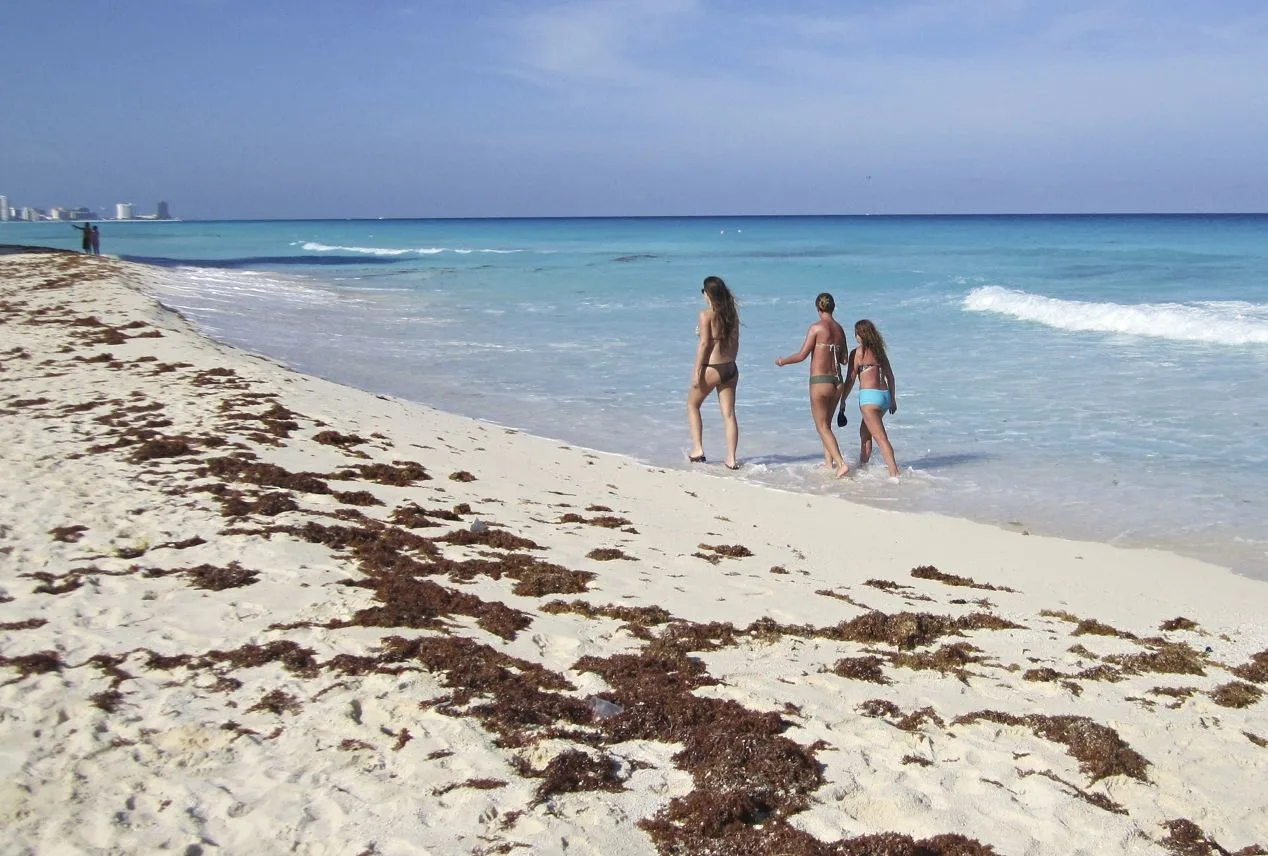
If you’ve been doom-scrolling beach videos, you’ve probably seen it: those brown seaweed mats washing ashore and bumming out beach days.
We at The Cancun Sun hear this question all the time—“When is sargassum really over?”
The short version: it varies each year, but late October is typically when conditions ease up noticeably, with cleaner, calmer beaches rolling into November and winter.
That said, we’re still in the thick of it right now, and some beaches are getting big landings—more on that below.
Why There Isn’t A Hard “End Date”
Sargassum isn’t a local quirk; it rides in from the Great Atlantic Sargassum Belt, driven by winds, currents, and storms.
Scientists at USF’s Optical Oceanography Lab track it monthly and consistently note that totals decline heading into late fall, but exact timing and beach-by-beach impacts change with weather. In other words, the ocean’s mood matters.
What To Expect Right Now (Late August)
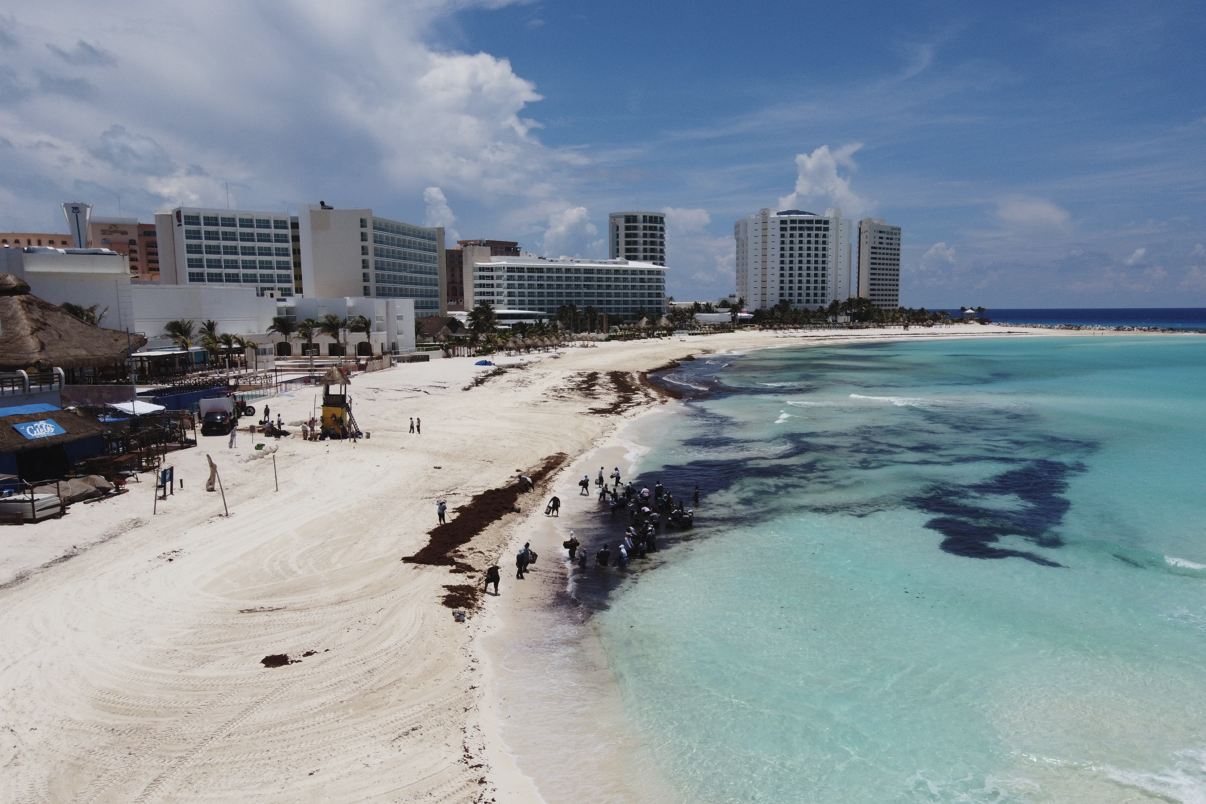
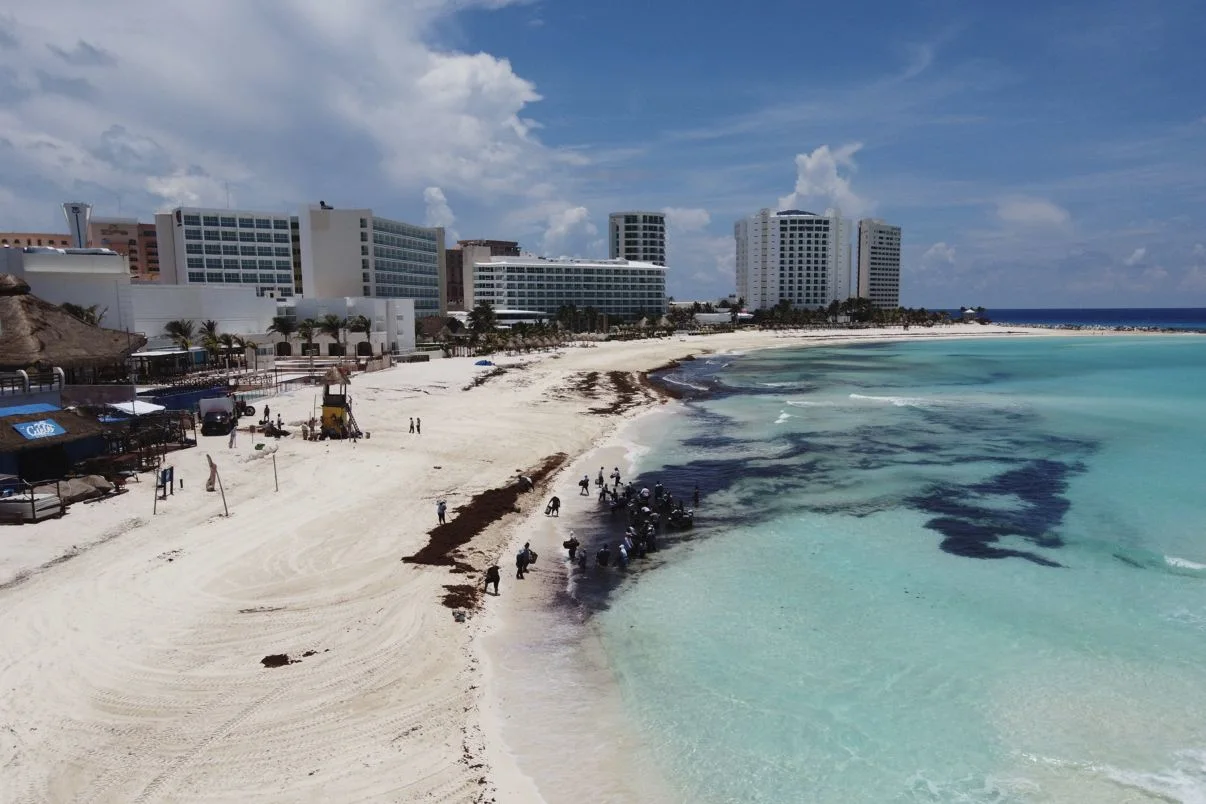
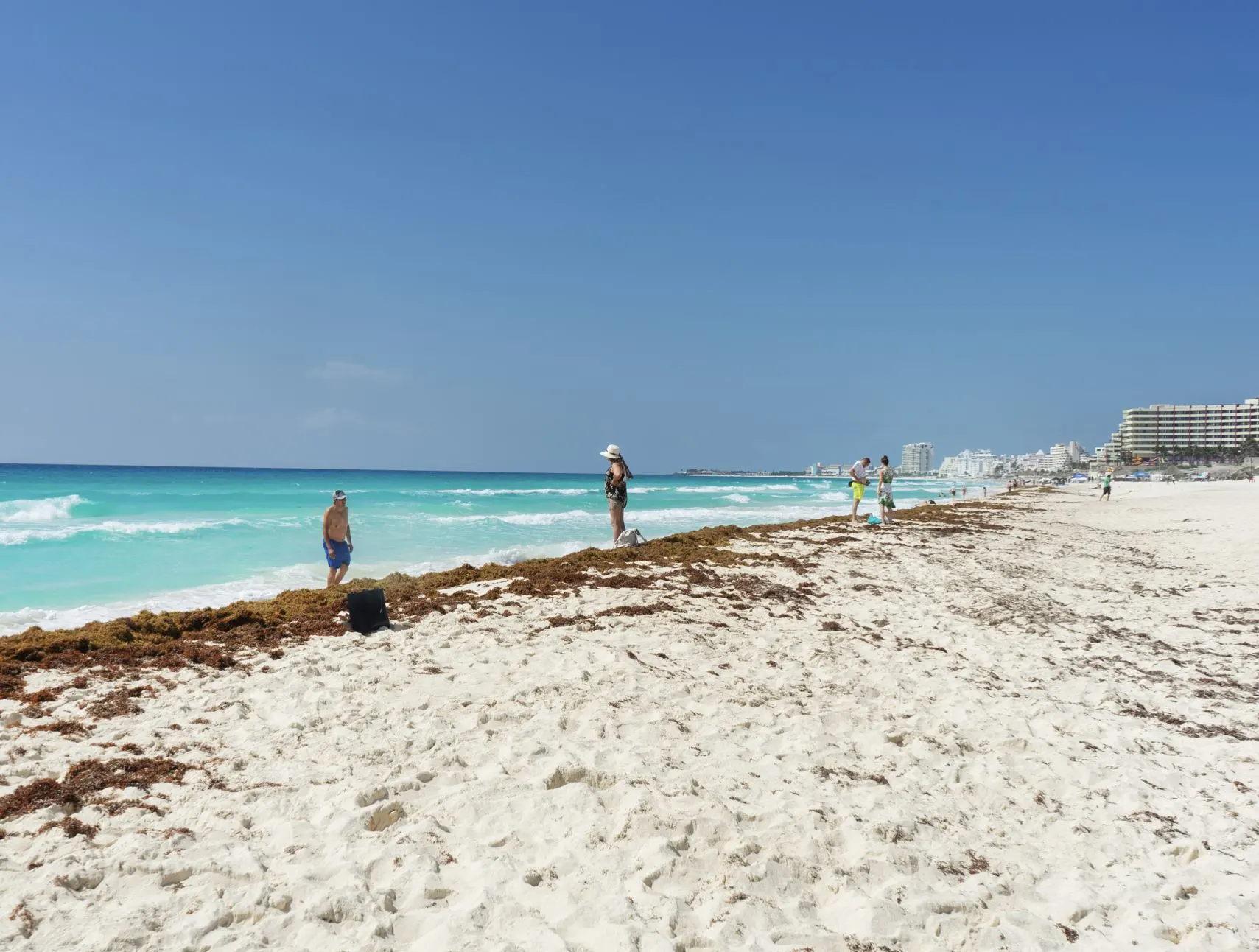
As of August 24, 2025, Cancun has seen a hefty influx—local tallies cite 4,351 tons this month, with Playa Delfines, Coral, and Chac Mool among the most affected.
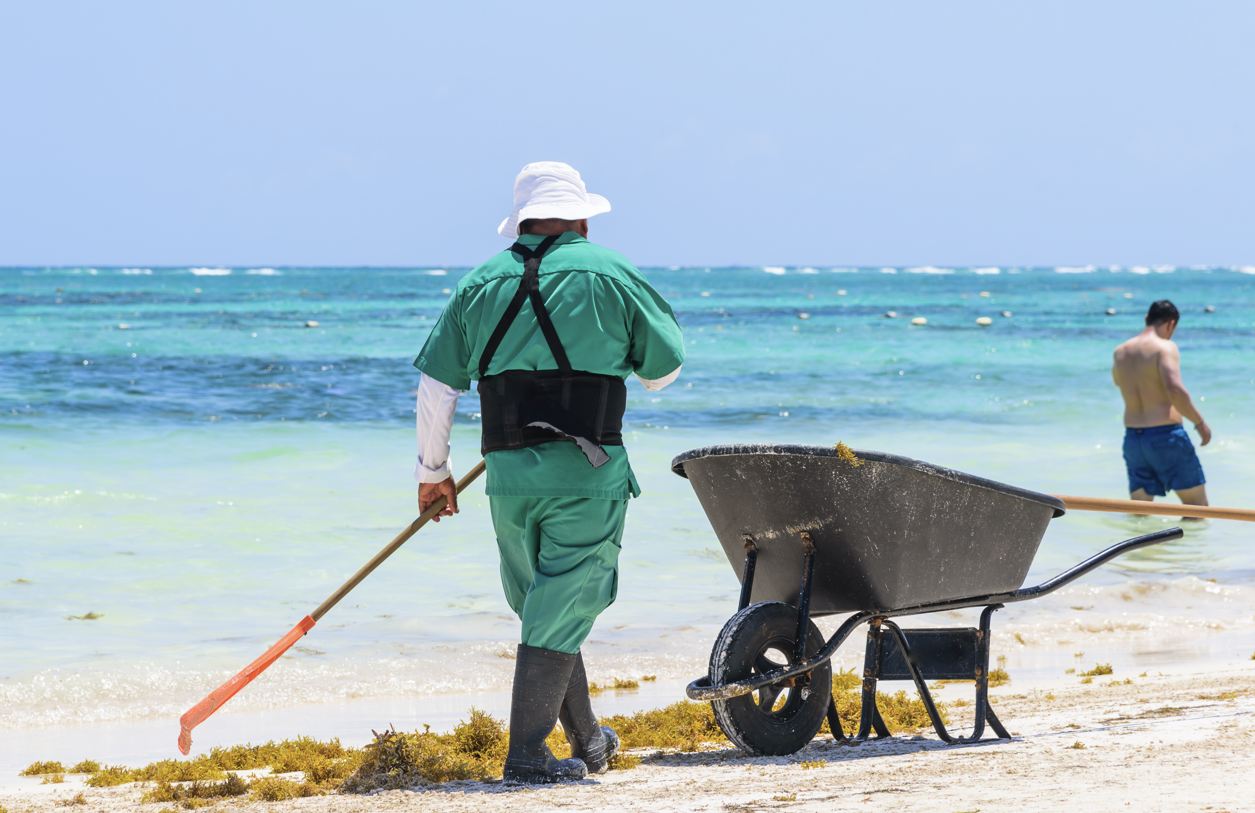
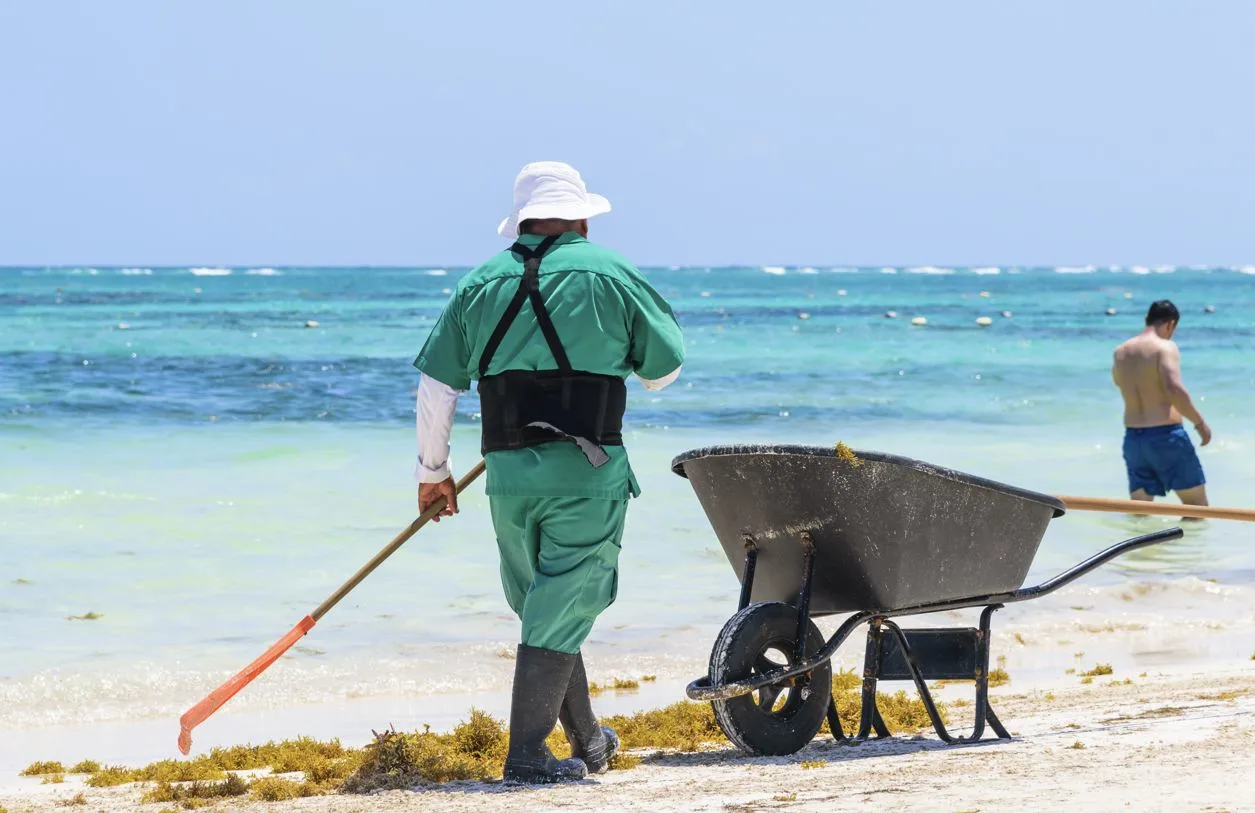
Crews are out daily with machinery, and the city has even organized community clean-ups to speed the recovery.

So…When Are You In The Clear?
Historically, Cancun’s primary sargassum season runs from spring through summer (often April/May to October).
By late October, conditions typically improve and trends head downhill into winter, which is why so many travelers target November–March for the most reliably clear beach days.
But nature doesn’t read calendars—there can be early lulls or late stragglers.

How To Stack The Odds In Your Favor
- Check live conditions before you go. Our guide to real-time beach webcams lets you peek at multiple shores to choose the clearest water today.
- Use the new city tools. Cancun is rolling out a real-time beach status platform/app so you can see sargassum levels and safety flags at a glance. We’ll keep you posted as it launches.
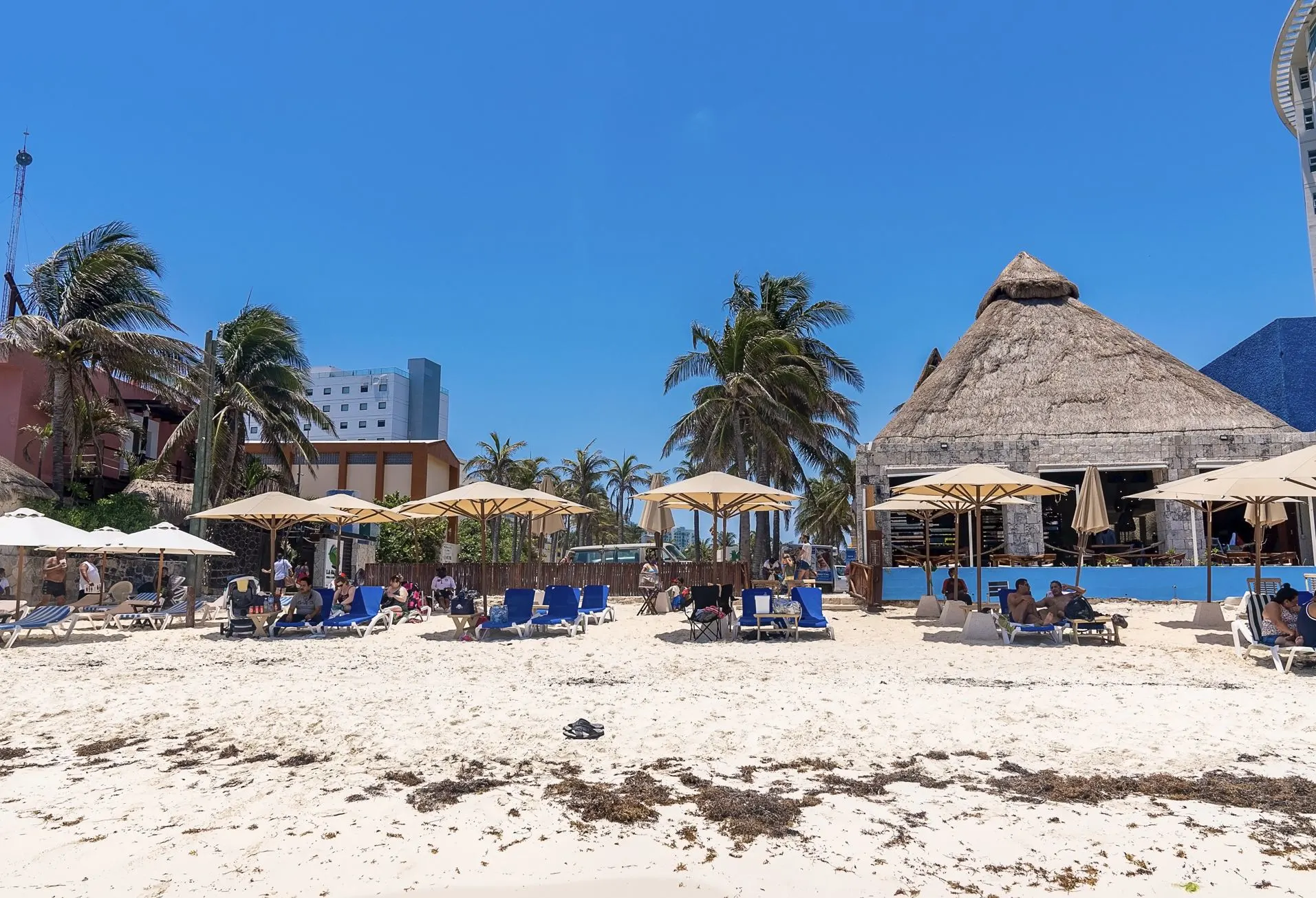
- Pick naturally luckier spots. Some areas get hit less thanks to geography. For example, Isla Mujeres (Playa Norte) often sees minimal sargassum compared to mainland Hotel Zone beaches—an easy ferry hop that can save the day. Our roundups highlight the least-affected beaches this summer and why Isla Mujeres frequently wins.
If Your Beach Is Seaweedy, Pivot
Don’t waste a vacation day—switch to cenotes, ruins, or lagoon escapes. We put together 7 actually fun alternatives during sargassum season that many travelers end up loving even more than a beach day.

Will Resorts Keep Beaches Usable In The Meantime?
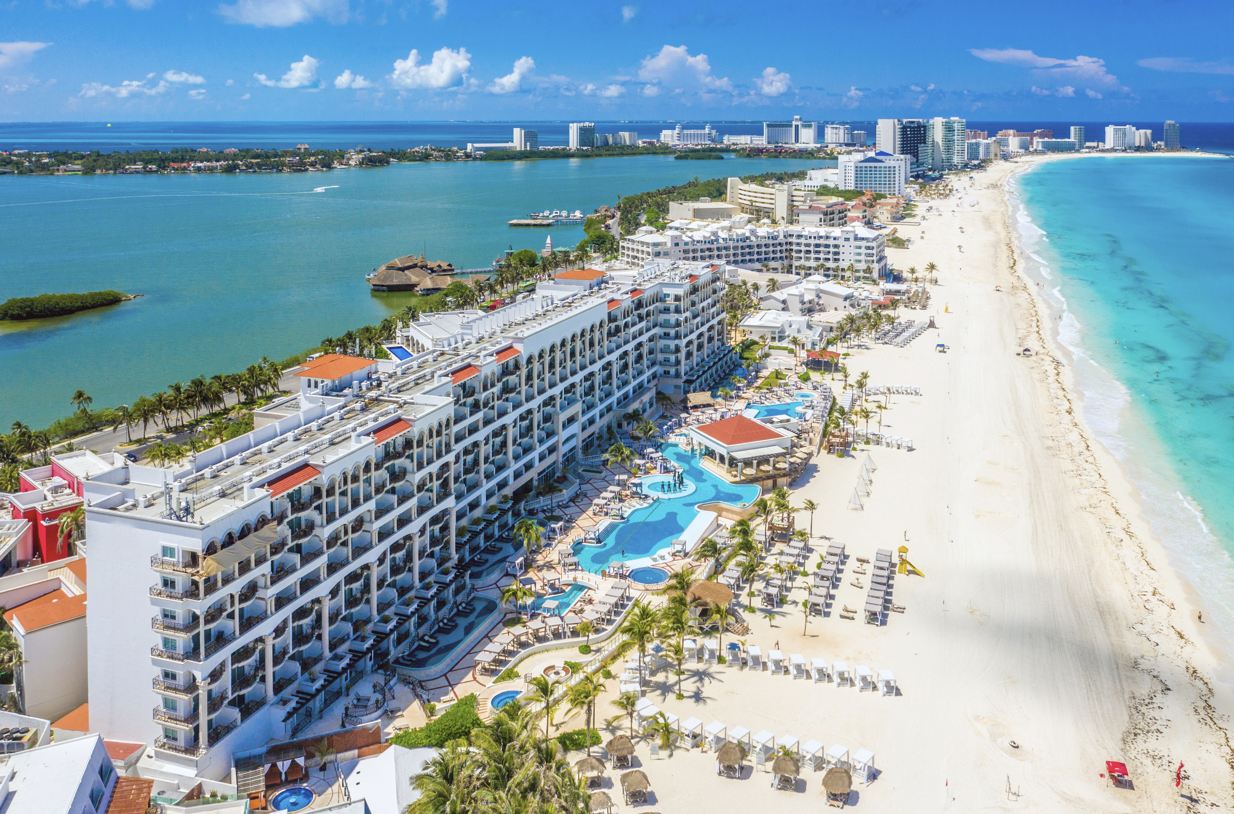
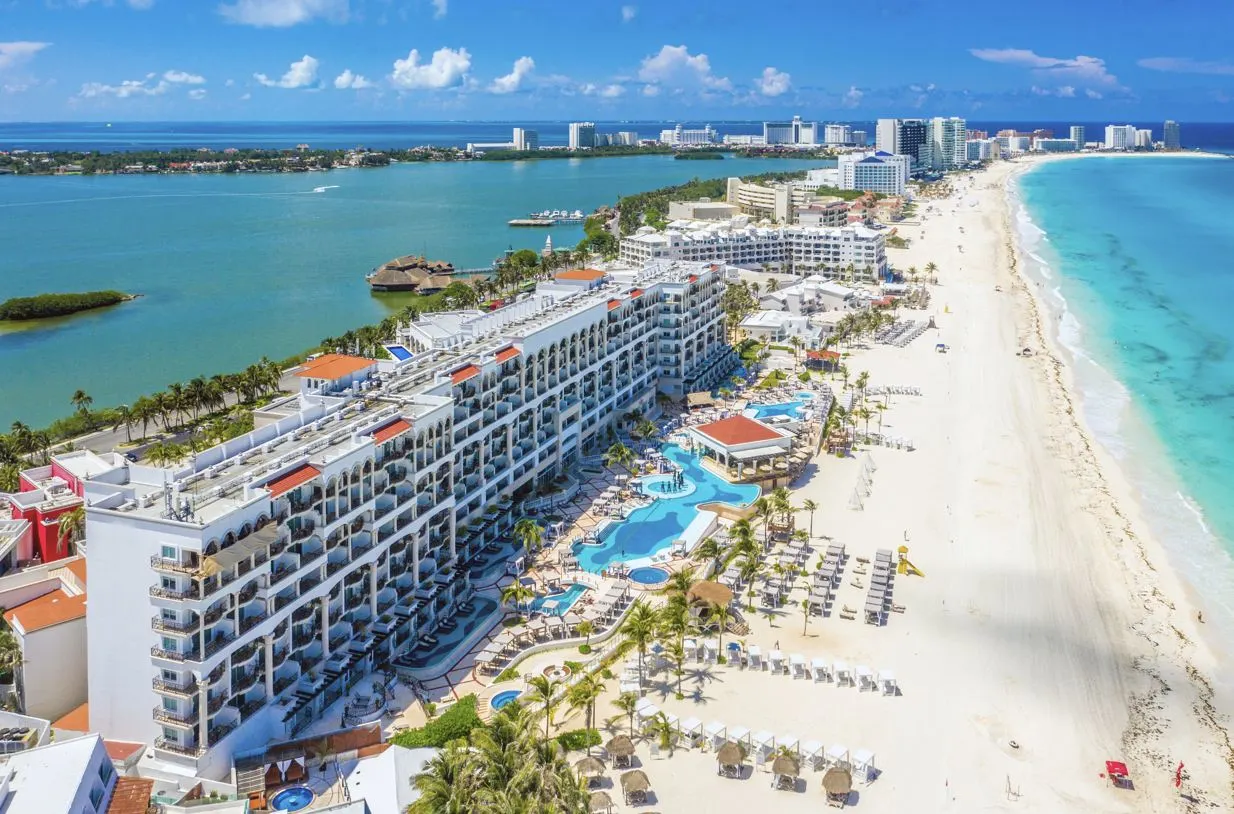
Yes—2025 has seen record-breaking cleanup efforts and more strategic use of barriers and collection schedules across the coast.
Pair that with Cancun’s expanding roster of Blue Flag beaches and you’ll understand why many visitors still enjoy brilliant beach days even in peak months.
Final Tips
- Right now (late August): Expect pockets of heavy sargassum at certain beaches, including Delfines, Coral, and Chac Mool.
- Typical trend: Conditions improve into late October, then get steadily better through winter—though yearly variability remains.
- Your playbook: Check live webcams, watch for the city’s real-time beach platform, lean into Blue Flag shores, and keep Isla Mujeres in your back pocket as a reliable, clear-water escape.
The Ultimate Cancun Trip Planner
When’s the best time to go? Our powerful month-by-month guide breaks down the weather, crowds, sargassum, and prices for your perfect trip.
Find Your Perfect Cancun & Riviera Maya Resort In Seconds
This simple, powerful tool was built by our on-the-ground experts to match you with the ideal resort for your specific budget and travel style.
Subscribe to our Latest Posts
Enter your email address to subscribe to The Cancun Sun’s latest breaking news affecting travelers, straight to your inbox.