
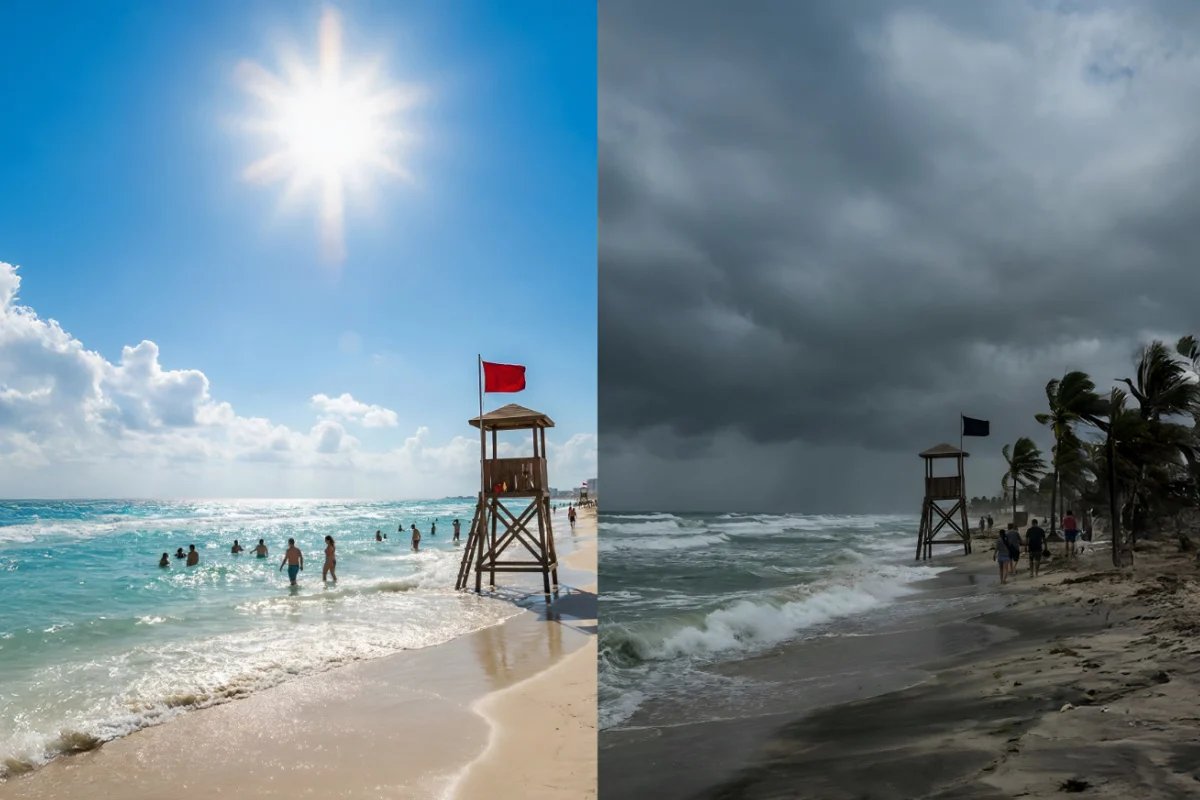
If you walk out to Playa Delfines on a windy morning and see a red or black flag flapping over the lifeguard tower, that little piece of fabric is going to decide what kind of beach day you’re going to have.
We at The Cancun Sun hear from a lot of readers who aren’t totally sure what those colors actually mean — especially the difference between red and black. And in Cancun and the Riviera Maya, that confusion can be dangerous.
So let’s clear it up and make sure you know exactly what to do the next time you spot either one.

First Things First: The Simple Red vs. Black Difference
Cancun uses a colored flag system that lines up with the wider Mexican and international beach safety codes.
Here’s the crucial difference every swimmer needs to know:
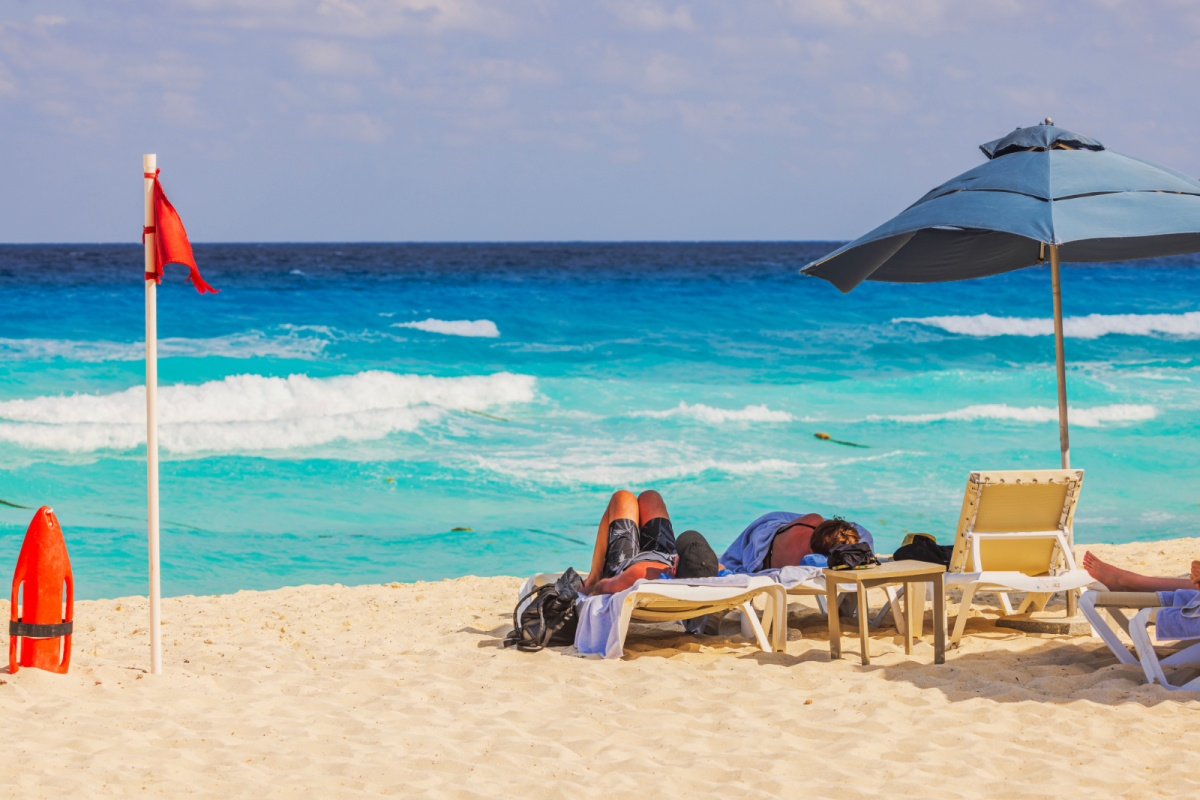
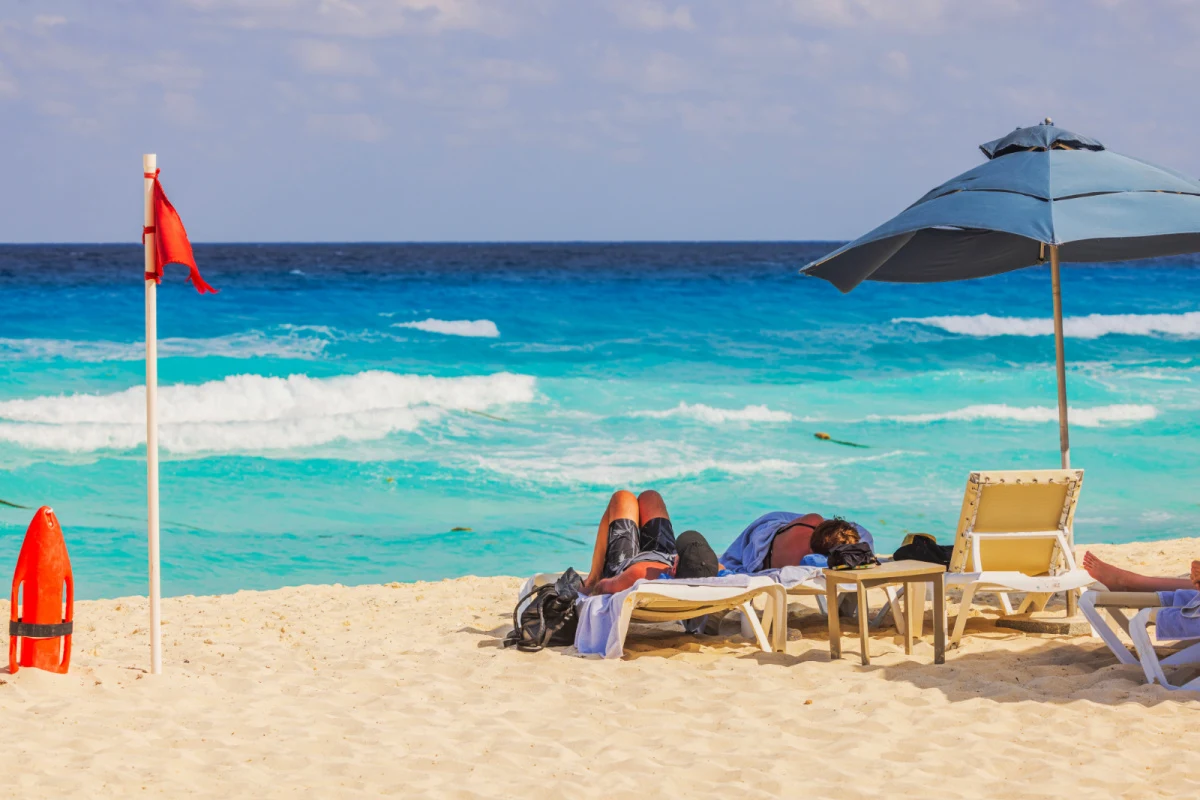
- Red flag = very dangerous conditions. Strong currents, powerful waves, or rough surf. Swimming is strongly discouraged. Authorities and lifeguards want you to stay out, but technically the water may not be fully “closed.”
- Black flag = water closed. This is the highest warning level. The beach may still be open for walking and photos, but the ocean itself is officially off-limits. No going in “just up to your knees,” no quick dip, nothing.
As we’ve already broken down in our Ultimate Cancun beach flag guide, visitors most often mix these two up, assuming red always equals “totally closed” and black is just “extra bad.” It’s actually the opposite: black is the hard line where the ocean is shut down.
During a recent visit to Playa Delfines we asked a local lifeguard if they could sum up the difference and were told, “If it’s red, we’re basically begging you to think twice. If it’s black, there’s nothing to think about — you stay on the sand.”
What A Red Flag Day Actually Means For Your Beach Time
On a red flag day in Cancun, the ocean is in a bad mood. That can mean:
- Strong rip currents you can’t see from shore
- Powerful shore break that can knock adults off their feet
- Sudden deep drop-offs close to the beach
Local officials and lifeguards repeatedly warn that red flags have been up during days when tourists still went in and ended up in trouble, leading to rescues and, in some cases, tragedies.
We at The Cancun Sun have covered multiple incidents where authorities had to remind travelers to follow beach rules after back-to-back accidents, emphasizing that ignoring flags is a common factor.
On a red flag day, smart travelers:
- Treat swimming as optional at best, not a given
- Stay in very shallow water (waist-deep or less) if they go in at all
- Keep kids completely out of the surf and stick to sand play
- Avoid floating toys and inflatables that can blow or drift out fast
It’s also the perfect time to pivot to the pool, especially if you’re staying at a resort with multiple pools, lazy rivers, or calm lagoon-style options.
If you want a full breakdown of every flag color, including yellow and green, it’s worth bookmarking our beach flag safety guide for Cancun for your trip.
When The Black Flag Flies, The Ocean Is Closed – No Exceptions
Black flag is a different story. This isn’t “be careful” — it’s “do not enter the ocean, period.”
Officials usually raise a black flag in situations like:
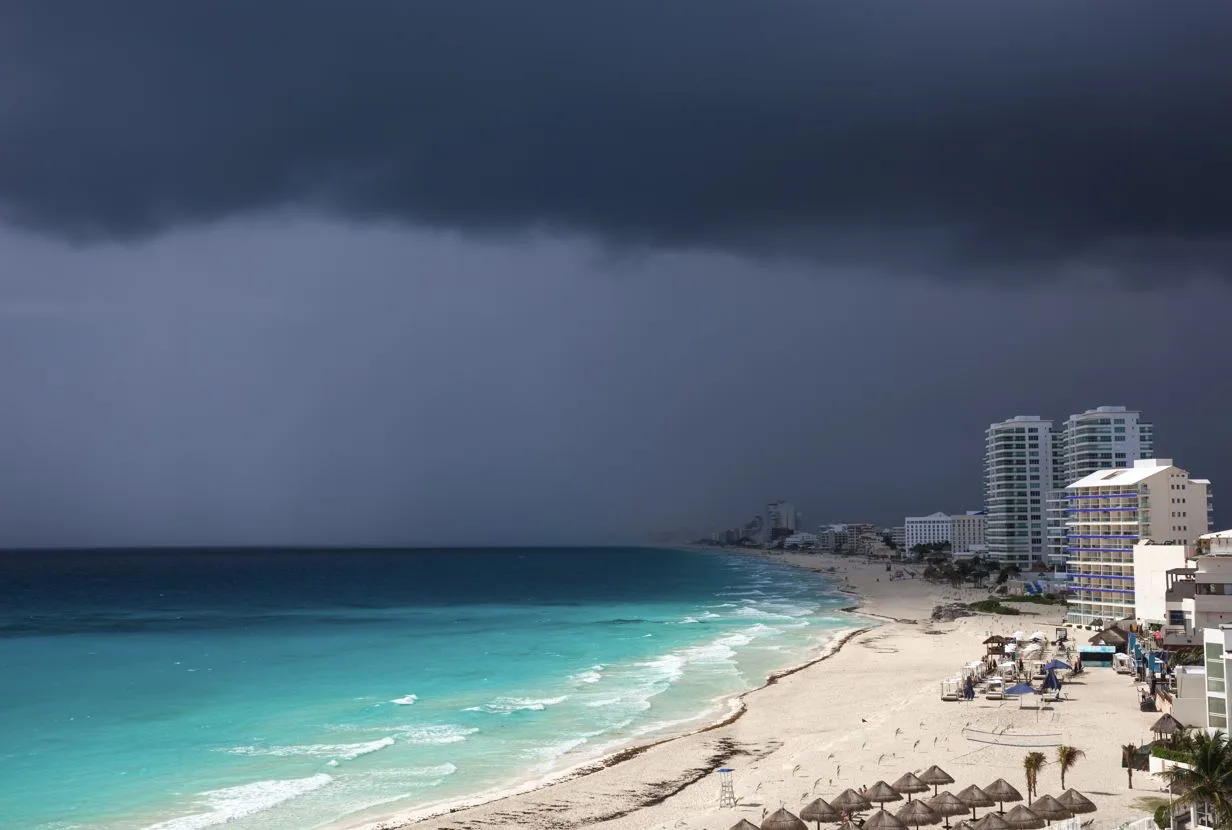
- Strong cold fronts or El Nortes blasting the coast
- Tropical storms or distant hurricanes generating massive swells
- Extremely strong currents or high surf that make rescues nearly impossible
We’ve seen local authorities and even the U.S. State Department stress the same rule: if you see black (or in some destinations, double red), stay out of the water completely.
On a black flag day, your beach game plan should be:
- Enjoy the view from the sand only — no wading, no splashing, no “just a quick dip”
- Use the time to walk the beach, take photos, or hunt for seashells away from the waterline
- Treat the ocean like a closed attraction and shift your swimming to the pool


Why Flags Flip So Quickly In Cancun & The Riviera Maya
If you’ve noticed that flags in Cancun seem to change more often than in some other destinations, you’re not wrong. Conditions here can swing fast because of:
Cold fronts (El Nortes) in winter
These systems can sweep in suddenly, turning a calm, postcard-perfect morning into a windy, choppy afternoon. Our recent guide to El Nortes in the Mexican Caribbean walks you through what those days feel like and how to pack for them.
Summer storms and distant hurricanes
Even when a storm isn’t headed directly for Cancun, the swell it generates can hammer the coast, leading to days of red or black flags during hurricane season.
Local currents and beach shape
Some beaches are just naturally rougher, especially parts of the Hotel Zone that face open ocean, while calmer spots like Isla Mujeres’ Playa Norte can see safer conditions on the same day.
This is exactly why we keep stressing that the single most important safety feature on any Cancun beach is the flag flying by the lifeguard tower, a point local authorities have repeated after multiple incidents.

Different Travelers, Different Strategies
How you adjust to red or black flags depends a bit on your travel style — but the “no ocean with black flags” rule applies to everyone.
For families with kids
- Make the hotel pool your main swimming spot when red or black flags are up.
- Use public beaches for sandcastles, soccer, and photos, not ocean time.
- Look for resorts or areas known for gentler surf — our Cancun Resort Finder can help you zero in on properties with calmer beachfronts or great lagoon-style pools if that’s a priority.
For confident swimmers and repeat visitors
- Don’t let experience trick you into ignoring warnings; many incidents in Cancun involve strong swimmers who underestimated red flag conditions.
- On red-flag days, stick to waist-deep water at most and avoid going in alone.
- If the idea of being “stuck” without ocean time stresses you out, build backup plans into your itinerary: cenote trips, lagoon tours, or spa days.
For digital nomads and long-stay visitors
- Use your flexibility to plan beach time around safer stretches by watching patterns in our Cancun Trip Planner and monthly tools, which factor in weather, crowds, and sargassum by month.
- Aim for calmer shoulder seasons if nonstop ocean swimming is a must, and treat mid-winter El Norte weeks as bonus time to explore cafes, coworking spots, and nearby towns.


What To Do Instead When The Ocean Says “No”
Red or black flag up and you were dreaming of turquoise swims all day? Here’s how we’d pivot:
- Hit the pool early to snag a good spot before everyone else gives up on the ocean.
- Swap an ocean day for one of the must-do Cancun excursions — think cenotes, nearby Mayan ruins, or eco-parks that don’t depend on open-ocean conditions.
- Plan a long, lazy beach walk at sunset on stretches like Playa Delfines or Costa Mujeres, staying well back from the surf line.
- Turn it into a “city day”: shopping in downtown Cancun, tacos, and a sunset drink instead of body surfing.
And if your red or black flag day happens to be at the end of a long beach session, remember you may still need to look respectable for dinner. We’ve already broken down shorts vs pants for resort dress codes so you’re not the one being turned away at the restaurant door.

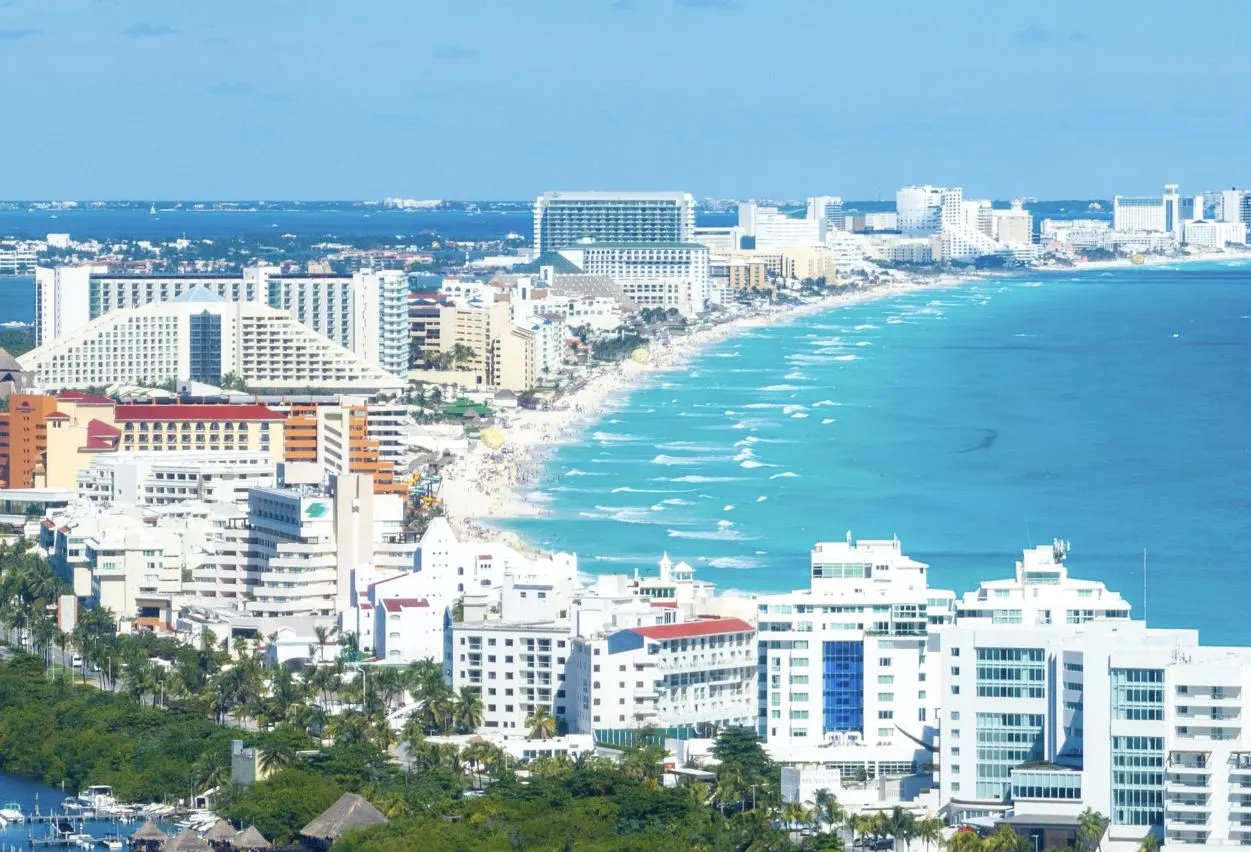
We at The Cancun Sun will keep tracking changing conditions, new safety measures, and updates like extended beach hours and more staff during peak seasons, so you can spend less time worrying and more time enjoying those white-sand views.
Remember:
- Red means “think twice and stay shallow at most.”
- Black means “no ocean, full stop.”
If you treat those two flags as non-negotiable, you’ll already be ahead of the pack when it comes to staying safe on Cancun’s spectacular beaches.
The Ultimate Cancun Trip Planner
When’s the best time to go? Our powerful month-by-month guide breaks down the weather, crowds, sargassum, and prices for your perfect trip.
Find Your Perfect Cancun & Riviera Maya Resort In Seconds
This simple, powerful tool was built by our on-the-ground experts to match you with the ideal resort for your specific budget and travel style.
Subscribe to our Latest Posts
Enter your email address to subscribe to The Cancun Sun’s latest breaking news affecting travelers, straight to your inbox.