
The 2026 summer season in the Mexican Caribbean is facing an unprecedented challenge.
Driven by shifting global currents, rising sea surface temperatures, and massive freshwater nutrient runoffs from South America, a staggering 119,000 tons of sargassum seaweed are projected to make landfall along the eastern-facing coastlines of Quintana Roo this year.
While the Mexican Navy is working around the clock with amphibious extraction vessels and miles of offshore barriers, the sheer volume of this year’s bloom has completely overwhelmed several popular coastal zones.

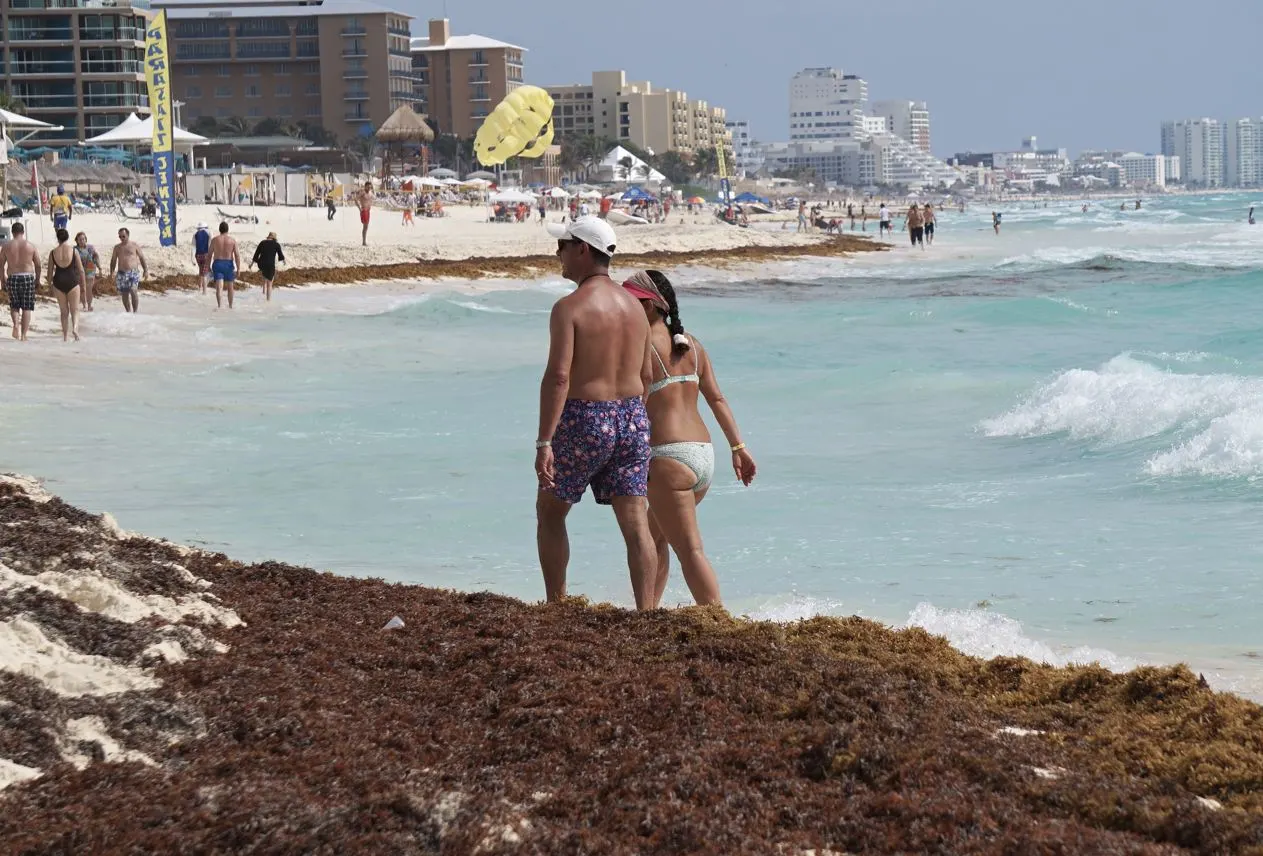
When this massive biomass becomes trapped in the shallow intertidal zones, it decomposes rapidly—blocking sunlight to the reefs, accelerating beach erosion, and emitting a highly unpleasant “rotten egg” odor (hydrogen sulfide) that can cause respiratory irritation and nausea.
Due to localized hydrodynamics and coastal geography, here are the five worst-affected beaches currently operating under a severe “Excessive” (red alert) status where swimming is virtually impossible.
Pro Tip: Check LIVE webcams at your resort to see what sargassum conditions are looking like before your trip.
1. Punta Esmeralda
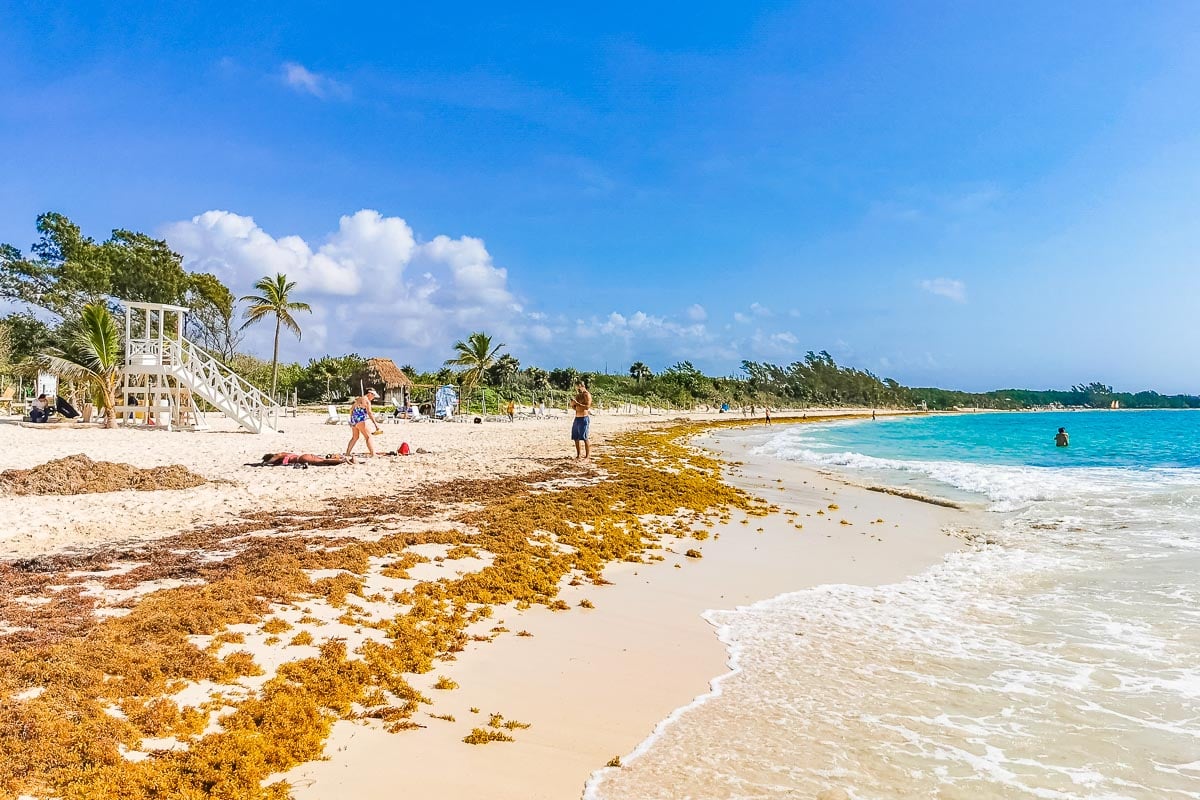
Punta Esmeralda represents the absolute most severe manifestation of the sargassum crisis within Playa del Carmen. Historically beloved for its natural freshwater cenote that empties directly into the ocean, this unique coastal curvature unfortunately acts as a highly efficient, inescapable trap for circulating seaweed.
- Massive Accumulations: The beach currently faces a staggering daily influx of up to 250 tons of macroalgae, completely overwhelming municipal cleanup efforts.
- Trapped Freshwater: The dense, structural sargassum mats frequently block the outward flow of the natural cenote, creating stagnant shoreline pools.
- Toxic Odors: The mixture of trapped freshwater and rotting organic matter heavily accelerates the production of hydrogen sulfide gas, causing a nauseating smell that drives beachgoers away.
2. Playa Coral
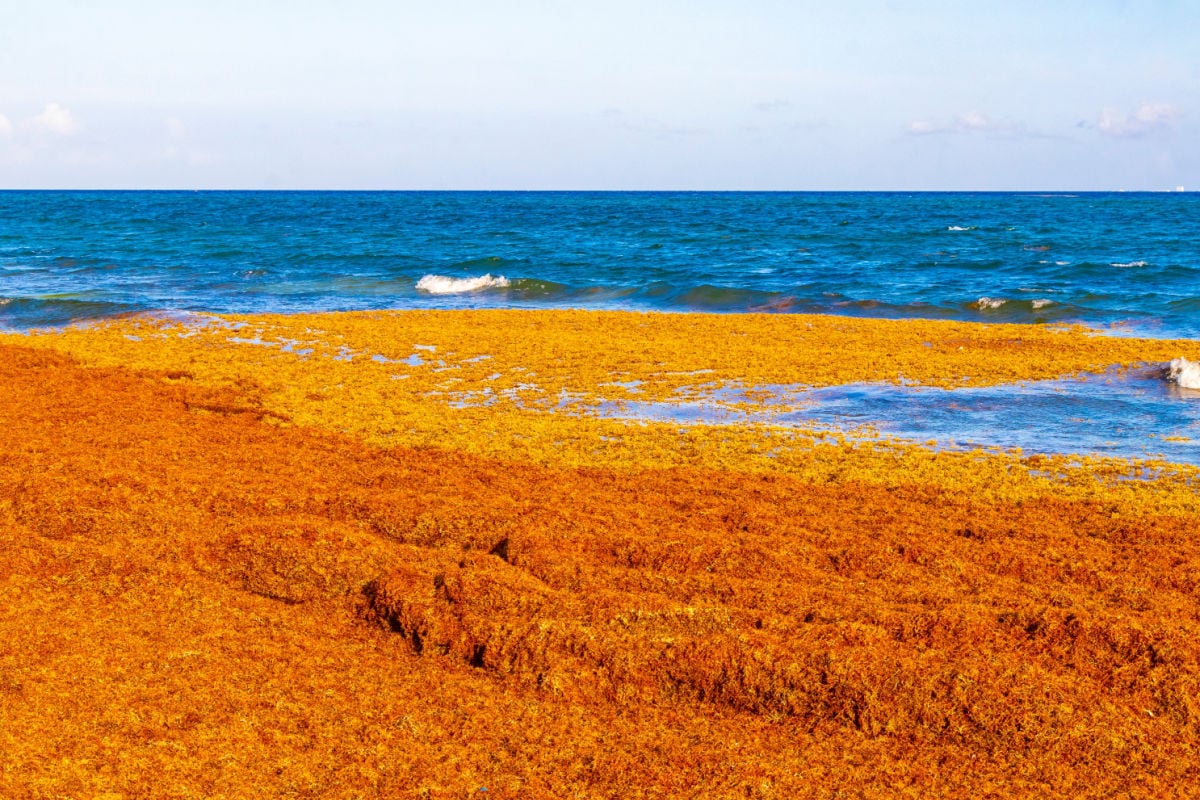
Playa Coral is located at the southern terminus of the Cancun Hotel Zone and suffers from severe geographical disadvantages that make it a massive magnet for macroalgae. Unlike the northern-facing beaches of the city, this localized pocket completely lacks the strong lateral currents needed to naturally sweep floating debris past the shoreline.
- Direct Landfall: Weak local tides are entirely insufficient to pull the biomass back out to sea, forcing the seaweed directly head-on onto the sand.
- Logistical Hurdles: The beach’s relative geographic isolation complicates the rapid deployment of heavy removal machinery compared to the central hotel strip.
- Prolonged Decay: Because mechanical extraction is heavily delayed, the algae stagnates in the shallows and piles up into massive, rotting embankments.
3. Playa Forum

Playa Forum sits exactly at the highly dynamic geographical bend known as Punta Cancun, resulting in critical coastal degradation this season. As the undisputed epicenter of Cancun’s world-famous nightlife and high-density international tourism, the severe inundation here is causing massive aesthetic and economic disruption.
- Hydrodynamic Funnel: Powerful ocean forces at the vertex of the Hotel Zone effectively push massive floating mats directly into the bay.
- Trapped Debris: The surrounding commercial infrastructure, luxury resorts, and artificial breakwaters severely restrict the natural dispersal of the biomass once it enters the nearshore waters.
- Compromised Water Quality: The iconic multi-hued turquoise water is frequently transformed into a murky, highly particulate suspension due to the rapid decomposition of trapped seaweed.
4. Playa Gaviota Azul
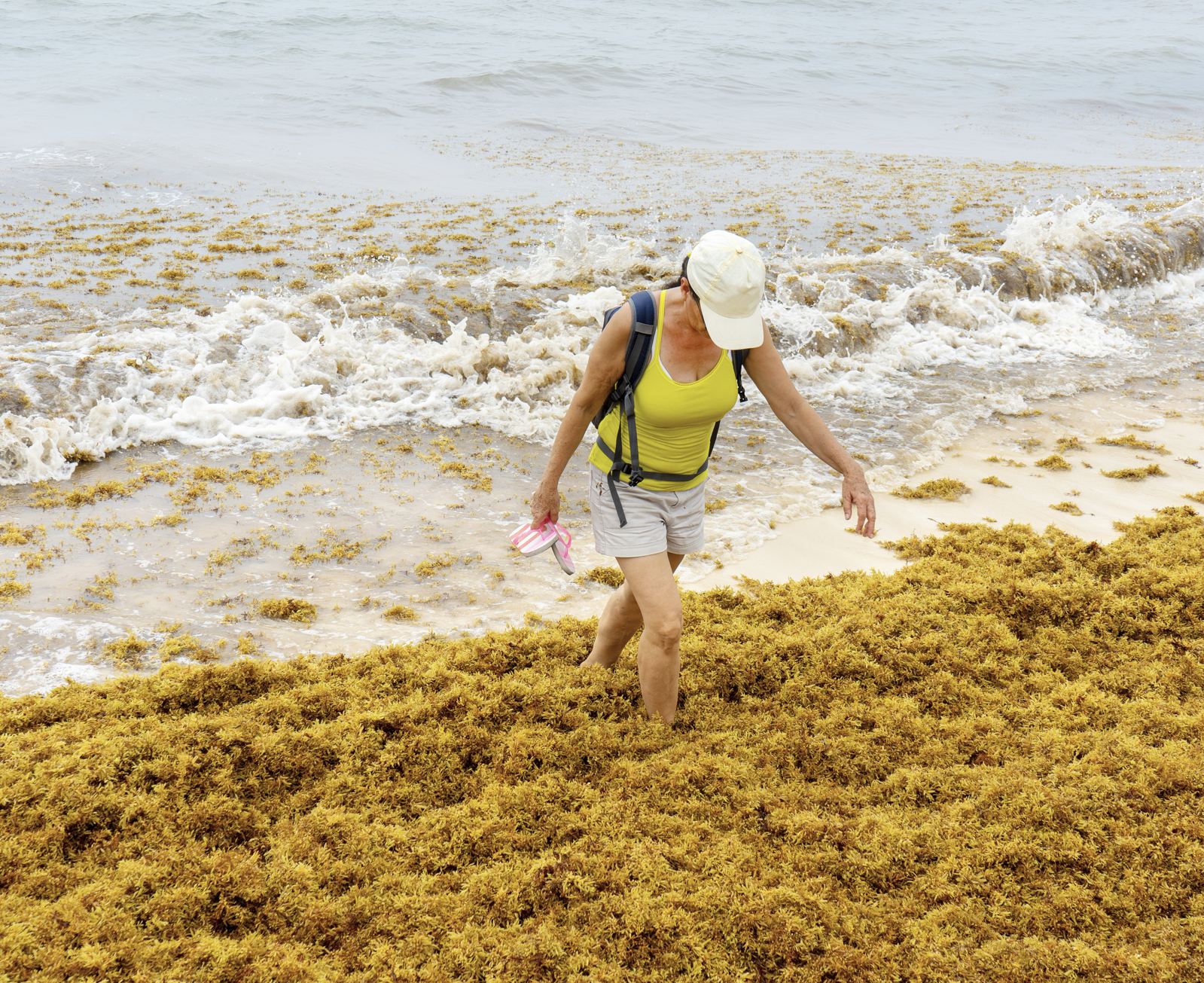
Playa Gaviota Azul is directly adjacent to Playa Forum in the most heavily commercialized sector of the Hotel Zone and has also succumbed to catastrophic levels of seaweed. The localized, swirling currents sweeping around Punta Cancun consistently trap massive quantities of sargassum against the artificial breakwaters, overwhelming both municipal workers and private beach clubs.
- Constant Influx: The sheer high volume of arriving biomass routinely defeats cleanup crews, erasing their mitigation efforts within hours as the tide rolls back in.
- Ecological Stress: The anoxic (oxygen-depleted) conditions generated by the rotting mats actively threaten the delicate nearshore micro-habitats.
- Unpleasant Swimming: The rapid microbial decay in the immediate swash zone completely ruins water clarity and makes recreational swimming highly unpleasant.
5. Playa Paraíso

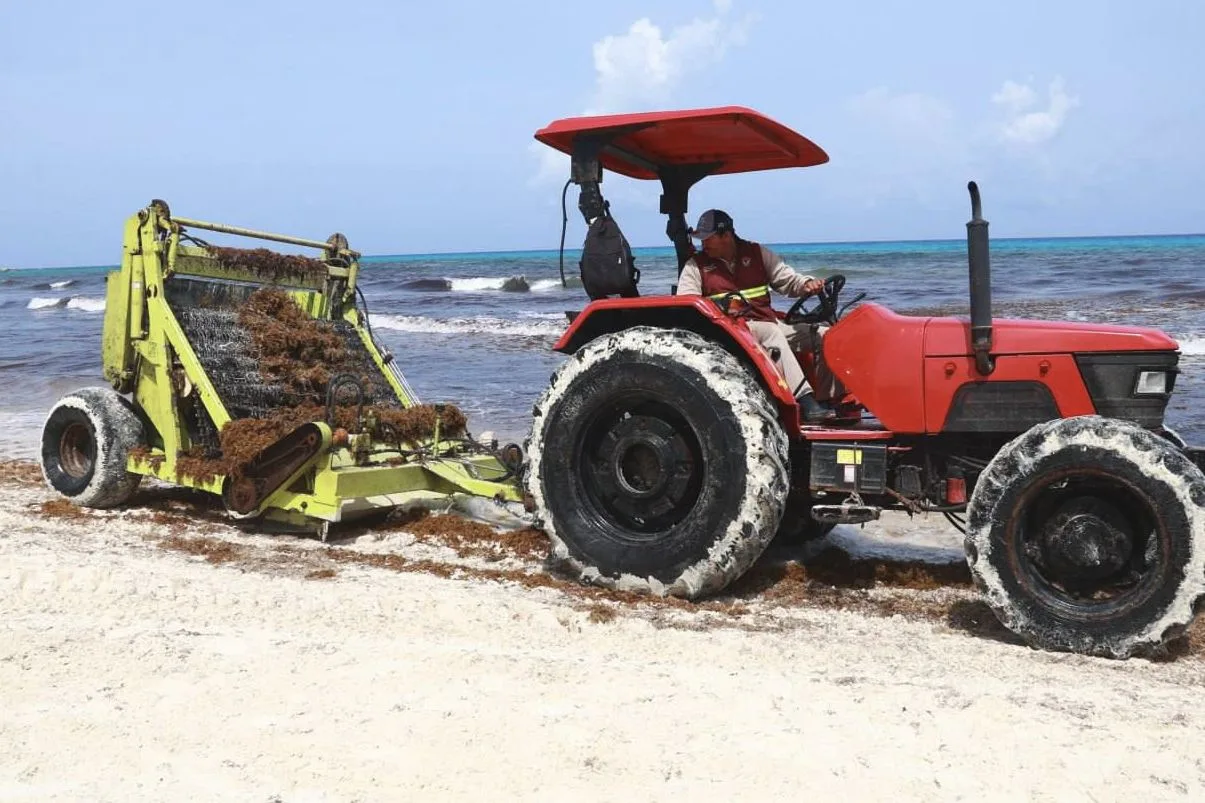
Playa Paraíso is situated further south in the highly sought-after municipality of Tulum, and its current state reflects the broader environmental crisis facing the Riviera Maya. Its wide, open, and utterly unshielded exposure to the Caribbean Sea leaves the pristine sand completely defenseless against the massive floating mats pushed westward by strong trade winds.
- Impenetrable Barriers: Sargassum frequently forms solid walls several feet high along the shoreline, burying the white sand and completely blocking pedestrian access to the water.
- Limited Extraction Capacity: The surrounding municipal and road infrastructure is significantly less developed than Cancun, creating a severe logistical bottleneck for heavy extraction machinery.
- Severe Beach Erosion: When heavy equipment is eventually utilized in the confined space, the highly invasive extraction process inadvertently removes vast quantities of coastal sand.
While the eastern-facing beaches are taking a heavy hit this summer, your vacation is far from ruined if you know where to look. The leeward (western) shores of Cozumel and the northern-facing beaches of Isla Mujeres remain geographically shielded and visually pristine.
Alternatively, heading inland to the freshwater cenotes or taking a trip down to the Bacalar lagoon guarantees completely sargassum-free swimming.
The Ultimate Cancun Trip Planner
When’s the best time to go? Our powerful month-by-month guide breaks down the weather, crowds, sargassum, and prices for your perfect trip.
Find Your Perfect Cancun & Riviera Maya Resort In Seconds
This simple, powerful tool was built by our on-the-ground experts to match you with the ideal resort for your specific budget and travel style.
Subscribe to our Latest Posts
Enter your email address to subscribe to The Cancun Sun’s latest breaking news affecting travelers, straight to your inbox.